You are using an outdated browser and your browsing experience will not be optimal. Please update to the latest version of Microsoft Edge, Google Chrome or Mozilla Firefox. Install Microsoft Edge

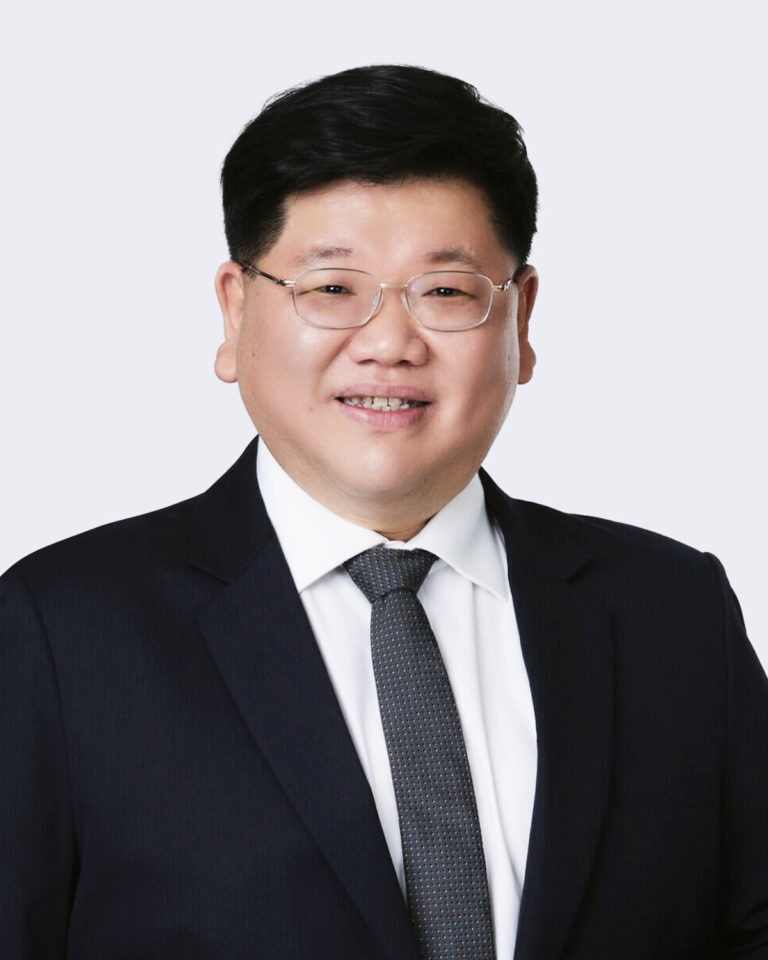
Atthachai Homhuan

Director, Regulatory Affairs

Biography

Dr. Atthachai Homhuan is the director of the regulatory affairs group at Tilleke & Gibbins. He assists biotechnology, chemical, life sciences, and pharmaceutical companies to draft and review patent claims and specifications and advises patent agents on amending claims and providing responses to office actions. Atthachai frequently drafts counterstatements against opposing parties in trademark and patent applications and his practice also includes advising on pre-litigation and litigation matters involving the life sciences, medical devices, and pharmaceuticals. He has presented before the IP&IT Court as a witness in chemistry and life sciences patent litigation. Based on his expertise, he is recognized as a leading patent lawyer in Thailand by IAM Patent.

In addition to patent work, Atthachai prepares healthcare product dossiers for registration and helps international companies develop market entry strategies for countries in Southeast Asia. His broad experience allows him to evaluate the feasibility of product registrations, conduct plant audits, and coordinate preclinical and clinical trials in accordance with international guidelines and standards. Atthachai also reviews healthcare product labeling for food, cosmetics, medical devices, and drug products in Thailand and other Southeast Asian countries.

Prior to joining the firm, Atthachai was a postdoctoral researcher in Japan and Taiwan, focusing on stem cell therapies and vaccine development. He applied his technical expertise to the industry when he became a project manager for a Thai vaccine manufacturing company, where he led the firm’s R&D efforts. His industry background also includes serving as a formulation manager at the subsidiary of a well-known American pharmaceutical innovator, where he was the group leader in charge of the company’s R&D and production functions.

A Thai-licensed attorney, Atthachai holds a PhD in Pharmaceutical Technology from Thailand’s Mahidol University, and he frequently lectures on pharmaceutical and chemical patents at universities across Thailand. He has completed the FICPI Southeast Asian Drafting Training Course.

Experience

  • Assisted pharmaceutical companies in drafting sale and purchasing agreements and held discussions with the Ministry of Public Health with regard to the purchasing agreements of COVID-19 drug products.
  • Advised pharmaceutical companies about the Thailand Emergency Use Authorization (EUA) approval requirements of COVID-19 drug products and vaccines.
  • Revised guidelines for Thai patent officers examining chemical and pharmaceutical patents.
  • Implemented a quality-control system and addressed GMP-related topics for the manufacturing of vaccines. This involved working closely with the Department of Medical Sciences of the Thai FDA with regard to biohazard manufacturing and audits, in order to obtain approval.
  • Worked with companies in the agricultural and chemicals industries with regard to complaints on substandard products raised by the Ministry of Agriculture.
  • Reviewed clinical trial agreements and bioequivalence studies for new drugs and conventional products, and ensured that the trials/studies and protocols were in accordance with Good Regulatory Practices and Good Clinical Practices.
  • Assisted life sciences and chemical companies to draft a variety of complex patents involving the manufacturing process for creating polymers from waste gas and patents related to biological vaccines, among others.
  • Audited leading pharmaceutical companies to ensure that their product registration dossiers and advertising campaigns comply with Thai legislation.
  • Registered new biological product dossiers at the Thai FDA and received approvals within 1.5 years—a relatively short period of time to obtain approval for a new drug in Thailand.
  • Registered medical devices, food products, and cosmetics with the Thai FDA for domestic and international companies.
  • Worked with the firm’s litigation team and won a disputed patent litigation case for a chemical glass company, in which the opposing party claimed damages exceeding THB 50 million.
ABOUT Atthachai

Industries

Life Sciences

Location

Languages

    Thai

    English

Education

    PhD, Mahidol University

    BSc, Chulalongkorn University

    LLB, Ramkhamhaeng University

Insights

July 24, 2026
For businesses in Thailand’s regulated industries, the problem of “too many licenses” is one of the most familiar hurdles to getting a product to market. Take a simple example: importing the materials necessary to sell teriyaki chicken skewers. To legally do this, a business may need approvals from several different agencies—separate permits for the chicken (Department of Livestock Development), the dipping sauce (Thai FDA), the wooden skewers (Department of Forestry), and other ingredients, each under a different authority. This kind of overlap is often cited to argue for a “regulatory guillotine”—a systematic review to cut outdated or duplicative rules that slow investment and business activity. The Facilitation of Licensing and Public Service Consideration Act B.E. 2569 (2026) (Licensing Facilitation Act 2026) is Thailand’s most significant response yet to that concern. This article looks at the Facilitation Act 2026 through a life sciences and regulatory affairs lens—what it may mean for the manufacturers, importers, and distributors of food, drugs, medical devices, cosmetics, and similar products who routinely deal with several regulators to bring a single product to market. The Super License: One Approval Standing in for Many The reform with the clearest potential for regulated-product businesses is the law’s “super license” mechanism, referred to as a “main license” in the statute. Once a business obtains the main license for a regulated activity, it is automatically deemed to hold all related sublicenses issued by other agencies for that same activity, provided the activity has been designated as eligible in the Government Gazette. The Licensing Facilitation Act 2026 also creates a central application center, allowing applicants to submit a single application and pay all relevant fees at one point of contact, with the center routing the application to each agency through a shared information system. The potential benefits of this for businesses
July 1, 2026
Obtaining marketing authorization is a fundamental requirement for bringing pharmaceutical products to the Thai market. Companies must navigate the Thai Food and Drug Administration’s registration procedures while also complying with post-approval pharmacovigilance obligations, licensing requirements for manufacturing and importation, data protection rules, and other regulatory requirements. This guide provides an overview of Thailand’s regulatory framework for pharmaceutical marketing authorization, including available registration pathways, review timelines, application fees, postmarketing surveillance obligations, licensing requirements, exemptions, data exclusivity, freedom of information, and parallel import considerations. It is intended as a practical reference for pharmaceutical companies, regulatory affairs professionals, and others involved in bringing medicinal products to the Thai market. Download the guide below for a concise overview of the current requirements and procedures governing pharmaceutical marketing authorization in Thailand.
June 19, 2026
For the first time, Thailand’s Food and Drug Administration (FDA) has published a consolidated list identifying all substances that have successfully passed its novel food safety evaluation process. The list is a step forward in regulatory transparency, but it also highlights a feature of the Thai regime that food companies often overlook: each approval is tied exclusively to the company that applied for it. A substance’s appearance on the list does not give other companies the green light to use it. This article examines the structure of Thailand’s novel food approval framework, the implications of applicant exclusivity, and the strategic choices it requires of food companies looking to bring novel ingredients to the Thai market. Thai FDA Food Safety Evaluation Framework Notification No. 376 of the Ministry of Public Health requires novel food substances to undergo a food safety assessment, with an exemption only for novel foods manufactured exclusively for export. The framework also encompasses “foods that do not qualify as novel foods” but which present characteristics warranting a safety evaluation, such as differing quality standards, increased serving sizes, or applications in specific food categories, where such changes affect consumption levels, nutritional value, or consumer safety. The recently published list of foods that passed the safety evaluation by the Thai FDA is structured by substance category and identifies the approved company (domestic manufacturer or importer), country of origin, substance name and trade name, approved purpose of use, and date of the Thai FDA’s approval notification certificate. A notable feature of Thailand’s novel food regime is that the approval result is tied exclusively to the company that submitted the application. Publication of the consolidated list does not constitute a general authorization to use the approved substances. The Thai FDA’s approval certificate specifies the approved conditions of use and the requirements
June 17, 2026
Thailand’s new labeling requirements for medical devices, which include for the first time a unique device identification (UDI) requirement for software as a medical device (SaMD), take effect on June 20, 2026. The Notification of the Ministry of Public Health regarding Criteria, Methods, and Conditions on Labeling and Instructions for Use for Medical Devices 2025, which replaces a similar notification from 2020, was published in the Government Gazette on December 22, 2025. To ensure clarity, modernity, and patient safety, the regulation requires domestic manufacturers and importers to provide labels and instructions for use (IFU) that are clearly legible, complete, and free of false or misleading claims. It also permits IFU to be provided in electronic format, such as via QR codes, websites, or other digital channels—directly relevant to SaMD, where physical labels are impractical and electronic presentation is the natural medium. The notification distinguishes two categories for labeling language. Home-use medical devices (for lay users outside healthcare facilities) must have labels and IFU in Thai. Professional-use medical devices may display labels and documentation in either Thai or English. This distinction is significant for SaMD developers: software intended for clinical professionals may use English-language interfaces and IFU, while consumer-facing health applications must provide Thai-language content. Labeling and UDI Requirements Labels and IFU must include, at a minimum: Product name and intended purpose Quantity or volume Name and address of domestic manufacturer or importer Thai FDA approval number Lot, version, or serial number Manufacturing date and expiry date For SaMD, the version number requirement is particularly relevant. The regulation also mandates display of a UDI code for SaMD in risk category 2 (moderate-risk), category 3 (moderate- to high-risk), and category 4 (high-risk), according to Thailand’s medical device risk classification system (which complies with the ASEAN Medical Device Directive and the EU

Awards & Rankings

June 4, 2026
Tilleke & Gibbins has reinforced its position as one of Southeast Asia’s leading patent practices in the newly released IAM Patent 1000 2026, earning top-tier firm rankings in Indonesia, Thailand, and Vietnam, alongside 23 individual recognitions across the region. The firm achieved Gold rankings in Thailand and Vietnam and a Highly Recommended ranking in Indonesia—the highest tier available in the jurisdiction—highlighting the strength and consistency of its regional patent practice. This marks the firm’s 14th consecutive year in the top tier for Thailand, seventh consecutive year for Vietnam, and third straight year ranked among Indonesia’s leading firms. The firm’s strong regional performance is further reflected in the individual rankings, with the following Tilleke & Gibbins practitioners recognized for their expertise in patent law: Indonesia Irene Djalim Melinda Ambrizal Wongrat Ratanaprayul Thailand Alan Adcock Atthachai Homhuan Darani Vachanavuttivong Jakkrit Kuanpoth Napagate Triratana Nattriya Supmoon Nuttaphol Arammuang Peeyakorn Suparugbundit San Chaithiraphant Somboon Earterasarun Suebsiri Taweepon Sukontip Jitmongkolthong Wong Vorravitwattana Vietnam Dat Thanh Nguyen Giang Hoang Bach Hien Thi Thu Vu Hung Tuan Nguyen Linh Duy Mai Loc Xuan Le Thanh Phuong Vu The IAM Patent 1000 identifies the world’s leading patent firms and practitioners through extensive qualitative research based on feedback from clients, peers, and industry stakeholders. For more details, please see the IAM Patent 1000 rankings for Indonesia, Thailand, and Vietnam.
May 14, 2026
Asian Legal Business (ALB) has published the ALB Asia IP Rankings 2026, the latest edition of its annual guide recognizing leading intellectual property firms across the region. Continuing the approach introduced last year, the rankings present a unified table in each jurisdiction, combining patent and trademark/copyright work to provide a more holistic view of the IP market. Tilleke & Gibbins has retained strong rankings in all three jurisdictions covered by the survey: Thailand: Tier 1 Vietnam: Tier 1 Indonesia: Tier 2 The rankings are based on work conducted between February 2025 and February 2026, covering both ongoing and completed contentious and noncontentious matters. ALB’s research draws on firm submissions, client feedback, editorial resources, and market input to identify the region’s leading IP practices. Tilleke & Gibbins’ IP team has maintained a strong track record across all ranked jurisdictions since the inception of the ALB IP Rankings in 2018. To view the full rankings, please see the May 2026 issue of ALB.
April 3, 2026
Tilleke & Gibbins is pleased to announce that the firm has been shortlisted in two categories at the Financial Times (FT) Innovative Lawyers APAC 2026 awards: Innovative Lawyers in Cyber and Data Privacy – “Digital Identity & Cryptocurrency Compliance” Innovative Practitioner – Athistha (Nop) Chitranukroh The FT Innovative Lawyers APAC Awards recognize law firms and practitioners who are driving innovation in legal services and delivering innovative client solutions across the Asia-Pacific region. This recognition marks our third acknowledgment in the Innovative Lawyers category and, notably, our first-ever nomination in the Innovative Practitioner category at the FT Innovative Lawyers APAC awards. It reflects our team’s continued ability to support clients on groundbreaking, forward-looking projects across the region. The awards ceremony will take place on May 14, 2026, in Hong Kong. To learn more about the FT Innovative Lawyers APAC 2026 awards and to view the full list of shortlisted organizations, please visit the FT website.

Other Professionals