You are using an outdated browser and your browsing experience will not be optimal. Please update to the latest version of Microsoft Edge, Google Chrome or Mozilla Firefox. Install Microsoft Edge

November 23, 2021

Vietnam: The Registrability of Media-Hype and Sensational Marks

Managing Intellectual Property

Given the highly polarized state of U.S. politics, one may find it difficult to imagine a scenario where Donald Trump and Joe Biden appear together outside of a debate stage. Surprisingly, these names were united on a Vietnamese trademark application filed during the heat of the U.S. presidential election in 2020.
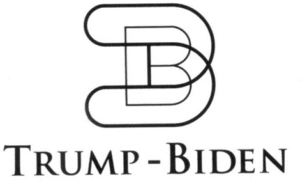
This “TRUMP-BIDEN” mark was filed for food, beverages, and restaurants in Classes 29, 30 and 43 — items with no link to the two presidents. The only reason for such filing, obviously, was to gain consumers’ attention and to ride a wave of popularity, although in a rather unusual way.

Attention-seeking entrepreneurs are often inspired by celebrities and recent events when seeking new brand names and slogans. They may attempt to register their ideas as trademarks while the influence of the person or event is still strong. Others take a different but similarly sensational approach, crafting marks loaded with double entendre with the hope of sneaking past the gatekeepers.

While the idea of registering celebrity-driven or sensational marks may be beneficial for business, is it possible under Vietnam’s IP laws?

Famous People’s Names

In addition to the TRUMP-BIDEN mark mentioned above, a quick search on the public database of the IP Office of Vietnam reveals several dozen “TRUMP” marks, with most of them filed after Donald Trump’s inauguration in 2017. The IP Office’s decisions have shown that marks explicitly referring to the former president (such as the full-name trademark DONALD TRUMP) will be refused protection, but more subtle indicators can survive to registration, such as DONTRUMP (Reg. 327991), BETATRUMP (Reg. No. 329952), TRUMP GOLD (Reg. No. 313441), TRUMP WATER  (Reg. No. 355166 – see image below), and even TRUMP by itself (Reg. No. 342771).

Under Article 73.3 of the IP Law, “signs identical or confusingly similar to real names, aliases, pseudonyms or images of leaders, national heroes or famous personalities of Vietnam or foreign countries” are ineligible for protection as marks, regardless of the goods/services applied for. This is why the “DONALD TRUMP” mark was refused, but it seems to apply only to obvious cases, such as where the full name of the famous person is exploited. If only a part of the name is used, it could still be accepted. From that view, it is likely that the TRUMP-BIDEN mark could be considered inherently distinctive, as it includes neither the full names nor the images of the presidents.

Another interesting TRUMP-derived mark is found in a pending application for TRUMPKIDS KINDERGARTEN:

While the Trump inspiration in the faceless image is undeniable, could this mark still be considered registrable? It consists of the name and image of a famous person, but both are stylized and combined with other elements. In our opinion, the mark is likely to get through. If so, this is an example of a clever way to utilize the fame of a person, while skirting the prohibitions of Article 73.3.

On the other hand, names or signs similar to those of well-known people with decidedly negative reputations – war criminals or terrorists, for example – may be refused for being contrary to social ethics and public order as stipulated in Article 8.1 of the IP Law, regardless of how “creative” the marks are. The mark BILLADEN for pesticides in Class 05 was refused for being confusingly similar to the name of Osama Bin Laden. Although the applicant argued that BILLADEN was fanciful and in no way related to the infamous terrorist, the IP Office held that the registration of the mark was against morality and public policy, and maintained its refusal.

Vulgar or Sensational Slogans

Some companies, especially in youth-oriented sectors like video games or beverages, adopt ridiculous, ear/eye-catching marks in the hope of gaining more attention for their products or services. One of Vietnam’s most popular craft breweries has applied for a series of winkingly raunchy bilingual marks for beer in Class 32, including BOM VU DU XAI [roughly “breast augmentation big enough to use”] FIFTY-TWO TRIPLE Z; COI DO RA [take off your clothes] LET’S GET NAKED; and AN BANH TRA TIEN [slang for “buy/use prostitute”] NO COOKIE NO NOOKIE. While such names are commonplace in the freewheeling craft beer industry, it remains to be seen if they are registrable in Vietnam.

Although the marks are pending without any issued opinion from the IP Office, a similar case was refused for protection. The stylized mark “NUDE” for trading services of food, clothing, household appliances, etc., in Class 35 was refused for again being contrary to social ethics and public order.

The standards for judging this are quite subjective and dependent on the particular examiner’s viewpoint. For example, we found the mark FASCIST was successfully registered for insecticides in Class 05, while DAP DA (literally “beat the rock” but slang for “use drugs”) was registered for restaurant services in Class 43. Based on this precedent, it is highly likely that the pending LET’S GET NAKED mark will be refused but the others will survive to registration, due to their indirect wording.

Our Perspective

We respect our clients’ choices, but we maintain certain standards. While some phrases, symbols, and other sensitive components may evoke powerful emotions that increase sales of the goods they designate, limits must also be set. Bearing in mind that Vietnam is an Asian country with high standards regarding social ethics, foreign companies should be mindful in choosing trademarks to be used in the country. The purpose is not only to have their marks registered, but also to have them accepted by mass Vietnamese consumers.

In addition, media-hype trademarks often have short shelf-lives, while the registration procedure in Vietnam is lengthy, normally 20-24 months. If and when the trademark registrations are granted, it may already be too late to draw the public’s attention. In the end, investing in thoughtful, sustainable trademarks will always be the right choice.

This article first appeared in Managing Intellectual Property.

RELATED INSIGHTS​ 

July 6, 2026
Indonesia’s regulation on reporting online intellectual property (IP) infringement provides comprehensive procedural guidance for IP rights holders and their licensees in reporting online infringement complaints. Issued in December 2025 by the Ministry of Law as Regulation No. 47 of 2025 regarding Handling of Intellectual Property Infringement Reports in Electronic Systems, this regulation covers all types of IP rights. It also specifies documentation when reporting infringement, and lays out the procedures for examination, verification, and enforcement actions. Submission of Complaints Complainants may submit reports through the online system of the Directorate General of Intellectual Property (DGIP) or in person at the DGIP office. Complaints may also be filed through an authorized proxy. Under the regulation, complainants are required to provide the following information and documents: Personal details of the complainant; Brief description of the protected work or subject matter (i.e., type of IP and name or address of the infringing website, portal, account, or application, or a link to the location of the infringing content); Complete description of the alleged infringement; Certificate of registration or recordal of the relevant IP; Recordal of IP license agreement, if any; and Other supporting evidence. Verification and Examination Process Upon receiving a complaint, the responsible formality officer may request clarification or additional supporting documents. In the latter case, the complainant must then submit the necessary administrative documents within 14 days of the notification date. Once the documentation is deemed complete and sufficient, the case will be formally registered. Subsequently, the DGIP will establish a verification team to handle online IP violations, which will include the Civil Servant Investigator (PPNS), the Ministry of Communication and Digital Affairs, experts with relevant expertise in IP, and representatives from related associations such as AVISI (Indonesian Video Streaming Association). After examining the report, the team will prepare the Minutes
June 30, 2026
Customs recordation is an enforcement mechanism in Myanmar that enables intellectual property (IP) rights holders to seek prevention of the cross-border movement of infringing goods. The enactment of Myanmar’s IP laws in 2019 has enabled customs recordation for registered marks and copyrights under the Trademark Law 2019 and the Copyright Law 2019. By contrast, the Patent Law 2019 and the Industrial Design Law 2019 do not provide a practical framework for customs recordation, and accordingly such rights are not subject to the customs recordation regime. Under the Trademark Law 2019, rights holders may apply for customs recordation and may also ask the Customs Department to suspend the release of goods suspected of bearing counterfeit marks. Likewise, the Copyright Law 2019 allows for customs intervention in relation to pirated works. These provisions reflect Myanmar’s gradual alignment with international standards on border measures, although the implementation framework remains at a relatively early stage of development. Customs Recordation Pursuant to the Trademark Law 2019 and the Copyright Law 2019, the relevant authorities have issued customs rules concerning the protection of registered marks and copyrights. In practice, the process generally begins with the submission of an application to the Customs Department together with supporting documentation. This typically includes proof of registration in Myanmar; details of the rights holder, applicant, and any authorized representative; and a comprehensive description of the genuine goods. Product identification materials—such as photographs, packaging samples, and distinguishing features—are particularly important in helping customs officers identify suspected infringing goods. A recordation remains valid for two years from the date of approval. It may be renewed for additional two-year terms, provided that the renewal application is filed within the thirty days prior to expiry for marks and up to thirty days in advance of the expiry date for copyrights, in accordance with
June 24, 2026
Patent enablement requirements are provided under Article 102 of Vietnam’s Law on Intellectual Property (IP Law). In particular, a patent specification must “fully and clearly disclose the nature of the invention to such an extent that, based on the specification, a person having ordinary skill in the relevant art can implement the invention.” In pharmaceutical and biotechnology patents, this requirement is more complicated and subject to more rigorous assessment. The Patent Examination Guidelines (Guidelines) of the Intellectual Property Office of Vietnam (IP Office) were amended in March 2026 to introduce Annexes III and IV for the pharmaceutical and biotechnology sectors, in which Annex III provides detailed guidelines on the assessment of specification requirements. These amendments were made under a project for strengthening capacity in industrial property examination between the Japan International Cooperation Agency (JICA) and the IP Office. Annex III provides detailed instructions on how examiners assess enablement in a pharmaceutical or biotechnology application, and offers examples of acceptable and unacceptable descriptions with regard to the enablement aspect. Enablement Requirements in Pharma and Biotech Patents Article 12.7 of Circular 10/2026/TT-BKHCN (Circular 10) adds to the requirements of Article 102 of the IP Law that the description must demonstrate the novelty, inventive step, and industrial applicability of the technical solution. For pharmaceutical composition subject matters, Article 12.9 of Circular 10 sets out that the description must present the results of clinical trials and/or the pharmacological effects of the claimed pharmaceutical composition, and must include at least the following information: Substance/mixture used. Testing method (system) employed. Information on the test results. Correlation between the pharmacological effects obtained from the tests and the application of the pharmaceutical product in the prevention, diagnosis, and treatment of diseases. The Guidelines note that pharmacological study results should be presented in a quantified manner, and pharmacological
June 16, 2026
Since the implementation of the Trademark Law 2019 on April 1, 2023, Myanmar has operated under a modern first-to-file trademark system that brings its registration framework closer to international practice. As the new regime continues to develop in practice, applicants are increasingly required to navigate formal examination requirements, substantive objections, and procedural deadlines with greater precision. This article provides a high-level review of the trademark examination process in Myanmar, focusing on the principal stages from initial review to approval, the types of objections commonly raised by the Intellectual Property Department (IPD), and the key considerations for responding effectively. A clear understanding of these issues is essential for applicants seeking to secure registration efficiently and to mitigate avoidable delays or refusals. Examination Process: Key Stages Trademark applications filed with the IPD undergo two stages of review. Formality Examination The IPD first verifies compliance with procedural requirements, including: Correct Nice Classification Clear mark representation Accurate applicant details Clearly defined goods or services Representative details, if the application is filed by a representative Other formality requirements cover translation and transliteration of any non-English or non-Myanmar elements in the mark, color claim details, applicable disclaimers, and payment of official fees. Deficiencies result in an office action requiring correction within 30 days, which may be extended upon request. Registrability Examination The IPD also assesses registrability. A mark may be refused if it: Lacks distinctiveness Is descriptive or generic Misleads the public or violates public order/morality Contains prohibited state symbols Only compliant applications proceed to publication. Responding to Office Actions Applicants must respond within 30 days of notification from the IPD. Depending on the nature of the objection, strategies may include submitting legal arguments for distinctiveness, providing evidence of acquired distinctiveness, filing appropriate disclaimers, clarifying descriptions such as color claims, or amending the listed goods