You are using an outdated browser and your browsing experience will not be optimal. Please update to the latest version of Microsoft Edge, Google Chrome or Mozilla Firefox. Install Microsoft Edge

November 23, 2021

Vietnam: The Registrability of Media-Hype and Sensational Marks

Managing Intellectual Property

Given the highly polarized state of U.S. politics, one may find it difficult to imagine a scenario where Donald Trump and Joe Biden appear together outside of a debate stage. Surprisingly, these names were united on a Vietnamese trademark application filed during the heat of the U.S. presidential election in 2020.
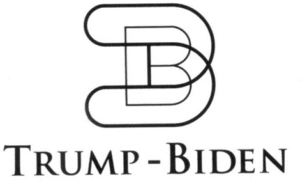
This “TRUMP-BIDEN” mark was filed for food, beverages, and restaurants in Classes 29, 30 and 43 — items with no link to the two presidents. The only reason for such filing, obviously, was to gain consumers’ attention and to ride a wave of popularity, although in a rather unusual way.

Attention-seeking entrepreneurs are often inspired by celebrities and recent events when seeking new brand names and slogans. They may attempt to register their ideas as trademarks while the influence of the person or event is still strong. Others take a different but similarly sensational approach, crafting marks loaded with double entendre with the hope of sneaking past the gatekeepers.

While the idea of registering celebrity-driven or sensational marks may be beneficial for business, is it possible under Vietnam’s IP laws?

Famous People’s Names

In addition to the TRUMP-BIDEN mark mentioned above, a quick search on the public database of the IP Office of Vietnam reveals several dozen “TRUMP” marks, with most of them filed after Donald Trump’s inauguration in 2017. The IP Office’s decisions have shown that marks explicitly referring to the former president (such as the full-name trademark DONALD TRUMP) will be refused protection, but more subtle indicators can survive to registration, such as DONTRUMP (Reg. 327991), BETATRUMP (Reg. No. 329952), TRUMP GOLD (Reg. No. 313441), TRUMP WATER  (Reg. No. 355166 – see image below), and even TRUMP by itself (Reg. No. 342771).

Under Article 73.3 of the IP Law, “signs identical or confusingly similar to real names, aliases, pseudonyms or images of leaders, national heroes or famous personalities of Vietnam or foreign countries” are ineligible for protection as marks, regardless of the goods/services applied for. This is why the “DONALD TRUMP” mark was refused, but it seems to apply only to obvious cases, such as where the full name of the famous person is exploited. If only a part of the name is used, it could still be accepted. From that view, it is likely that the TRUMP-BIDEN mark could be considered inherently distinctive, as it includes neither the full names nor the images of the presidents.

Another interesting TRUMP-derived mark is found in a pending application for TRUMPKIDS KINDERGARTEN:

While the Trump inspiration in the faceless image is undeniable, could this mark still be considered registrable? It consists of the name and image of a famous person, but both are stylized and combined with other elements. In our opinion, the mark is likely to get through. If so, this is an example of a clever way to utilize the fame of a person, while skirting the prohibitions of Article 73.3.

On the other hand, names or signs similar to those of well-known people with decidedly negative reputations – war criminals or terrorists, for example – may be refused for being contrary to social ethics and public order as stipulated in Article 8.1 of the IP Law, regardless of how “creative” the marks are. The mark BILLADEN for pesticides in Class 05 was refused for being confusingly similar to the name of Osama Bin Laden. Although the applicant argued that BILLADEN was fanciful and in no way related to the infamous terrorist, the IP Office held that the registration of the mark was against morality and public policy, and maintained its refusal.

Vulgar or Sensational Slogans

Some companies, especially in youth-oriented sectors like video games or beverages, adopt ridiculous, ear/eye-catching marks in the hope of gaining more attention for their products or services. One of Vietnam’s most popular craft breweries has applied for a series of winkingly raunchy bilingual marks for beer in Class 32, including BOM VU DU XAI [roughly “breast augmentation big enough to use”] FIFTY-TWO TRIPLE Z; COI DO RA [take off your clothes] LET’S GET NAKED; and AN BANH TRA TIEN [slang for “buy/use prostitute”] NO COOKIE NO NOOKIE. While such names are commonplace in the freewheeling craft beer industry, it remains to be seen if they are registrable in Vietnam.

Although the marks are pending without any issued opinion from the IP Office, a similar case was refused for protection. The stylized mark “NUDE” for trading services of food, clothing, household appliances, etc., in Class 35 was refused for again being contrary to social ethics and public order.

The standards for judging this are quite subjective and dependent on the particular examiner’s viewpoint. For example, we found the mark FASCIST was successfully registered for insecticides in Class 05, while DAP DA (literally “beat the rock” but slang for “use drugs”) was registered for restaurant services in Class 43. Based on this precedent, it is highly likely that the pending LET’S GET NAKED mark will be refused but the others will survive to registration, due to their indirect wording.

Our Perspective

We respect our clients’ choices, but we maintain certain standards. While some phrases, symbols, and other sensitive components may evoke powerful emotions that increase sales of the goods they designate, limits must also be set. Bearing in mind that Vietnam is an Asian country with high standards regarding social ethics, foreign companies should be mindful in choosing trademarks to be used in the country. The purpose is not only to have their marks registered, but also to have them accepted by mass Vietnamese consumers.

In addition, media-hype trademarks often have short shelf-lives, while the registration procedure in Vietnam is lengthy, normally 20-24 months. If and when the trademark registrations are granted, it may already be too late to draw the public’s attention. In the end, investing in thoughtful, sustainable trademarks will always be the right choice.

This article first appeared in Managing Intellectual Property.

RELATED INSIGHTS​ 

June 15, 2026
The surge in AI development has led to a desperate demand for large, high-quality training data. However, real-world data can be expensive to collect, difficult to access, and often subject to strict privacy and regulatory constraints. Synthetic data, which consists of artificially generated records that replicate the statistical properties of real-world data without reproducing specific individuals’ information, provides an appealing solution by generating artificial datasets at scale without relying on identifiable personal information. It combines speed, cost efficiency, and regulatory compliance, making it a sensible alternative for organizations seeking to reduce risks while maintaining data utility. When properly anonymized, synthetic datasets may fall outside the scope of laws such as the EU’s General Data Protection Regulation (GDPR) or Thailand’s Personal Data Protection Act (PDPA), reducing compliance burdens while still supporting high-quality model training. However, relying on synthetic data without rigorous legal due diligence could be a strategic mistake. It replaces one set of known risks (scraping, direct privacy liability) with a new set of complex liabilities. The narrative that synthetic data is a “silver bullet” for privacy and IP compliance is dangerous and could be misleading. While synthetic data addresses data scarcity, it also introduces new legal uncertainties. Legal counsel should anticipate downstream risks arising from compromised data sources. Models trained on unlawfully obtained data may need to be decommissioned, even if their outputs appear lawful. What is synthetic data? Synthetic data refers to artificially generated information created using AI techniques such as deep learning and generative models. Instead of copying real records, it reproduces the statistical patterns and relationships found in the original dataset. Synthetic data generally falls into three categories: Fully synthetic data – Entirely new data points generated from learned patterns. The model studies the structure of the original data and produces records that resemble real-world
June 10, 2026
In March 2026, the Intellectual Property Office of Vietnam (IP Office) issued a decision refusing a trademark application after considering an opposition based primarily on copyright grounds. The outcome is noteworthy because the foreign brand owner had neither trademark registrations nor applications in Vietnam at the time the opposition was filed, and the IP Office has historically applied a stringent approach to oppositions relying on copyright. The Opposition Maurten is a well-known Swedish sports nutrition brand recognized globally for its innovative hydrogel technology, which is designed to help endurance athletes fuel more effectively without gastrointestinal discomfort. The brand’s distinctive logo is characterized by clean lines and a bold black-and-white color scheme, and has long been associated with the company’s performance products. The brand’s logo is displayed above. An identical mark was filed for registration by a Vietnamese trademark squatter. In 2023, a Vietnamese individual filed an application for registration of an identical mark (Application No. 4-2023-38668), a practice commonly observed in Vietnam as trademark squatting. The brand owner engaged Tilleke & Gibbins to assist with strategy and filing an opposition to the mark. At the time, Maurten had no trademark rights or meaningful use in Vietnam, and global marketing data showed only modest figures without any local presence. Thus, to convince the IP Office to refuse the squatter’s application, instead of relying on trademark rights or use evidence, the opposition strategy centered on the copyright protection of the logo itself, as copyright arises automatically in Vietnam upon creation of the work and does not require registration. (It is worth noting, however, that the IP Office has traditionally been cautious in accepting copyright as a basis for refusing trademark applications.) On September 24, 2024, an opposition was filed on three main grounds: confusing similarity, copyright infringement of the artistic work,
June 10, 2026
For multinational franchisors operating in Thailand, a key risk after franchise termination is that former outlets may continue operating in ways that could easily mislead consumers into believing they remain within the authorized network. To justify such operations, former franchisees often argue that the termination was invalid or ineffective. As a result, these cases are often treated as contractual disputes, making it difficult for franchisors to obtain injunctive relief before a final judgment confirms that the termination was lawful. Franchisors face significant commercial and reputational harm during lengthy proceedings, including consumer confusion, disruption to franchise restructuring, and damage to brand reputation and customer trust. In an encouraging development, the Thai court in a 2025 case responded to the problem of unauthorized post-termination franchise operations by granting interim relief, recognizing broader brand and consumer harm, and awarding substantial damages, highlighting a successful litigation strategy of framing the dispute not merely as a contractual termination issue but as trademark infringement causing ongoing commercial injury. The Subway Case From December 2024 to mid-2025, an unauthorized “Subway®” franchise operation in Thailand attracted substantial public and media attention. Reports and online discussions about unauthorized Subway® stores circulated widely after complaints arose about food quality and customer experience at certain outlets that were allegedly operating after their franchise rights had expired. Because these stores continued to use Subway® trademarks, trade dress, and overall commercial appearance, many consumers were unable to distinguish them from authorized operations, resulting in reputational risks and customer confusion that affected the franchisor’s brand and franchise system in Thailand. Subway treated this matter with the utmost seriousness and moved promptly to protect its brand, franchise system, and customers. It filed a civil action with the IP&IT Court seeking a permanent injunction and damages. During the proceedings, the court granted a preliminary injunction
May 22, 2026
Intellectual property specialists from Tilleke & Gibbins in Vietnam have contributed an updated Intellectual Property Transactions in Vietnam overview for Thomson Reuters Practical Law, an online publication that provides comprehensive legal guides for jurisdictions worldwide. The Vietnam overview was authored by Linh Thi Mai Nguyen, Thanh Phuong Vu, Chi Lan Dang, Son Thai Hoang, and Duc Anh Tran. The chapter provides a high-level examination of key aspects of IP transactions law in Vietnam, including IP assignment and licensing, research and development collaborations, IP in mergers and acquisitions (M&A), lending and taking security over intellectual property rights, settlement agreements, employee- and consultant-created IP, competition law, taxation, and non-tariff trade barriers. Key topics covered in the chapter include: IP assignment: Basis and formalities for assignments of patents, utility models, trade marks, copyright, design rights, trade secrets, confidential information, and domain names in Vietnam. IP licensing: Scope, formalities, and recordal requirements for licensing patents, trade marks, copyright, design rights, and trade secrets. Research and development collaborations: Treatment of improvements, derivatives, and joint ownership of IP, including exploitation and enforcement issues. IP aspects of M&A and security: Due diligence, warranties, transfer formalities, and taking security over intellectual property rights. Practical Law, a legal reference resource from Thomson Reuters, publishes a range of guides for hundreds of jurisdictions and practice areas. The Intellectual Property Transactions Global Guide is a valuable resource for legal practitioners seeking comparative insight into transactional IP issues across multiple jurisdictions. To view the latest version of the Intellectual Property Transactions in Vietnam overview, please visit the Practical Law website and enroll in the free Practical Law trial to gain full access.