You are using an outdated browser and your browsing experience will not be optimal. Please update to the latest version of Microsoft Edge, Google Chrome or Mozilla Firefox. Install Microsoft Edge

November 23, 2021

Vietnam: The Registrability of Media-Hype and Sensational Marks

Managing Intellectual Property

Given the highly polarized state of U.S. politics, one may find it difficult to imagine a scenario where Donald Trump and Joe Biden appear together outside of a debate stage. Surprisingly, these names were united on a Vietnamese trademark application filed during the heat of the U.S. presidential election in 2020.
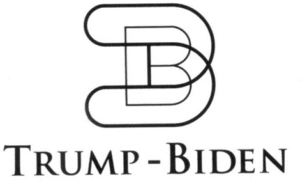
This “TRUMP-BIDEN” mark was filed for food, beverages, and restaurants in Classes 29, 30 and 43 — items with no link to the two presidents. The only reason for such filing, obviously, was to gain consumers’ attention and to ride a wave of popularity, although in a rather unusual way.

Attention-seeking entrepreneurs are often inspired by celebrities and recent events when seeking new brand names and slogans. They may attempt to register their ideas as trademarks while the influence of the person or event is still strong. Others take a different but similarly sensational approach, crafting marks loaded with double entendre with the hope of sneaking past the gatekeepers.

While the idea of registering celebrity-driven or sensational marks may be beneficial for business, is it possible under Vietnam’s IP laws?

Famous People’s Names

In addition to the TRUMP-BIDEN mark mentioned above, a quick search on the public database of the IP Office of Vietnam reveals several dozen “TRUMP” marks, with most of them filed after Donald Trump’s inauguration in 2017. The IP Office’s decisions have shown that marks explicitly referring to the former president (such as the full-name trademark DONALD TRUMP) will be refused protection, but more subtle indicators can survive to registration, such as DONTRUMP (Reg. 327991), BETATRUMP (Reg. No. 329952), TRUMP GOLD (Reg. No. 313441), TRUMP WATER  (Reg. No. 355166 – see image below), and even TRUMP by itself (Reg. No. 342771).

Under Article 73.3 of the IP Law, “signs identical or confusingly similar to real names, aliases, pseudonyms or images of leaders, national heroes or famous personalities of Vietnam or foreign countries” are ineligible for protection as marks, regardless of the goods/services applied for. This is why the “DONALD TRUMP” mark was refused, but it seems to apply only to obvious cases, such as where the full name of the famous person is exploited. If only a part of the name is used, it could still be accepted. From that view, it is likely that the TRUMP-BIDEN mark could be considered inherently distinctive, as it includes neither the full names nor the images of the presidents.

Another interesting TRUMP-derived mark is found in a pending application for TRUMPKIDS KINDERGARTEN:

While the Trump inspiration in the faceless image is undeniable, could this mark still be considered registrable? It consists of the name and image of a famous person, but both are stylized and combined with other elements. In our opinion, the mark is likely to get through. If so, this is an example of a clever way to utilize the fame of a person, while skirting the prohibitions of Article 73.3.

On the other hand, names or signs similar to those of well-known people with decidedly negative reputations – war criminals or terrorists, for example – may be refused for being contrary to social ethics and public order as stipulated in Article 8.1 of the IP Law, regardless of how “creative” the marks are. The mark BILLADEN for pesticides in Class 05 was refused for being confusingly similar to the name of Osama Bin Laden. Although the applicant argued that BILLADEN was fanciful and in no way related to the infamous terrorist, the IP Office held that the registration of the mark was against morality and public policy, and maintained its refusal.

Vulgar or Sensational Slogans

Some companies, especially in youth-oriented sectors like video games or beverages, adopt ridiculous, ear/eye-catching marks in the hope of gaining more attention for their products or services. One of Vietnam’s most popular craft breweries has applied for a series of winkingly raunchy bilingual marks for beer in Class 32, including BOM VU DU XAI [roughly “breast augmentation big enough to use”] FIFTY-TWO TRIPLE Z; COI DO RA [take off your clothes] LET’S GET NAKED; and AN BANH TRA TIEN [slang for “buy/use prostitute”] NO COOKIE NO NOOKIE. While such names are commonplace in the freewheeling craft beer industry, it remains to be seen if they are registrable in Vietnam.

Although the marks are pending without any issued opinion from the IP Office, a similar case was refused for protection. The stylized mark “NUDE” for trading services of food, clothing, household appliances, etc., in Class 35 was refused for again being contrary to social ethics and public order.

The standards for judging this are quite subjective and dependent on the particular examiner’s viewpoint. For example, we found the mark FASCIST was successfully registered for insecticides in Class 05, while DAP DA (literally “beat the rock” but slang for “use drugs”) was registered for restaurant services in Class 43. Based on this precedent, it is highly likely that the pending LET’S GET NAKED mark will be refused but the others will survive to registration, due to their indirect wording.

Our Perspective

We respect our clients’ choices, but we maintain certain standards. While some phrases, symbols, and other sensitive components may evoke powerful emotions that increase sales of the goods they designate, limits must also be set. Bearing in mind that Vietnam is an Asian country with high standards regarding social ethics, foreign companies should be mindful in choosing trademarks to be used in the country. The purpose is not only to have their marks registered, but also to have them accepted by mass Vietnamese consumers.

In addition, media-hype trademarks often have short shelf-lives, while the registration procedure in Vietnam is lengthy, normally 20-24 months. If and when the trademark registrations are granted, it may already be too late to draw the public’s attention. In the end, investing in thoughtful, sustainable trademarks will always be the right choice.

This article first appeared in Managing Intellectual Property.

RELATED INSIGHTS​ 

March 6, 2025
Vietnam’s government is currently undergoing a significant restructuring, consolidating and eliminating various agencies with the aim of streamlining operations and increasing efficiency. The restructuring will bring notable changes to the country’s intellectual property (IP) landscape. We discuss below key developments that may influence IP protection and enforcement in Vietnam in the coming years. Mergers of Ministries One of the most notable changes in the restructuring is the merger of several ministries, including the Ministry of Information and Communications (MIC) and the Ministry of Science and Technology (MOST). Vietnam’s Intellectual Property Office is a unit under MOST; therefore, this merger is expected to impact various aspects of IP administration and enforcement. With the newly merged ministry—which is expected to retain the name of MOST—actively supporting the development of the digital economy, further advancements in digital tools for IP administration and prosecution are anticipated. This could include enhancements in e-filing, online procedures, and digital payment systems, contributing to greater accessibility and efficiency in IP-related services. Domain name disputes can also expect to see a more coordinated approach under the new ministry. Previously, jurisdiction over domain name disputes was divided between MIC and MOST, sometimes leading to procedural complexities. With both areas now under a single ministry, these matters are expected to be handled more seamlessly, potentially with a model aligned with the Uniform Domain Name Dispute Resolution Policy (UDRP). Structural Changes in Inspection Authorities The restructuring also affects inspection authorities responsible for IP enforcement, particularly those under MOST and the Ministry of Culture, Sports, and Tourism (MOCST). These changes may cause temporary delays in administrative enforcement actions: The MOST Inspectorate, which handles industrial property violations, may experience slower enforcement during the transition. The MOCST Inspectorate, responsible for copyright enforcement, may face similar disruptions. However, these delays are expected to be temporary,
February 3, 2025
Thailand’s aim of hosting entertainment complexes that include casinos is moving forward with the cabinet’s approval in principle of the draft Entertainment Complex Business Act on January 13, 2025. In fact, Thailand has studied the pros and cons of allowing the operation of entertainment complexes since March 2019. Though the initial surge of global interest died down during the COVID-19 pandemic, the country renewed its efforts with the recent draft law. This is part of the government’s aim of bringing parts of the informal economy (or shadow economy) and the underground economy—estimated to be more than 50% of Thailand’s GDP—into the revenue system. While many authors have provided analyses of the bill’s contents, this article explores how the enforcement of the Entertainment Complex Bill after its passage would relate to various aspects of intellectual property (IP) in the casino business in the context of Thai law. Below are some examples of the potential effects of the draft legislation on IP rights in Thailand. Public Order and Public Policy Under Thai law, contradiction of public order, good morality, or public policy is grounds for denying IP protection. With the eventual passage and enforcement of the Entertainment Complex Bill, IP rights related to gaming that used to be regarded as contrary to the public order and received no protection under the current law would become eligible for legal protection and considered registrable under the law. This is similar to what happened recently with cannabis in Thailand. Legalization of cannabis opened up pathways for trademark and patent protection in this industry. IP in the casino industry encompasses a wide range of assets, including patents, trademarks, copyrights, and trade secrets. These IP rights protect the unique features of casino games, gaming machines, software, and branding elements. For instance, in Thailand patents can cover
January 29, 2025
The fourth round of negotiations of the EU-Thailand Free Trade Agreement (FTA) wrapped up in Bangkok in November 2024. Now that the latest summary report is out, it is worth highlighting some of the intellectual property (IP)-related changes we might see once the chapter is complete. Copyright If Thailand were to agree to follow the EU proposal, we would see the term of protection for copyright extended. Currently under Thai law, protection is the life of the author plus fifty years. This is twenty years less than the EU proposal. It seems that copyright is one area the two sides have yet to agree on, and it is no wonder as agreeing to follow Thai law would deprive authors from the EU of an additional twenty years of protection post-death. On the other hand, Thailand agreeing to the EU proposal would likely result in legislative change in the country to align domestic law with the FTA. We may also see more robust and streamlined collective management organizations (CMOs) in Thailand. The current proposal calls for each party to promote cooperation between their CMOs, which would extend to transparency over their running, including revenue and representation agreements. Thailand does currently have CMOs within the territory, and the Department of Intellectual Property (DIP) has a voluntary CMO code. However, it is unclear whether existing practice will be sufficient for EU rightsholders. CMOs have been an area that is difficult to regulate as there has been a balancing act between tightening the examination of reporting and not wanting to limit the freedom of rightsholders and how they commercialize their IP. Trademarks There is a fair amount of overlap between the Trademark Act in Thailand and the EU proposals. However, it is unclear to what degree the existing laws would satisfy the requests
January 21, 2025
A proposal to establish a specialized Intellectual Property Court in Vietnam has been a topic of significant interest among IP practitioners for the past 20 years. It was thus a major breakthrough when the new Law on the Organization of People’s Courts was ratified in 2024, stipulating in Article 4.1(dd) that the Vietnamese court system would include a specialized first-instance IP Court. The new law took effect on January 1, 2025, replacing the Law on the Organization of People’s Courts of 2014, A groundbreaking law This breakthrough can be viewed from multiple perspectives. First of all, in terms of organization, this is the first time, after numerous considerations, that Vietnam has officially recognized the importance of the IP field and the need to establish a specialized adjudicative body due to the field’s unique nature. The establishment of a specialized first-instance IP Court is expected to lead to fundamental changes in the practice of developing and applying IP law. While the establishment of IP rights such as trademarks, patents, and plant varieties is managed by administrative agencies such as the Intellectual Property Office, the Copyright Office, and the Crop Production Department, which seem unlikely to change their functions and tasks, there could be significant changes in the enforcement of these rights, which has been a persistent issue in Vietnam’s IP law system. Thus far, in practice, the enforcement of IP rights in Vietnam has relied overwhelmingly on administrative measures over civil measures. Civil measures, typically involving court proceedings under which the matter will be submitted to a court for settlement, are not appealing to disputing parties, especially IP rights owners. The absence of a specialized court has led to many IP cases being handled by judges without any knowledge or experience in this specialized field, resulting in confusion, misconceptions about