You are using an outdated browser and your browsing experience will not be optimal. Please update to the latest version of Microsoft Edge, Google Chrome or Mozilla Firefox. Install Microsoft Edge

November 23, 2021

Vietnam: The Registrability of Media-Hype and Sensational Marks

Managing Intellectual Property

Given the highly polarized state of U.S. politics, one may find it difficult to imagine a scenario where Donald Trump and Joe Biden appear together outside of a debate stage. Surprisingly, these names were united on a Vietnamese trademark application filed during the heat of the U.S. presidential election in 2020.
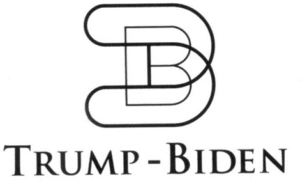
This “TRUMP-BIDEN” mark was filed for food, beverages, and restaurants in Classes 29, 30 and 43 — items with no link to the two presidents. The only reason for such filing, obviously, was to gain consumers’ attention and to ride a wave of popularity, although in a rather unusual way.

Attention-seeking entrepreneurs are often inspired by celebrities and recent events when seeking new brand names and slogans. They may attempt to register their ideas as trademarks while the influence of the person or event is still strong. Others take a different but similarly sensational approach, crafting marks loaded with double entendre with the hope of sneaking past the gatekeepers.

While the idea of registering celebrity-driven or sensational marks may be beneficial for business, is it possible under Vietnam’s IP laws?

Famous People’s Names

In addition to the TRUMP-BIDEN mark mentioned above, a quick search on the public database of the IP Office of Vietnam reveals several dozen “TRUMP” marks, with most of them filed after Donald Trump’s inauguration in 2017. The IP Office’s decisions have shown that marks explicitly referring to the former president (such as the full-name trademark DONALD TRUMP) will be refused protection, but more subtle indicators can survive to registration, such as DONTRUMP (Reg. 327991), BETATRUMP (Reg. No. 329952), TRUMP GOLD (Reg. No. 313441), TRUMP WATER  (Reg. No. 355166 – see image below), and even TRUMP by itself (Reg. No. 342771).

Under Article 73.3 of the IP Law, “signs identical or confusingly similar to real names, aliases, pseudonyms or images of leaders, national heroes or famous personalities of Vietnam or foreign countries” are ineligible for protection as marks, regardless of the goods/services applied for. This is why the “DONALD TRUMP” mark was refused, but it seems to apply only to obvious cases, such as where the full name of the famous person is exploited. If only a part of the name is used, it could still be accepted. From that view, it is likely that the TRUMP-BIDEN mark could be considered inherently distinctive, as it includes neither the full names nor the images of the presidents.

Another interesting TRUMP-derived mark is found in a pending application for TRUMPKIDS KINDERGARTEN:

While the Trump inspiration in the faceless image is undeniable, could this mark still be considered registrable? It consists of the name and image of a famous person, but both are stylized and combined with other elements. In our opinion, the mark is likely to get through. If so, this is an example of a clever way to utilize the fame of a person, while skirting the prohibitions of Article 73.3.

On the other hand, names or signs similar to those of well-known people with decidedly negative reputations – war criminals or terrorists, for example – may be refused for being contrary to social ethics and public order as stipulated in Article 8.1 of the IP Law, regardless of how “creative” the marks are. The mark BILLADEN for pesticides in Class 05 was refused for being confusingly similar to the name of Osama Bin Laden. Although the applicant argued that BILLADEN was fanciful and in no way related to the infamous terrorist, the IP Office held that the registration of the mark was against morality and public policy, and maintained its refusal.

Vulgar or Sensational Slogans

Some companies, especially in youth-oriented sectors like video games or beverages, adopt ridiculous, ear/eye-catching marks in the hope of gaining more attention for their products or services. One of Vietnam’s most popular craft breweries has applied for a series of winkingly raunchy bilingual marks for beer in Class 32, including BOM VU DU XAI [roughly “breast augmentation big enough to use”] FIFTY-TWO TRIPLE Z; COI DO RA [take off your clothes] LET’S GET NAKED; and AN BANH TRA TIEN [slang for “buy/use prostitute”] NO COOKIE NO NOOKIE. While such names are commonplace in the freewheeling craft beer industry, it remains to be seen if they are registrable in Vietnam.

Although the marks are pending without any issued opinion from the IP Office, a similar case was refused for protection. The stylized mark “NUDE” for trading services of food, clothing, household appliances, etc., in Class 35 was refused for again being contrary to social ethics and public order.

The standards for judging this are quite subjective and dependent on the particular examiner’s viewpoint. For example, we found the mark FASCIST was successfully registered for insecticides in Class 05, while DAP DA (literally “beat the rock” but slang for “use drugs”) was registered for restaurant services in Class 43. Based on this precedent, it is highly likely that the pending LET’S GET NAKED mark will be refused but the others will survive to registration, due to their indirect wording.

Our Perspective

We respect our clients’ choices, but we maintain certain standards. While some phrases, symbols, and other sensitive components may evoke powerful emotions that increase sales of the goods they designate, limits must also be set. Bearing in mind that Vietnam is an Asian country with high standards regarding social ethics, foreign companies should be mindful in choosing trademarks to be used in the country. The purpose is not only to have their marks registered, but also to have them accepted by mass Vietnamese consumers.

In addition, media-hype trademarks often have short shelf-lives, while the registration procedure in Vietnam is lengthy, normally 20-24 months. If and when the trademark registrations are granted, it may already be too late to draw the public’s attention. In the end, investing in thoughtful, sustainable trademarks will always be the right choice.

This article first appeared in Managing Intellectual Property.

RELATED INSIGHTS​ 

December 20, 2024
With intellectual property playing an ever-increasing role in economic development, the need to harness, promote, and protect ASEAN innovation remains urgent as integration progresses. Among its objectives, the ASEAN Economic Community aims to transform the region into a hub of innovation and competitiveness and ensure that the region remains an active participant in the international IP community. With ASEAN member states increasing IP generation and further committing to global IP regimes, the region is increasingly looking toward sophisticated IP ownership and holding structures. IP Holding Companies ASEAN-based companies continue to centralize ownership of their IP assets in offshore holding and licensing vehicles—an approach multinational companies headquartered elsewhere have been using for a number of years. IP-intensive companies look to locate their IP portfolios in low-tax jurisdictions with strong IP registration and protection laws. The company then licenses the IP to operating companies in the group or to third-party licensees, franchisees, agents, distributors, and other partners in return for royalties or license fees. These special-purpose vehicles are typically referred to as IP holding companies. IP holding companies are popular because they can help corporations minimize tax, gain tax benefits or concessions, protect IP from bankruptcy or other claims against the parent company, and focus management attention on the IP portfolio as an income generator. Tax and IP Holding Companies Tax is the primary reason most companies park their IP in separate IP holding vehicles. Sometimes, companies choose to establish their IP holding company in a no-tax, low-tax, or preferred-tax jurisdiction close to their home country. The selected jurisdiction should also be a country with a large and well-established tax treaty network. Double taxation treaties are key considerations in jurisdiction shopping. If the IP assets need to be pledged as security for future borrowings or if they are to be included
December 20, 2024
Closing out the year, Thailand’s Department of Intellectual Property (DIP) has gifted green innovators with a chance to take a faster route for examining their patent and petty patent applications under the “Target Patent Fast-Track” program. This route prioritizes environmentally sustainable inventions, and significantly accelerates the preliminary and substantive examinations of selected applications at no additional official fee. The program was publicly announced on December 2, 2024, in the DIP Notification on the Expansion of Technological Fields under the Target Patent Fast-Track Program, which took effect on December 15, 2024. The expedited process is open to both Thai and foreign applicants, provided the requirements in the notification are met. Under the fast-track program, a first office action for qualifying applications can be expected within 6 months during the preliminary examination stage. These applications will also be issued a first office action within just 12 months in the substantive examination period after publication. The DIP begins accepting formal requests for selection to participate in the program from January 1, 2025, onward. Each applicant can submit only one application per fast-track patent program per month, as selected applications cannot belong to the same applicant. No more than 10 applications per month will be chosen to participate in the fast-track route, with the results being announced on the 5th of every following month. To be eligible for selection, applications must comply with all the fast-track requirements specified in the recent DIP notification, particularly: The patent or petty patent application must have been filed with the DIP for at least three months, or a substantive examination request has already been filed in the case of patent applications. Each application must contain no more than 10 claims throughout its participation in the program. The application must be electronically filed in Thailand first or through
December 18, 2024
The EU-Thailand Free Trade Agreement is drawing a lot of interest as the fourth round recently concluded in Bangkok. Despite negotiations starting in 2013, there was a ten-year pause before we saw the first round of negotiations end in September 2023. The initial plan was for four rounds of negotiations, with the free trade agreement (FTA) finalized in 2025. However, following the fourth round it is clear that the negotiations are still ongoing. Now, the question is: how much closer are the EU and Thailand to concluding their FTA? The EU initially submitted 13 chapter proposals for the FTA, followed by a further 12, and these became the springboard for the negotiations. Given the complexity of agreeing on an accord of this size, there will probably be additional proposals submitted in 2025. These chapters have seen sector-specific negotiation groups formed, and although it has been difficult to truly gauge the status, steady progress has been made in each. Arguably one of the biggest points of discussion pertains to the customs process for imports and exports. Both sides aim to align their practices in relation to rules of origin and custom rates, with preferential tariff treatments offered to goods originating from Thailand and the EU, as well as talks of eliminating or reducing relevant taxes. The desire for a faster customs clearance can be seen in EU proposals for clearance of goods on arrival. Although there has been progress in agreeing to a more simplified customs process, more work needs to be done before we hear news of the agreed-upon fees and charges, or confirmation of what goods would be allowed temporary admission. When we consider customs clearance, it is important to also examine what this FTA could mean for rightsholders. One piece of good news is that it appears
December 9, 2024
Cambodia’s Law on Seed Management and Plant Breeder’s Rights was enacted in 2008, but it was not until recently that new plant varieties could successfully be registered for protection in the country. Although the law has been in place for some time, recent developments confirmed the application process and a schedule of charges for the registration of new plant varieties. With these developments, breeders have been able to register their new plant varieties in Cambodia since March 1, 2024. Applicants for new plant variety protection must be Cambodian nationals, foreign nationals domiciled in Cambodia, or permanent residents of either a country that is a contracting party to the International Union for the Protection of New Varieties of Plants (UPOV) Convention or a country with which Cambodia has signed a memorandum of understanding on plant variety protection. Applicants can also claim a priority date from the first application for the same plant variety filed in any contracting party of the UPOV Convention within 12 months of the earliest application’s filing date. To be eligible for protection, new plant varieties must satisfy the following criteria: Novelty: A variety is considered “new” if, at the date of filing the application for new plant variety protection, it has not been sold, marketed, or otherwise disposed of others—by or with the consent of the breeder—for more than: One year for any plant variety in Cambodia; Six years for trees and vines or four years for all other plant varieties in countries besides Cambodia. Distinctiveness: A variety must be clearly distinguishable from any other existing varieties. Uniformity: A variety must be sufficiently uniform in its relevant characteristics. Stability: A variety must remain unchanged in its essential characteristics at the end of each cycle of propagation and in each generation. The last three criteria are often