
You are using an outdated browser and your browsing experience will not be optimal. Please update to the latest version of Microsoft Edge, Google Chrome or Mozilla Firefox. Install Microsoft Edge

December 6, 2018

Successful Online-to-Offline Enforcement Action Leads to Huge Seizure of Counterfeits

Informed Counsel

The ease with which counterfeiters are able to hide their identity online, simply by hiding behind a username, can often complicate the protection of IP rights. However, if an infringer’s anonymity can be pierced, it can yield huge seizures of counterfeit products, make great strides in protecting valuable intellectual assets, and close major distribution channels.

In a recent example, Panasonic Corporation successfully uncovered the identity of a Chinese infringer operating in Thailand, raided the infringer’s physical location, and seized more than 30,000 counterfeit Panasonic products (primarily bat- teries). The raid has had a deep impact on the market, disrupting the distribution channels for these counterfeit goods, removing the fake goods from online marketplaces, and protecting the Thai public from dangerous counterfeit goods.

Identifying the Online Infringers

Many e-commerce websites are open to anyone wanting to sell their goods, creating a platform for fake goods to be easily offered for sale by infringers. Using anonymous usernames, infringers can create store pages containing enticing and convincing statements, luring end-users into believing that the cheaper goods are genuine.
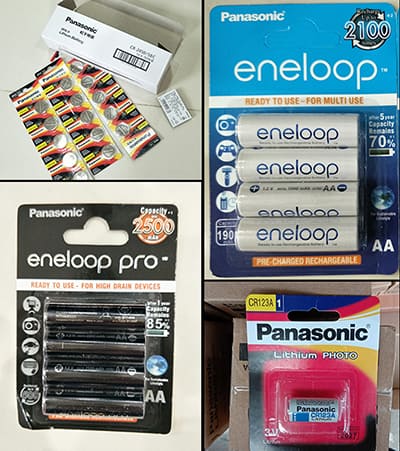
In this case, three such pages were found to be selling counterfeit Panasonic batteries on one of Thailand’s most popular online marketplaces. After contacting the online marketplace operators to request that the advertisements be taken down, two pages closed but one remained active.

An in-depth private investigation into the remaining online shop uncovered that all three pages were owned by the same entity—a Chinese national with two houses in Bangkok, from which he actively sold various types of fake Panasonic batteries in large quantities.

Warning Letter vs. Raid Action   

Sending a warning letter is usually the preferred enforce- ment action against small-scale online infringers. If the dispute can be settled after sending the warning letter, this option is more time- and cost-efficient than other legal actions.    

However, infringers with large inventories may be less receptive to this approach, either ignoring warning letters entirely, or only ceasing sales temporarily. Either way, infringers with large inventories are very likely to continue sales eventually, as they need to clear out their stock.   

In addition, attempts to negotiate with foreign nationals operating in Thailand often backfire, as they are not usually permanently established in Thailand. It is common for such infringers to simply move to another location upon receipt of a warning letter.   

In this instance the targeted infringer clearly had a large stock, was a foreign national, and was quite cautious in his activities, using the marketplace platform to hide his identity and not disclosing his name on his shop pages. A warning letter was therefore considered to pose a high risk, and a strong raid action against the target in order to seize the fake goods was considered a better solution. In addition, such action would penalize the infringers and spread the message that Panasonic takes serious legal action against infringers in order to protect its consumers.    

A criminal raid action was therefore initiated at the identified houses in order to seize the products.

Search and Seizure    

Based on investigation reports, strong evidence, and coordination with a police raid team, the court granted search warrants to gain entry to the suspect’s houses. No counterfeit Panasonic products were found at the first house, although other branded mobile phone chargers, earphones, mobile phone holders, and various unbranded products were on site. The police seized those goods for non-payment of import taxes.
The suspect and one of his staff (a Thai citizen) were found inside the second house, and they granted entry when presented with the search warrant. The search confirmed that the residential property was being used as a warehouse for commercial purposes. Batteries, chargers, watches, and other products were stored in every room, including the living room, kitchen, bedrooms, and even bathrooms. A large number of fake Panasonic products were found, along with other branded products.    

The police seized more than 30,000 counterfeit Panasonic products, including stickers labeled “Panasonic” that were obviously going to be attached to infringing products before sale. 

Arresting the Counterfeiters

The police filed charges of trademark infringement and importation tax evasion under the Customs Act against both people found in the house. In respect of the stickers labelled “Panasonic,” intended to convince the public that counterfeit goods were genuine Panasonic goods, the infringers were charged with using a mark without authorization in order to mislead the public, under the Thai Penal Code. In addition, the foreign national was charged with working without a work permit under Thailand’s immigration regime.   

This successful raid action prevented the distribution of fake goods to end-users, and will serve as a deterrent to other potential infringers in the market in accordance with Panasonic’s anticounterfeiting and customer protection policies.    

This raid is a prime example of the level of commitment necessary in order to protect Thai consumers from dangerous counterfeit products. Actions like these are rarely a one-off, and typically form part of a broader anticounterfeiting campaign. In that context, raids can also help to identify the sources of fake batteries being distributed in Thailand, and ultimately eliminate the counterfeit products once and for all.

RELATED INSIGHTS​ 

March 19, 2026
Thailand’s Electronic Transactions Development Agency (ETDA), which describes itself as a “co-creation regulator” working collaboratively with industry rather than imposing top-down rules, has unveiled its regulatory roadmap for digital platform businesses under the Royal Decree on Digital Platform Service Businesses B.E. 2565 (2022). The 2026 regulatory approach is guided by three core principles—“practicable, verifiable, shared responsibility”—aimed at elevating digital services to be safe, transparent, and fair. These principles inform ETDA’s 2026 priorities, which focus on three key dimensions: product and service standards on platforms, fair competition and fee transparency, and online fraud prevention. Product and Service Standards ETDA’s 2026 agenda addresses product and service standards across several platform categories: Online marketplace platforms. The Notification on Additional Measures for Online Marketplace Platforms under Section 18(2) came into force on December 31, 2025, designating 21 marketplace platforms that must verify products and merchants. Among other obligations, covered platforms must remove or suspend substandard products under the “notice and take down” principle. The ETDA has collaborated with the Food and Drug Administration and the Thai Industrial Standards Institute to develop inspection manuals and coordinate compliance procedures. Social commerce. The ETDA is preparing a new notification under Section 18(2) specifically targeting social commerce platforms with sales support functions, aiming to align regulation with evolving digital market conditions. Ride sharing. Since the postponement of the deadline to comply with the ETDA’s notification on ride-sharing platforms to March 31, 2026, the ETDA has supported drivers in registering with the Department of Land Transport through the Driver Verify registration system, which has already issued certifications to approximately 27,900 riders. The ETDA is also examining structural issues relating to appropriate insurance packages, motorcycle engine capacity expansion, and fair leasing fees and contract transfer costs in coordination with the Department of Land Transport, the Office of Insurance Commission,
March 12, 2026
Thailand’s AI legislative framework took another step forward when the Office of the Consumer Protection Board (OCPB) issued a notification establishing guidelines for AI-generated advertising that may cause material misunderstanding about products or services. The notification, which is already in effect, was issued under the Consumer Protection Act B.E. 2522 (1979) and its amendments, which prohibit advertising that is unfair to consumers or may cause harm to society, including false or exaggerated statements and statements that may cause material misunderstanding about products or services. The notification addresses emerging advertising practices, including the use of images edited using software or AI to attract consumer interest or build credibility. The OCPB noted that such advertising may result in consumers misunderstanding the essential characteristics, condition, or usage of products, which violates consumer rights and causes damage. Key Requirements on AI-Generated or Digitally Manipulated Advertising Content For advertisements using still images or videos created or edited with software programs or AI tools that may cause the depicted product or service to differ from the actual product sold or service provided—which may cause misunderstanding regarding the condition, quality, quantity, or other essential aspects of the products or services—advertisers and business operators must comply with the following requirements: Prior authorization. Obtain approval from relevant regulatory authorities where required by law. Accurate representation. Ensure that the advertised size, quantity, volume, number, or composition matches the actual product or service being sold, whether in still images or videos. Mandatory AI disclosure labels. Display clear disclosures when AI or software is used to create or edit images, such as: “Real image or simulation edited using AI” “Photo from actual location or simulation edited using AI” “Photo from actual product or edited simulation” “Image created by AI” “Video created by AI” Clarity of disclosure. Ensure disclosures are clearly visible,
March 9, 2026
Over the past several years, numerous automobile manufacturers have brought electric vehicles (EVs) to the market and received positive feedback from consumers in Thailand and around the world. EVs have gained popularity due to their lower maintenance costs, reduced energy expenses, and environmental benefits. However, reports have emerged of EVs causing problems such as battery fires, autopilot malfunctions leading to accidents, and safety systems such as brakes engaging automatically under inappropriate conditions. Even when these situations do not cause injury to drivers or passengers, they raise significant concerns for EV manufacturers, importers, and sellers operating in Thailand. These problems may seriously impact businesses if the products are identified as unsafe under Thailand’s Product Liability Act (PLA), officially known as the Liability for Damages Arising from Unsafe Products Act. Under this law, authorities or courts can order business operators to recall products from the market or prohibit their export, import, or sale. To manage and mitigate the risk of being found liable for damages due to an unsafe product under the PLA, EV business operators should be aware of the scope of the law. Potentially Liable Parties The PLA identifies several types of entrepreneurs and business operators—both individuals and entities—as “potentially liable parties” (PLPs) who may be held liable under the law. In the EV context, this could include vehicle manufacturers, battery suppliers, software developers whose systems are integrated into the vehicle, and local importers or distributors. Specifically, the PLA covers: Manufacturers or hirers Importers Sellers of goods for which the manufacturer, hirer, or importer cannot be identified Any other party who uses the name, trade name, trademark, or statements associated with the alleged unsafe products, or acts in a manner that causes them to be perceived as a manufacturer, hirer, or importer Definition of “Product” and “Unsafe Product” The
January 6, 2026
On December 30, 2025, Thailand’s Electronic Transactions Development Agency (ETDA) notified digital marketplace operators of a consolidated list of “high‑risk products” that are subject to strict monitoring on digital platforms. The list was jointly prepared by the Thai Industrial Standards Institute (TISI) and the Food and Drug Administration (FDA) to guide platform compliance in the initial phase of implementation of the Electronic Transaction Committee’s Notification on Other Measures for Marketplace for Goods with Specific Characteristics under Section 18(2) of the 2022 Royal Decree on Digital Platform Businesses Requiring Notification B.E.2568 (2025). The notice is addressed to operators of digital platform services that function as product marketplaces with specific characteristics laid out in the notification. The ETDA states that the TISI and the FDA are closely monitoring the high‑risk product categories on digital platforms, and the published list serves as the baseline reference for platform screening during the initial phase of the notification’s implementation. High‑Risk Product List The list aggregates categories of products that are illegal to sell online or are otherwise tightly regulated under Thai law, with an emphasis on health-related products, controlled substances, medical devices, and a wide range of industrial products that require certification or compliance with specified Thai Industrial Standards, as detailed below. Prohibited and tightly controlled health products. This includes all categories of modern medicines subject to control other than general household remedies; all categories of controlled herbal products except for over-the-counter herbal products; narcotics; psychotropic substances; and medical devices requiring use in medical facilities or a physician’s prescription. Selected industrial products requiring heightened controls. The list highlights dozens of TISI-regulated items commonly sold online. Examples include pacifiers, rice cookers, electrical wire, food wrap film, crayons, washing machines and dryers, air conditioners, electric cookers and air fryers, water heaters, microwave ovens, LED luminaires, hair dryers