
You are using an outdated browser and your browsing experience will not be optimal. Please update to the latest version of Microsoft Edge, Google Chrome or Mozilla Firefox. Install Microsoft Edge

December 6, 2018

Successful Online-to-Offline Enforcement Action Leads to Huge Seizure of Counterfeits

Informed Counsel

The ease with which counterfeiters are able to hide their identity online, simply by hiding behind a username, can often complicate the protection of IP rights. However, if an infringer’s anonymity can be pierced, it can yield huge seizures of counterfeit products, make great strides in protecting valuable intellectual assets, and close major distribution channels.

In a recent example, Panasonic Corporation successfully uncovered the identity of a Chinese infringer operating in Thailand, raided the infringer’s physical location, and seized more than 30,000 counterfeit Panasonic products (primarily bat- teries). The raid has had a deep impact on the market, disrupting the distribution channels for these counterfeit goods, removing the fake goods from online marketplaces, and protecting the Thai public from dangerous counterfeit goods.

Identifying the Online Infringers

Many e-commerce websites are open to anyone wanting to sell their goods, creating a platform for fake goods to be easily offered for sale by infringers. Using anonymous usernames, infringers can create store pages containing enticing and convincing statements, luring end-users into believing that the cheaper goods are genuine.
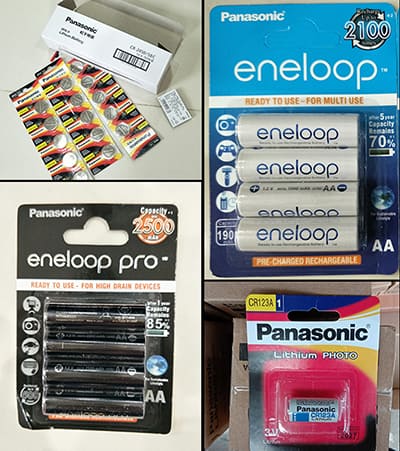
In this case, three such pages were found to be selling counterfeit Panasonic batteries on one of Thailand’s most popular online marketplaces. After contacting the online marketplace operators to request that the advertisements be taken down, two pages closed but one remained active.

An in-depth private investigation into the remaining online shop uncovered that all three pages were owned by the same entity—a Chinese national with two houses in Bangkok, from which he actively sold various types of fake Panasonic batteries in large quantities.

Warning Letter vs. Raid Action   

Sending a warning letter is usually the preferred enforce- ment action against small-scale online infringers. If the dispute can be settled after sending the warning letter, this option is more time- and cost-efficient than other legal actions.    

However, infringers with large inventories may be less receptive to this approach, either ignoring warning letters entirely, or only ceasing sales temporarily. Either way, infringers with large inventories are very likely to continue sales eventually, as they need to clear out their stock.   

In addition, attempts to negotiate with foreign nationals operating in Thailand often backfire, as they are not usually permanently established in Thailand. It is common for such infringers to simply move to another location upon receipt of a warning letter.   

In this instance the targeted infringer clearly had a large stock, was a foreign national, and was quite cautious in his activities, using the marketplace platform to hide his identity and not disclosing his name on his shop pages. A warning letter was therefore considered to pose a high risk, and a strong raid action against the target in order to seize the fake goods was considered a better solution. In addition, such action would penalize the infringers and spread the message that Panasonic takes serious legal action against infringers in order to protect its consumers.    

A criminal raid action was therefore initiated at the identified houses in order to seize the products.

Search and Seizure    

Based on investigation reports, strong evidence, and coordination with a police raid team, the court granted search warrants to gain entry to the suspect’s houses. No counterfeit Panasonic products were found at the first house, although other branded mobile phone chargers, earphones, mobile phone holders, and various unbranded products were on site. The police seized those goods for non-payment of import taxes.
The suspect and one of his staff (a Thai citizen) were found inside the second house, and they granted entry when presented with the search warrant. The search confirmed that the residential property was being used as a warehouse for commercial purposes. Batteries, chargers, watches, and other products were stored in every room, including the living room, kitchen, bedrooms, and even bathrooms. A large number of fake Panasonic products were found, along with other branded products.    

The police seized more than 30,000 counterfeit Panasonic products, including stickers labeled “Panasonic” that were obviously going to be attached to infringing products before sale. 

Arresting the Counterfeiters

The police filed charges of trademark infringement and importation tax evasion under the Customs Act against both people found in the house. In respect of the stickers labelled “Panasonic,” intended to convince the public that counterfeit goods were genuine Panasonic goods, the infringers were charged with using a mark without authorization in order to mislead the public, under the Thai Penal Code. In addition, the foreign national was charged with working without a work permit under Thailand’s immigration regime.   

This successful raid action prevented the distribution of fake goods to end-users, and will serve as a deterrent to other potential infringers in the market in accordance with Panasonic’s anticounterfeiting and customer protection policies.    

This raid is a prime example of the level of commitment necessary in order to protect Thai consumers from dangerous counterfeit products. Actions like these are rarely a one-off, and typically form part of a broader anticounterfeiting campaign. In that context, raids can also help to identify the sources of fake batteries being distributed in Thailand, and ultimately eliminate the counterfeit products once and for all.

RELATED INSIGHTS​ 

April 10, 2026
As digital commerce continues to reshape consumer behavior in Thailand, the Office of the Consumer Protection Board (OCPB) has been taking steps to review and update key regulations for online platforms. The OCPB has had a particular focus on addressing the risks posed by e-marketplace businesses—from misleading product information to fraudulent online transactions. Some of the regulator’s current legislative efforts related to Thailand’s labeling regulations as well as potential changes to the country’s law on direct sales and marketing. Proposed Changes to Consumer Protection Labeling Regulations On February 24, 2026, the OCPB convened a public hearing to review the Notification of the Committee on Labels re: Specification of Goods as Controlled Label Goods B.E. 2565 (2022) and its annex issued under the Consumer Protection Act. The closed-door session, which started the OPCD’s process of seeking feedback on the proposed changes, brought together representatives from government agencies, business operators, and consumer groups. The OCPB explained that its review of the labeling regulations aims to address regulatory gaps arising from evolving commercial practices, particularly the expansion of e-commerce and cross-border transactions. Authorities highlighted recurring issues involving product information that is unclear, incomplete, or potentially misleading in digital sales channels. The proposed revisions are intended to improve consumers’ access to accurate and complete product information, ensure that label disclosures remain relevant amid the growth of e-commerce, and strengthen protections against deceptive or misleading digital advertising. The review is being undertaken pursuant to the Consumer Protection Act B.E. 2522 (1979). As part of the initiative, the OCPB signaled a potential update to the categories of “controlled label products” as well as enhanced disclosure obligations for business operators, with the broader aim of promoting greater transparency, reinforcing operator accountability, and aligning Thailand’s labeling framework with current market conditions. The OCPB secretary general emphasized that
April 1, 2026
On March 30, 2026, Thailand’s Customs Department announced a strategy to raise import duties on a broad range of consumer goods—including plastic items and electronics accessories—to their maximum statutory ceilings, which often sit at 30% or 40%. Many of these goods currently benefit from promotional or incentive rates as low as 5%. For importers, e-commerce platforms, and logistics providers, this development demands immediate attention. While these increases generally require cabinet approval, they do not require full parliamentary amendment of the Customs Tariff Decree B.E. 2530, as the Customs director-general and the finance minister hold delegated authority to adjust rates within existing statutory bounds. Businesses should not assume that the legislative process will provide significant lead time before higher rates take effect. Death of the De Minimis: Abolishing the THB 1,500 Loophole This “ceiling-rate” policy, which is designed to equalize the landed cost of foreign goods with the domestic production costs of Thai manufacturers, builds on a sweeping set of customs reforms that have already begun to reshape Thailand’s trade environment. The foundation of this new regime was laid on January 1, 2026, when Thailand formally abolished the longstanding THB 1,500 duty exemption for small imported parcels under Customs Notification No. 219/2568. Every imported item is now subject to VAT and applicable import duties for its declared value, regardless of parcel size or transaction amount. By narrowing the scope of exemptions previously granted to low-value goods under the Customs Tariff Decree B.E. 2530, the government has made clear that the era of tax-free cross-border micro-imports is over. Three-Phased Strategy and Legal Modernization The March 30 announcement is the second phase of a three-part regulatory roadmap: Immediate enforcement: The removal of the THB 1,500 loophole and the imposition of VAT on all parcels, effective January 1, 2026. Tariff realignment: The current
March 31, 2026
Thailand’s Office of the Consumer Protection Board has opened a public hearing period on draft regulations governing the transfer of direct sales and direct marketing businesses. The draft Notification of the Direct Sales and Direct Marketing Committee: Criteria and Procedures for Business Transfer and Amendment of Registration for Direct Sales or Direct Marketing Businesses establishes a compliance-focused process with strict documentation requirements and timelines for transferring direct sales and direct marketing businesses. The proposed framework also defines the roles of transferors and transferees and establishes application procedures with the Office of the Consumer Protection Board. Applications may be submitted in person or electronically and will be examined to confirm they are complete, authentic, and compliant with legal requirements. This includes verification that: The transferee meets all required qualifications; No disqualifying factors apply; and The applicant is not subject to legal restrictions. The public hearing period is open until April 29, 2026. Direct sales and direct marketing business operators should prepare for these proposed requirements to ensure compliant implementation once the regulations are finalized.
March 20, 2026
Myanmar has introduced a comprehensive new regulatory framework for alcoholic beverages that will impose stricter controls on production, distribution, advertising, and sales. On March 7, 2026, the National Defence and Security Council issued a new Excise Law (NDSC Law No. 13/2026), repealing the Excise Act of 1917. The law, which has not yet entered into force, will take effect on a date to be specified in a separate notification—likely within this year. The new Excise Law establishes clearer definitions, introduces multiple categories of excise licenses and permits, and significantly expands prohibitions and compliance obligations for businesses operating in the alcohol sector. Many operational details will be clarified through implementing rules and notifications. Scope and Definitions The new law defines “excise” to cover alcoholic liquor and excisable articles. Alcoholic liquor is broadly defined as any liquid containing more than 0.5% ethyl alcohol, including beer, wine, toddy sap, fermented liquor, and any other liquid declared as alcohol by notification of the relevant ministry, excluding denatured alcohol. Alcoholic liquor is further categorized into country liquor, foreign liquor, and international‑standard domestically produced liquor. Excise Licensing The law also introduces a more detailed licensing regime. The following types of liquor excise licenses are available: Production Production of value-added products Bottling Distribution Sales Other excise‑related businesses designated by General Administrative Department (GAD) notification The GAD will prescribe the licensing fees, requirements, and conditions for each category through notifications issued with the approval of the Ministry of Home Affairs. The GAD may also, with the approval of the Ministry of Home Affairs, prescribe quantities and volumes of alcoholic beverages that may be possessed without a liquor license. No such prescribed quantities have yet been issued. Holders of excise licenses for manufacturing, production of value-added products, or bottling must obtain approval from the relevant government department or