
You are using an outdated browser and your browsing experience will not be optimal. Please update to the latest version of Microsoft Edge, Google Chrome or Mozilla Firefox. Install Microsoft Edge

August 29, 2018

Panasonic Wins Passing Off Case for Packaging and Product Designs

Informed Counsel

Although the Thai Trademark Act provides protection for passing off, filing a lawsuit to defend an IP owner’s unregistered rights can still pose certain challenges. This is especially true where two registered trademarks are different, but the product packaging designs of both marks are confusingly similar. In these circumstances, the court occasionally decides upon a mere comparison of the two marks and may determine that the similarities of their packaging designs are not likely to cause confusion among public consumers due to their dissimilarity.

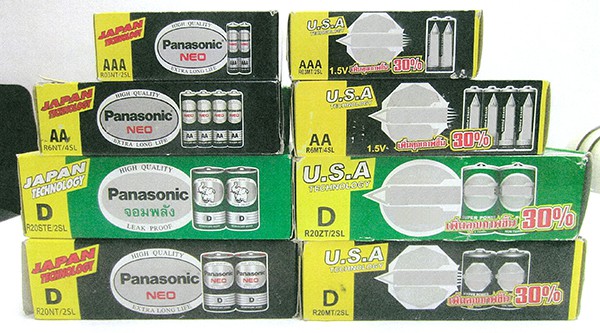
Recently, the Supreme Court rendered a remarkable and highly significant judgment on the grounds of passing off, which should serve as a landmark trademark infringement case in Thailand. Panasonic, the plaintiff, owns various trademark registrations worldwide. Among those registered marks, the most eye-catching mark is the PANASONIC mark itself. Panasonic registered this mark for use with manganese and alkaline batteries in Class 9 in Thailand in 1985. Panasonic exerted huge efforts and much research in designing the unique colors used with its batteries and the labeling on the packaging to let consumers recognize its products immediately as belonging to Panasonic.

Approximately five years ago, a Thai manufacturing company (defendants) was discovered to be manufacturing different types of batteries that were found to be similar to those manufactured by Panasonic under its own trademark. The defendants’ batteries were closely similar to Panasonic’s battery colors and the text was positioned almost identically to Panasonic’s packaging.

After trying unsuccessfully to reach an amicable settlement, Panasonic decided to bring a civil lawsuit against the defendants on the grounds of trademark infringement and passing off.
IP&IT Court Decision   

At the Intellectual Property and International Trade (IP&IT) Court, Panasonic argued that the appearance of its packaging was immediately recognizable among Thai public consumers and distinguishable from the packaging of other battery manufacturers. To support its claim, Panasonic conducted a public survey opinion poll comparing the overall appearances of its packaging and that of other battery manufacturers’ packaging. The survey results revealed that the average consumer readily recognizes Panasonic’s packaging without seeing the PANASONIC mark, and that there is a likelihood of confusion when consumers see the defendant’s packaging. Unfortunately, these survey results were not convincing evidence to the court. Without considering the defendant’s bad faith in imitating the color, size, and word arrangement of its battery packaging, the court instead took into consideration the trademark itself, and therefore considered that the defendant’s batteries were distinguishable when considering pronunciation and overall appearance.    

Panasonic disagreed with the court’s opinion and decided to appeal the case to the Supreme Court, arguing that the IP&IT Court failed to elaborate on the legal point of the defendants’ bad faith, as it was using similar packaging, labeling, and colors to its own product designs and benefiting from Panasonic’s widespread reputation.

The Supreme Court Decision   

The Supreme Court confirmed the IP&IT Court decision with regard to the dissimilarity of the registered marks, when considering pronunciation and the shape of the Roman characters of the marks. However, the Supreme Court disagreed with most other aspects of the IP&IT Court’s reasoning, especially in its failure to determine whether the defendants, by using a similar packaging, label, and product design to that of Panasonic’s, acted in bad faith and thereby infringed Panasonic’s unregistered trademark rights.    

The Supreme Court emphasized the importance of the bad faith intention of the defendants by determining the manner in which the trademark is used on goods and packages. The court found that even though the registered mark in dispute was not confusingly similar to the PANASONIC trademark in either appearance or pronunciation, the court must compare the characteristics of the batteries and the packaging of the defendants with those aspects of Panasonic’s batteries to determine whether the two companies’ products are similar.    

With regard to the color scheme, the Supreme Court took an approach contrary to the IP&IT Court’s reasoning. Even though color is a common feature that anyone can freely use, a certain color combination (e.g., green and silver; black and silver; or red, white, black and yellow), together with the placement of the colors, text, and images, creates a visual design and pattern indicating that Panasonic’s goods are different from others’ goods.   

The Supreme Court further elaborated that the appearance of the defendants’ batteries and packaging, which appear to be closely similar to Panasonic’s, clearly reflect the bad-faith intention of the defendants to use their registered mark with batteries in order to deceive the relevant consumers into believing that the batteries belong to Panasonic. The court held that such tortious conduct can only have the result of causing injury to Panasonic and is thus unlawful.    

The Supreme Court ruled that the defendants must cease using their product designs and packaging designs of similar coloring and patterns to those of Panasonic, and must not pass off their products as those of Panasonic. Moreover, the court awarded Panasonic compensatory damages, together with its attorneys’ fees and court fees.

Conclusion   

The trademark owner’s victory in this case offers a valuable lesson in determining that trademark infringement should not only consider the mark itself but also the manner in which an alleged infringer uses its mark to imitate a brand owner’s unique product designs and packaging, which can now be considered to be unregistered trademarks. This Supreme Court judgment establishes an exemplary guideline for brand owners facing similar issues, whereby brand owners can protect themselves from others imitating their unique product designs and packaging.

RELATED INSIGHTS​ 

September 8, 2025
The Indonesian government has implemented mandatory halal certification to protect its predominantly Muslim population. To ensure halal standards, the government has issued several key regulations, including Law No. 33 of 2014 concerning Halal Product Assurance, Government Regulation No. 42 of 2024 concerning Implementation of Halal Product Assurance, and specifically for imported products, Decision of the Head of Halal Product Assurance Agency (BPJPH) No. 90 of 2023 concerning Procedures of Implementing Foreign Halal Certificate Registration. Compliance Deadlines The government has established statutory deadlines for products and services to obtain halal certification under Government Regulation No. 39 of 2021 concerning Implementation of Halal Product Assurance. The deadline for imported food, beverages, and slaughtering products and services to comply with halal certification was extended to October 17, 2026 (from October 17, 2024, originally) with the issuance of Government Regulation No. 42 of 2024. Other product categories have varying deadlines: October 17, 2026: Natural drugs, quasi-drugs, health supplements, cosmetics, chemical products, genetically engineered products, clothing and accessories, household supplies, prayer equipment, stationery, and class A medical devices October 17, 2029: Over-the-counter drugs and class B medical devices October 17, 2034: Prescription drugs (excluding psychotropics) and class C medical devices SHLN Registration for Imports To simplify the halal certification process for imported products, BPJPH offers a foreign halal certificate registration (Registrasi Sertifikat Halal Luar Negeri, or SHLN registration) pathway. This allows eligible imported products to obtain halal certification without filing the standard national halal certification procedure. Under the Halal Law, imported products are not required to apply for national halal certification if their halal certificate is issued by a foreign halal institution that has entered into a mutual recognition agreement (MRA) with BPJPH. Currently, 89 foreign halal institutions from countries (including the United States, South Korea, Thailand, and the United Kingdom) have entered into
September 2, 2025
Thailand’s Office of the Consumer Protection Board (OCPB) has initiated a sweeping regulatory review of licensed direct sale and direct marketing businesses in Thailand and is in the process of notifying business operators to submit their annual business report and financial statement to the OCPB as part of their postlicensing obligations. This move marks a significant escalation in the government’s efforts to enforce compliance and transparency in the sector, which has faced growing scrutiny in recent years. Key Regulatory Considerations All businesses holding a direct sales or direct marketing license are required to submit their audited financial statement along with their business operation report to the OCPB within 60 days from the end of their fiscal year (extendable for up to 30 days by request, if necessary). The OCPB is currently conducting license audits as part of its enforcement duties. The office aims to complete audits for at least 90% of the 2,983 registered businesses that have obtained their license since 2022. This includes a review of the business conduct of the license holder. New license applications are also under scrutiny. Applicants are currently being subjected to background checks, and the OCPB has signaled a more rigorous vetting process moving forward. Impact of Noncompliance Failure to comply with these reporting obligations may result in escalating enforcement actions, including: Official notice to rectify noncompliance within a specified timeframe. Revocation of business registration, if the operator fails to respond. Revocation of business registration could result in a five-year prohibition on reapplying for a direct sales or direct marketing license following the revocation. The OCPB has already initiated outreach efforts, including SMS and email notifications, and has hosted seminars to raise awareness of these obligations. These measures are part of a broader initiative to enhance transparency and consumer trust in the sector. Businesses operating in the direct selling and
August 25, 2025
Indonesia’s current regulations on franchises, as stipulated under Government Regulation No. 35/2024 on Franchising and its implementing regulation, Ministry of Trade (MOT) Regulation No. 71/2019 regarding Implementation of Franchising, highlight fundamental changes in franchise registration. These changes have introduced additional complexities and challenges in the franchise registration procedure, making it more difficult for franchise owners to navigate the process. New procedure Franchise applications are still submitted through the Online Single Submission (OSS) portal of the Capital Investment Coordinating Board (BKPM). However, the new procedure requires each applicant, including foreign franchisors, to have an OSS account and a business registration number (NIB) issued by BKPM. An application for franchise registration must be submitted under the applicant’s own account—submissions can no longer be made through the account of a consultant. Once a franchise application is submitted, the authority will distribute the submission to the MOT—the authorized ministry for franchise registration. Any notification or decision upon the registration made by the MOT will be available in the OSS system. Applicants should regularly monitor the status of the franchise application because no notifications will be sent to applicants to alert them of any deficiency. Here is the summary of the new procedure for franchisors: Notable Requirements The disclosure document, or prospectus, is the key focus for the MOT in examining a franchise registration for a franchisor. This document is subject to thorough scrutiny by the MOT to ensure that all mandatory information meets the requirements set in the franchise regulations. The current regulations specifically require that the mandatory clause “business system” in the prospectus cover operational standards and procedures, which should include human resource management, administration, operational management, standard operating methods, business location selection, business premises design, employee requirements, and marketing strategies. Other clauses that are equally important to pay attention to are:
August 15, 2025
More than a decade after the issuance of Decree No. 52/2013/ND-CP (as amended by Decree No. 85/2021/ND-CP; collectively, “Decree 52”), Vietnam’s legal framework for e-commerce is under growing pressure to keep pace with the evolving digital economy. While Decree 52 has provided a foundational framework, it has shown certain limitations in keeping up with issues such as counterfeit goods, intellectual property enforcement, unqualified products, and emerging models like livestream selling and affiliate marketing. To address these regulatory gaps, the Ministry of Industry and Trade (MOIT) has released the 2025 Draft E-Commerce Law (“Draft Law”) for public consultation. The Draft Law is intended to supersede the current framework under Decree 52 and establish a more detailed and comprehensive legal foundation for the regulations of e-commerce activities in Vietnam. It is currently expected to be submitted to the National Assembly for review and potential adoption during its 10th session in October 2025. In this article, we discuss the Draft Law’s most significant updates and legal developments in comparison to existing regulations, and assess the practical challenges that businesses may face in preparing for implementation in the near future. Platform Classification: Toward a More Nuanced Framework Unlike Decree 52’s simpler structure, which broadly categorized platforms into either (i) websites selling goods and services or (ii) websites providing e-commerce services, the Draft Law introduces a more detailed framework that aims to classify platforms based on their technical functions and business models. Specifically, the Draft Law introduces a four-tier classification system for e-commerce platforms, consisting of: (i) Direct Business Platforms, (ii) Intermediary Platforms, (iii) Social Networks with E-Commerce Functions, and (iv) Multi-Service Integrated Platforms. This approach reflects an effort to more accurately capture the complexity of today’s e-commerce landscape, including hybrid platforms such as TikTok Shop. While this approach reflects the growing complexity of