
You are using an outdated browser and your browsing experience will not be optimal. Please update to the latest version of Microsoft Edge, Google Chrome or Mozilla Firefox. Install Microsoft Edge

August 29, 2018

Panasonic Wins Passing Off Case for Packaging and Product Designs

Informed Counsel

Although the Thai Trademark Act provides protection for passing off, filing a lawsuit to defend an IP owner’s unregistered rights can still pose certain challenges. This is especially true where two registered trademarks are different, but the product packaging designs of both marks are confusingly similar. In these circumstances, the court occasionally decides upon a mere comparison of the two marks and may determine that the similarities of their packaging designs are not likely to cause confusion among public consumers due to their dissimilarity.

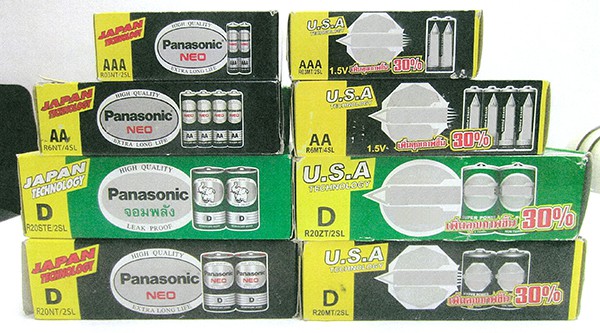
Recently, the Supreme Court rendered a remarkable and highly significant judgment on the grounds of passing off, which should serve as a landmark trademark infringement case in Thailand. Panasonic, the plaintiff, owns various trademark registrations worldwide. Among those registered marks, the most eye-catching mark is the PANASONIC mark itself. Panasonic registered this mark for use with manganese and alkaline batteries in Class 9 in Thailand in 1985. Panasonic exerted huge efforts and much research in designing the unique colors used with its batteries and the labeling on the packaging to let consumers recognize its products immediately as belonging to Panasonic.

Approximately five years ago, a Thai manufacturing company (defendants) was discovered to be manufacturing different types of batteries that were found to be similar to those manufactured by Panasonic under its own trademark. The defendants’ batteries were closely similar to Panasonic’s battery colors and the text was positioned almost identically to Panasonic’s packaging.

After trying unsuccessfully to reach an amicable settlement, Panasonic decided to bring a civil lawsuit against the defendants on the grounds of trademark infringement and passing off.
IP&IT Court Decision   

At the Intellectual Property and International Trade (IP&IT) Court, Panasonic argued that the appearance of its packaging was immediately recognizable among Thai public consumers and distinguishable from the packaging of other battery manufacturers. To support its claim, Panasonic conducted a public survey opinion poll comparing the overall appearances of its packaging and that of other battery manufacturers’ packaging. The survey results revealed that the average consumer readily recognizes Panasonic’s packaging without seeing the PANASONIC mark, and that there is a likelihood of confusion when consumers see the defendant’s packaging. Unfortunately, these survey results were not convincing evidence to the court. Without considering the defendant’s bad faith in imitating the color, size, and word arrangement of its battery packaging, the court instead took into consideration the trademark itself, and therefore considered that the defendant’s batteries were distinguishable when considering pronunciation and overall appearance.    

Panasonic disagreed with the court’s opinion and decided to appeal the case to the Supreme Court, arguing that the IP&IT Court failed to elaborate on the legal point of the defendants’ bad faith, as it was using similar packaging, labeling, and colors to its own product designs and benefiting from Panasonic’s widespread reputation.

The Supreme Court Decision   

The Supreme Court confirmed the IP&IT Court decision with regard to the dissimilarity of the registered marks, when considering pronunciation and the shape of the Roman characters of the marks. However, the Supreme Court disagreed with most other aspects of the IP&IT Court’s reasoning, especially in its failure to determine whether the defendants, by using a similar packaging, label, and product design to that of Panasonic’s, acted in bad faith and thereby infringed Panasonic’s unregistered trademark rights.    

The Supreme Court emphasized the importance of the bad faith intention of the defendants by determining the manner in which the trademark is used on goods and packages. The court found that even though the registered mark in dispute was not confusingly similar to the PANASONIC trademark in either appearance or pronunciation, the court must compare the characteristics of the batteries and the packaging of the defendants with those aspects of Panasonic’s batteries to determine whether the two companies’ products are similar.    

With regard to the color scheme, the Supreme Court took an approach contrary to the IP&IT Court’s reasoning. Even though color is a common feature that anyone can freely use, a certain color combination (e.g., green and silver; black and silver; or red, white, black and yellow), together with the placement of the colors, text, and images, creates a visual design and pattern indicating that Panasonic’s goods are different from others’ goods.   

The Supreme Court further elaborated that the appearance of the defendants’ batteries and packaging, which appear to be closely similar to Panasonic’s, clearly reflect the bad-faith intention of the defendants to use their registered mark with batteries in order to deceive the relevant consumers into believing that the batteries belong to Panasonic. The court held that such tortious conduct can only have the result of causing injury to Panasonic and is thus unlawful.    

The Supreme Court ruled that the defendants must cease using their product designs and packaging designs of similar coloring and patterns to those of Panasonic, and must not pass off their products as those of Panasonic. Moreover, the court awarded Panasonic compensatory damages, together with its attorneys’ fees and court fees.

Conclusion   

The trademark owner’s victory in this case offers a valuable lesson in determining that trademark infringement should not only consider the mark itself but also the manner in which an alleged infringer uses its mark to imitate a brand owner’s unique product designs and packaging, which can now be considered to be unregistered trademarks. This Supreme Court judgment establishes an exemplary guideline for brand owners facing similar issues, whereby brand owners can protect themselves from others imitating their unique product designs and packaging.

RELATED INSIGHTS​ 

September 26, 2024
Indonesia enacted a new franchise regulation, Government Regulation No. 35 of 2024 on Franchising (“GR 35/2024”), on September 2, 2024. Franchising in Indonesia was previously governed by Government Regulation No. 42 of 2007 on Franchising (“GR 42/2007”), along with an implementing regulation, Ministry of Trade Regulation No. 71 of 2019 regarding Implementation of Franchising (“MOT Regulation 71/2019”). This new regulation repeals GR 42/2007. However, MOT Regulation No. 71/2019 remains in effect until a new MOT regulation can be enacted. The new franchise regulation contains several amendments and provides more detailed requirements to complement MOT Regulation No. 71/2019. Comparison of GR 35/2024 to GR 42/2007 Minimum years of business operation. The new regulation reduces the minimum duration that a franchise registration applicant must have been operating from five years to three years. Intellectual property (IP) status. Any relevant IP must now be registered before a franchise registration application can be submitted. This is a change from the previous regulations, under which it was possible to obtain a franchise registration (STPW) while an IP application was still pending, and if the IP application could not be registered, the STPW would be canceled. Registration requirements for foreign franchisors. Under the new regulation, foreign franchisors must provide a legalized or apostilled business permit document from the country of origin in addition to the previously required franchise offering prospectus and statement letter from the relevant Indonesian authority. Administrative sanctions. The new regulation has adjusted the three escalating stages of administrative sanctions to (1) two warning letters, (2) a 14-day suspension from business activities, and (3) STPW revocation. This varies from the three stages under the previous regulation (three warning letters, fine, and STPW revocation). The new regulation also expands the list of noncompliant actions that are subject to these administrative sanctions. In addition to
September 9, 2024
The popularity of the franchise business model has been growing rapidly in Southeast Asia in recent years, with some of the world’s top brands becoming common sights in the commercial districts and shopping malls of major regional cities in Cambodia, Indonesia, Laos, Myanmar, Thailand, and Vietnam. While for most countries in this part of the world, franchising has not been explicitly mentioned in legislation, well prepared franchise business operations can comfortably adapt to each country’s regulatory framework, and the growth is poised to continue even as the global retail sector redesigns and redoubles its efforts in the wake of the COVID-19 outbreak. In fact, the franchise business model, which is both global and hyper-local at once, is one of the most promising solutions that entrepreneurs are turning to in their quest to overcome the challenges of the new economic reality. The Regional Guide to Franchising Law in Southeast Asia provides key, up-to-date insights into the legal frameworks regulating franchise operations in these Southeast Asian countries, and helps brand owners understand the most relevant laws, authorities, and procedures for their business. Some of the essential topics covered for each jurisdiction include considerations in negotiating and designing franchise agreements, protecting intellectual property rights, and important information on judicial and arbitral procedures should a dispute arise between franchisor and franchisee. Practitioners from Tilleke & Gibbins’ offices in Cambodia, Indonesia, Laos, Myanmar, Thailand, and Vietnam contributed to guide—not only by providing legal expertise on the laws and mechanisms applicable in each jurisdiction, but also by examining strategies for establishing and running resilient franchise operations in Southeast Asia. The full guide can be accessed as a PDF through the button below.
July 9, 2024
On July 3, 2024, the Committee on Contracts of Thailand’s Consumer Protection Board announced the Notification re: Stipulation of Cash-on-Delivery (COD) Logistics Services as a Controlled-Receipt Business under the Consumer Protection Act B.E. 2522 (1979). The notification regulates businesses “providing goods transportation services that collect cash on delivery,” which refers to business operators responsible for transporting goods from sender (i.e., the merchant of the goods) to consumer (i.e., the purchaser of the goods) and upon delivery collects payment from the consumer either in cash or via bank transfer. The obligations that the notification imposes on these business operators are described below. Receipts Business operators must prepare a receipt as evidence of payment according to the specified requirements and deliver it to the consumer immediately upon receiving payment for the goods. The receipt must include text in Thai that is clearly visible and legible, with a font size of at least two millimeters and no more than 11 characters per inch. The text must contain essential information and conditions as specified in the notification, including: The duration that the business operator will hold the money received from the consumer before releasing it to the sender; The timeframe within which the consumer must notify the business operator to return the goods and request a refund; Information about the employees who deliver the goods and collect payment from consumers; The name of the person authorized to issue the receipt; Details about the parcel specifying the nature of the goods, including the name, type, kind, characteristics, size, weight, quantity, color, volume or capacity, and price of the goods; and A statement that the consumer has the right to reject the delivered goods or receive a refund. The receipt also must not contain any statement prohibited by the notification. Examples include: Text stipulating that
March 25, 2024
Attorneys from Tilleke & Gibbins in Vietnam have provided an updated Vietnam chapter for Fashion Law 2024, a guide to law surrounding the business of fashion in jurisdictions around the world. The guide, which covers 20 key jurisdictions in the global fashion industry, offers insights into local legal frameworks for a range of issues, such as brand enforcement and protection, e-commerce and marketing, and sustainability. The Vietnam chapter of Fashion Law 2024 provides detailed information on the following topics: Main intellectual property rights for fashion products Contractual arrangements in manufacturing, distribution, and advertising Regulations and enforcement of online marketing Unfair competition rules and judicial interpretation Specific regulations on sustainability and ESG in fashion Special import and export rules for fashion products The full Vietnam chapter is available for free through the button below and on the Global Legal Post website. Tilleke & Gibbins also contributed the Thailand chapter to the guide.