
You are using an outdated browser and your browsing experience will not be optimal. Please update to the latest version of Microsoft Edge, Google Chrome or Mozilla Firefox. Install Microsoft Edge

August 29, 2018

Panasonic Wins Passing Off Case for Packaging and Product Designs

Informed Counsel

Although the Thai Trademark Act provides protection for passing off, filing a lawsuit to defend an IP owner’s unregistered rights can still pose certain challenges. This is especially true where two registered trademarks are different, but the product packaging designs of both marks are confusingly similar. In these circumstances, the court occasionally decides upon a mere comparison of the two marks and may determine that the similarities of their packaging designs are not likely to cause confusion among public consumers due to their dissimilarity.

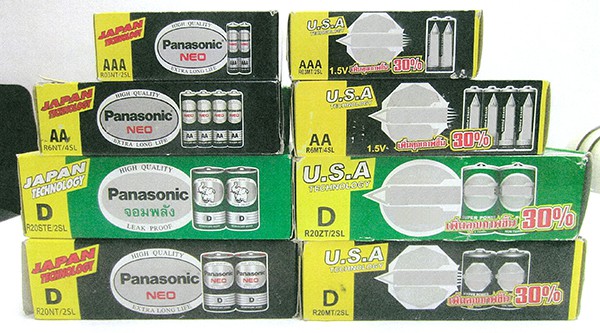
Recently, the Supreme Court rendered a remarkable and highly significant judgment on the grounds of passing off, which should serve as a landmark trademark infringement case in Thailand. Panasonic, the plaintiff, owns various trademark registrations worldwide. Among those registered marks, the most eye-catching mark is the PANASONIC mark itself. Panasonic registered this mark for use with manganese and alkaline batteries in Class 9 in Thailand in 1985. Panasonic exerted huge efforts and much research in designing the unique colors used with its batteries and the labeling on the packaging to let consumers recognize its products immediately as belonging to Panasonic.

Approximately five years ago, a Thai manufacturing company (defendants) was discovered to be manufacturing different types of batteries that were found to be similar to those manufactured by Panasonic under its own trademark. The defendants’ batteries were closely similar to Panasonic’s battery colors and the text was positioned almost identically to Panasonic’s packaging.

After trying unsuccessfully to reach an amicable settlement, Panasonic decided to bring a civil lawsuit against the defendants on the grounds of trademark infringement and passing off.
IP&IT Court Decision   

At the Intellectual Property and International Trade (IP&IT) Court, Panasonic argued that the appearance of its packaging was immediately recognizable among Thai public consumers and distinguishable from the packaging of other battery manufacturers. To support its claim, Panasonic conducted a public survey opinion poll comparing the overall appearances of its packaging and that of other battery manufacturers’ packaging. The survey results revealed that the average consumer readily recognizes Panasonic’s packaging without seeing the PANASONIC mark, and that there is a likelihood of confusion when consumers see the defendant’s packaging. Unfortunately, these survey results were not convincing evidence to the court. Without considering the defendant’s bad faith in imitating the color, size, and word arrangement of its battery packaging, the court instead took into consideration the trademark itself, and therefore considered that the defendant’s batteries were distinguishable when considering pronunciation and overall appearance.    

Panasonic disagreed with the court’s opinion and decided to appeal the case to the Supreme Court, arguing that the IP&IT Court failed to elaborate on the legal point of the defendants’ bad faith, as it was using similar packaging, labeling, and colors to its own product designs and benefiting from Panasonic’s widespread reputation.

The Supreme Court Decision   

The Supreme Court confirmed the IP&IT Court decision with regard to the dissimilarity of the registered marks, when considering pronunciation and the shape of the Roman characters of the marks. However, the Supreme Court disagreed with most other aspects of the IP&IT Court’s reasoning, especially in its failure to determine whether the defendants, by using a similar packaging, label, and product design to that of Panasonic’s, acted in bad faith and thereby infringed Panasonic’s unregistered trademark rights.    

The Supreme Court emphasized the importance of the bad faith intention of the defendants by determining the manner in which the trademark is used on goods and packages. The court found that even though the registered mark in dispute was not confusingly similar to the PANASONIC trademark in either appearance or pronunciation, the court must compare the characteristics of the batteries and the packaging of the defendants with those aspects of Panasonic’s batteries to determine whether the two companies’ products are similar.    

With regard to the color scheme, the Supreme Court took an approach contrary to the IP&IT Court’s reasoning. Even though color is a common feature that anyone can freely use, a certain color combination (e.g., green and silver; black and silver; or red, white, black and yellow), together with the placement of the colors, text, and images, creates a visual design and pattern indicating that Panasonic’s goods are different from others’ goods.   

The Supreme Court further elaborated that the appearance of the defendants’ batteries and packaging, which appear to be closely similar to Panasonic’s, clearly reflect the bad-faith intention of the defendants to use their registered mark with batteries in order to deceive the relevant consumers into believing that the batteries belong to Panasonic. The court held that such tortious conduct can only have the result of causing injury to Panasonic and is thus unlawful.    

The Supreme Court ruled that the defendants must cease using their product designs and packaging designs of similar coloring and patterns to those of Panasonic, and must not pass off their products as those of Panasonic. Moreover, the court awarded Panasonic compensatory damages, together with its attorneys’ fees and court fees.

Conclusion   

The trademark owner’s victory in this case offers a valuable lesson in determining that trademark infringement should not only consider the mark itself but also the manner in which an alleged infringer uses its mark to imitate a brand owner’s unique product designs and packaging, which can now be considered to be unregistered trademarks. This Supreme Court judgment establishes an exemplary guideline for brand owners facing similar issues, whereby brand owners can protect themselves from others imitating their unique product designs and packaging.

RELATED INSIGHTS​ 

December 22, 2022
Rules for franchising in Indonesia were first published in 1997 through a government regulation and a ministerial decree, which was subsequently amended several times. The franchising regulations currently in effect are Government Regulation No. 42 of 2007 concerning Franchises and Regulation issued by the Minister of Trade No. 71 of 2019 concerning the Implementation of Franchising (MOT No. 71 of 2019). Franchises in Indonesia must meet certain criteria that distinguish them from other types of businesses, and franchising must be based on a franchise agreement governed by Indonesian law. Prior to entering into a franchise agreement, a franchisor must provide a prospectus (disclosure document) to the prospective franchisee at least two weeks before the execution of the franchise agreement so that the prospective franchisee has sufficient time to review the reputation and goodwill of the franchisor through the prospectus. The prospectus must contain various details about the franchise business, its management, its operations, and other relevant aspects. Both local and foreign franchisors must obtain a franchise registration certificate—referred to as an STPW—from the Ministry of Trade before offering their franchises to prospective franchisees. The franchisee is also required to obtain an STPW. The STPW for the franchisor is the proof of prospectus registration, while the STPW for the franchisee is the proof of registration of the franchise agreement. Franchisors and franchisees who have STPWs are required to submit reports on franchise business activities to the Ministry of Trade’s director of business development and distribution by the end of June each year. Up to three written warnings will be served on a franchisor or franchisee who does not comply with the registration requirements. A fine of up to IDR 100 million (approx. USD 6,400) will be imposed if the franchisor or franchisee fails to respond to the warnings. MOT No.
December 19, 2022
On November 22, 2022, the Thai cabinet approved in principle the draft Liability for Defective Goods Act (the “Bill”) proposed by the Office of the Consumer Protection Board. While Thailand’s Product Liability Act B.E. 2551 (2008) deals with liability to consumers arising from unsafe products, the draft Liability for Defective Goods Act aims to ensure that consumers are well protected from defects in appliances and vehicles that might not initially be easily visible or noticed. Key Definitions The Bill applies most notably to business operators and consumers. In the Bill, a “business operator” who may potentially be liable is: a manufacturer (or its hirer) of goods for sale; or a consignee or importer who brings goods into Thailand for sale; or a seller or a hire purchase provider who cannot identify the manufacturer (or its hirer) or the importer. As opposed to the Product Liability Act, which clearly provides that all business operators in the supply chain must be jointly liable, the Bill lacks such clear guidance. This could be interpreted as meaning that under the current Bill only the business operator at the top of the supply chain who is sued in the same case as other business operators is responsible. A “consumer” is defined as a purchaser or hirer of goods from a manufacturer, including an assignee or successor of the goods from the purchaser or hirer. Scope and Application The Bill is intended to govern purchase or hire-purchase contracts for: electric appliances; electronic devices; personal cars and motorcycles; other goods that may be set out in a future royal decree issued under the act. The Bill will not apply to any purchase or hire purchase of used products or as-is products when this is clearly stated by the seller or hire-purchase provider or the auctioneer in
November 29, 2022
Cambodia’s new Sub-Decree on the Management of Commercial Advertising of Products and Services, issued November 4, 2022, is a notable step in ensuring that advertisers comply with advertising regulations, advertise ethically and legally, and avoid deceiving or misleading consumers. The sub-decree regulates both traditional advertising (e.g., print, broadcast, display, etc.) and digital forms (e.g., social media, online, mobile, etc.), and also includes provisions that address advertising alongside rewards—a popular method of advertising in Cambodia. The Ministry of Commerce is the authority tasked with issuing certificates of advertising compliance (more below) and is responsible for monitoring and assessing the compliance of advertisements with this sub-decree and related regulations. The ministry also enforces against unfair advertising through its Consumer Protection, Competition and Fraud Repression Directorate-General (CCF). Key Issues The sub-decree addresses a range of key issues relevant to companies advertising products and services in Cambodia. Licensing The sub-decree does not appear to set new licensing or permit requirements, but it requires advertisements for products and services to comply with the sub-decree, any existing regulations (unless they contradict the sub-decree), and future regulations. If regulations require a license for advertising, this should be obtained from the relevant authorities. One example is advertising of pharmaceuticals, which requires a license from the Ministry of Health under existing regulations. Types of Advertisement Under the sub-decree, advertising is divided into two types: advertisements with rewards and advertisement without rewards. Rewards may include souvenirs, lucky draws, and other rewards attached to the purchase of products and services. Forms of Advertisement Forms and means of advertising specified in the sub-regulation include the following: Advertising via audiovisual media such as TV, electronic broadcasting media (including both satellite and cable TV), and so on; Electronic advertising, such as websites, e-mail, electronic messages (in written, voice, or image form), ringtones, social
October 3, 2022
Impacts from the COVID-19 pandemic have led some manufacturers to reduce costs by changing production methods, designs, or machinery, or reducing the number of employees on payroll. While these strategies may reduce costs and help their business survive, they may also result to lower quality goods. In the worst case, however, these poor quality goods may cancel out or even outweigh a manufacturer’s cost savings if the products are deemed to be unsafe for consumers under Thailand’s Product Liability Act (officially the Liability for Damages Arising from Unsafe Products Act). The Product Liability Act has been in force for 14 years. However, there have been few landmark Supreme Court decisions related to it as most cases are settled before the final judgment. Consequently, most business owners have limited knowledge of the precedent cases and are unsure about what actions they can take to manage and mitigate the risk of being found liable for claims of damages due to an unsafe product. The Product Liability Act identifies several types of entrepreneurs and business operators (individuals and entities) as “potentially liable parties” (PLPs) who may be penalized under the law: Manufacturers or hirers Importers Sellers of goods for which the manufacturer, hirer, or importer cannot be identified; Any other party who uses the name, trade name, trademark, or statements of the alleged unsafe products, or acts in a manner that causes them to be seen as a manufacturer, hirer, or importer The Product Liability Act defines a “product” as any kind of movable property that has been manufactured or imported for sale—including agricultural products and electricity, but excluding those ruled out by ministerial regulations. Therefore, real estate and services are excluded from the Product Liability Act. However, real estate buyers are protected by the Civil and Commercial Code, and by the