
You are using an outdated browser and your browsing experience will not be optimal. Please update to the latest version of Microsoft Edge, Google Chrome or Mozilla Firefox. Install Microsoft Edge

August 29, 2018

Panasonic Wins Passing Off Case for Packaging and Product Designs

Informed Counsel

Although the Thai Trademark Act provides protection for passing off, filing a lawsuit to defend an IP owner’s unregistered rights can still pose certain challenges. This is especially true where two registered trademarks are different, but the product packaging designs of both marks are confusingly similar. In these circumstances, the court occasionally decides upon a mere comparison of the two marks and may determine that the similarities of their packaging designs are not likely to cause confusion among public consumers due to their dissimilarity.

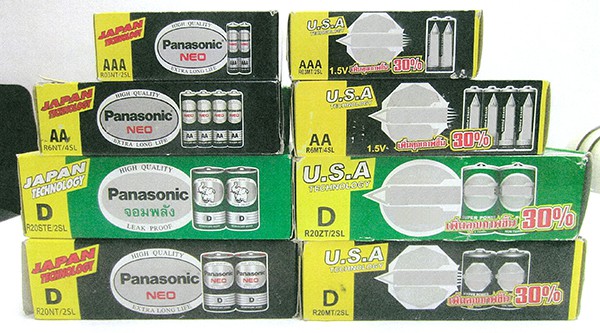
Recently, the Supreme Court rendered a remarkable and highly significant judgment on the grounds of passing off, which should serve as a landmark trademark infringement case in Thailand. Panasonic, the plaintiff, owns various trademark registrations worldwide. Among those registered marks, the most eye-catching mark is the PANASONIC mark itself. Panasonic registered this mark for use with manganese and alkaline batteries in Class 9 in Thailand in 1985. Panasonic exerted huge efforts and much research in designing the unique colors used with its batteries and the labeling on the packaging to let consumers recognize its products immediately as belonging to Panasonic.

Approximately five years ago, a Thai manufacturing company (defendants) was discovered to be manufacturing different types of batteries that were found to be similar to those manufactured by Panasonic under its own trademark. The defendants’ batteries were closely similar to Panasonic’s battery colors and the text was positioned almost identically to Panasonic’s packaging.

After trying unsuccessfully to reach an amicable settlement, Panasonic decided to bring a civil lawsuit against the defendants on the grounds of trademark infringement and passing off.
IP&IT Court Decision   

At the Intellectual Property and International Trade (IP&IT) Court, Panasonic argued that the appearance of its packaging was immediately recognizable among Thai public consumers and distinguishable from the packaging of other battery manufacturers. To support its claim, Panasonic conducted a public survey opinion poll comparing the overall appearances of its packaging and that of other battery manufacturers’ packaging. The survey results revealed that the average consumer readily recognizes Panasonic’s packaging without seeing the PANASONIC mark, and that there is a likelihood of confusion when consumers see the defendant’s packaging. Unfortunately, these survey results were not convincing evidence to the court. Without considering the defendant’s bad faith in imitating the color, size, and word arrangement of its battery packaging, the court instead took into consideration the trademark itself, and therefore considered that the defendant’s batteries were distinguishable when considering pronunciation and overall appearance.    

Panasonic disagreed with the court’s opinion and decided to appeal the case to the Supreme Court, arguing that the IP&IT Court failed to elaborate on the legal point of the defendants’ bad faith, as it was using similar packaging, labeling, and colors to its own product designs and benefiting from Panasonic’s widespread reputation.

The Supreme Court Decision   

The Supreme Court confirmed the IP&IT Court decision with regard to the dissimilarity of the registered marks, when considering pronunciation and the shape of the Roman characters of the marks. However, the Supreme Court disagreed with most other aspects of the IP&IT Court’s reasoning, especially in its failure to determine whether the defendants, by using a similar packaging, label, and product design to that of Panasonic’s, acted in bad faith and thereby infringed Panasonic’s unregistered trademark rights.    

The Supreme Court emphasized the importance of the bad faith intention of the defendants by determining the manner in which the trademark is used on goods and packages. The court found that even though the registered mark in dispute was not confusingly similar to the PANASONIC trademark in either appearance or pronunciation, the court must compare the characteristics of the batteries and the packaging of the defendants with those aspects of Panasonic’s batteries to determine whether the two companies’ products are similar.    

With regard to the color scheme, the Supreme Court took an approach contrary to the IP&IT Court’s reasoning. Even though color is a common feature that anyone can freely use, a certain color combination (e.g., green and silver; black and silver; or red, white, black and yellow), together with the placement of the colors, text, and images, creates a visual design and pattern indicating that Panasonic’s goods are different from others’ goods.   

The Supreme Court further elaborated that the appearance of the defendants’ batteries and packaging, which appear to be closely similar to Panasonic’s, clearly reflect the bad-faith intention of the defendants to use their registered mark with batteries in order to deceive the relevant consumers into believing that the batteries belong to Panasonic. The court held that such tortious conduct can only have the result of causing injury to Panasonic and is thus unlawful.    

The Supreme Court ruled that the defendants must cease using their product designs and packaging designs of similar coloring and patterns to those of Panasonic, and must not pass off their products as those of Panasonic. Moreover, the court awarded Panasonic compensatory damages, together with its attorneys’ fees and court fees.

Conclusion   

The trademark owner’s victory in this case offers a valuable lesson in determining that trademark infringement should not only consider the mark itself but also the manner in which an alleged infringer uses its mark to imitate a brand owner’s unique product designs and packaging, which can now be considered to be unregistered trademarks. This Supreme Court judgment establishes an exemplary guideline for brand owners facing similar issues, whereby brand owners can protect themselves from others imitating their unique product designs and packaging.

RELATED INSIGHTS​ 

September 30, 2022
In keeping with the government’s strong focus on consumer protection in recent years, Cambodia’s consumer protection authority issued a notice on consumer product labeling on September 23, 2022. The notice from the General Department of Consumer Protection, Competition, and Fraud Repression (CCF) provides clarifications on labeling rules for general consumer products, goods, and services. The most significant clarification is that both locally produced and imported products, goods, and services must have a Khmer-language label or attach a product description in Khmer language. Imports may use a sticker with Khmer language as long as the minimum labeling requirements are met. The notice announces a transition period for companies to amend their labeling, allowing them to make changes to the labeling until December 31, 2022. According to the notice, the CCF will investigate and take enforcement measures starting January 1, 2023. This likely signals a major increase in enforcement efforts throughout 2023. Labeling Rules The CCF notice gives instructions on product labeling rules. In Cambodia, “product” refers to general products, goods, and services on the Cambodian market. Product-specific labeling regulations (e.g., for food products) overrule the requirements for these general products. The CCF notice provides the following instructions: All products on the market must have a label, or attach a product description, using Khmer language. Imported products that do not have a Khmer-language label printed on the packaging should provide a product description in Khmer. Companies can attach the necessary information or apply a sticker to the product. Trademarks on the products may use a foreign language but must be in line with the relevant local trademark registration. Foreign-language or different labeling is only permitted if authorized by the regulator, or by regulations that apply to a specific type of product. The label or product description must use an appropriate font
September 15, 2022
In the course of our work, we often hear about consumers in Thailand lodging complaints with the Office of the Consumer Protection Board (OCPB) about problems with a purchased product or service. The OCPB is a government agency attached to the Office of the Prime Minister. Its main duties are to protect consumers in Thailand with respect to product advertising, product labeling, and contracts, and to handle consumer complaints. However, there are exceptions to the types of consumer complaints that the OCPB can handle. This is because some consumer complaints must by law be handled by certain specialized agencies. Examples of these exceptions include consumer complaints relating to: health products (food, drugs, cosmetics, medical devices, household dangerous substances, and narcotics); medical services; insurance; pricing of consumer products; condominium juristic person; public land; rail, water, and air transportation; tourism; education; banking and finance; telecommunications; and electricity and water consumption. Procedure When a consumer complaint that the office can accept comes to the OCPB, the officers first consider whether the business operator has violated any laws, in which case the relevant authorities, such as the police, should handle the matter. When the officers consider it appropriate, they may ask the parties to mediate the dispute. Complaints in Bangkok are mediated by officers at the Bangkok OCPB. For complaints lodged in other provinces, the governors of the provinces may assign officers or agencies under their supervision to mediate. The OCPB can mediate twice within 90 days. If the parties still want to continue with the mediation, a subcommittee of the Consumer Protection Board (CPB)—the body that directs the OCPB—will then conduct two more mediation sessions within 90 days. If a resolution is still not reached, the subcommittee can conduct one additional mediation session before declaring the mediation failed and ending the complaint
January 12, 2022
The popularity of the franchise business model has grown rapidly in mainland Southeast Asia in recent years, with some of the world’s top brands becoming common sights in the commercial districts and shopping malls of major regional cities in Cambodia, Laos, Myanmar, Thailand, and Vietnam. Although these countries have not yet enacted franchising-specific laws, certain features of each country’s regulatory regime impact franchising. As such, well-prepared franchise business operations have comfortably adapted to each country’s regulatory framework, and the growth is poised to continue even as the global retail sector redesigns and redoubles its efforts in the wake of the COVID-19 pandemic. In fact, the franchise business model, which is both global and local at the same time, may offer retail entrepreneurs a solution in their quest to meet the challenges of the new retail economic realities. This article explains the legal frameworks that impact the franchise business model in Cambodia, Laos, Myanmar, Thailand, and Vietnam. For each country, this article discusses relevant regulatory considerations for franchise agreements, how to protect intellectual property rights, and judicial and arbitral procedures for resolving disputes that might arise between a franchisor and a franchisee. The full article can be downloaded through the button below.   © 2021. Originally published in the Franchise Law Journal, Vol. 41, No. 2, Fall 2021, by the American Bar Association. Reproduced with permission. All rights reserved. This information or any portion thereof may not be copied or disseminated in any form or by any means or stored in an electronic database or retrieval system without the express written consent of the American Bar Association or the copyright holder.
December 31, 2021
In the last week of December, 2021, the Ministry of Justice published the Law Amending Certain Provisions of the Laws on Tax No. 01/NA, dated August 7, 2021, in the Government Gazette. The Law will come into force on January 1, 2022. The most notable amendments relate to Value Added Tax (VAT), which are summarized below. The new law also makes changes to the laws on tax management, income tax, and excise tax, which Tilleke & Gibbins will provide updates on in due course.