
You are using an outdated browser and your browsing experience will not be optimal. Please update to the latest version of Microsoft Edge, Google Chrome or Mozilla Firefox. Install Microsoft Edge

August 29, 2018

Panasonic Wins Passing Off Case for Packaging and Product Designs

Informed Counsel

Although the Thai Trademark Act provides protection for passing off, filing a lawsuit to defend an IP owner’s unregistered rights can still pose certain challenges. This is especially true where two registered trademarks are different, but the product packaging designs of both marks are confusingly similar. In these circumstances, the court occasionally decides upon a mere comparison of the two marks and may determine that the similarities of their packaging designs are not likely to cause confusion among public consumers due to their dissimilarity.

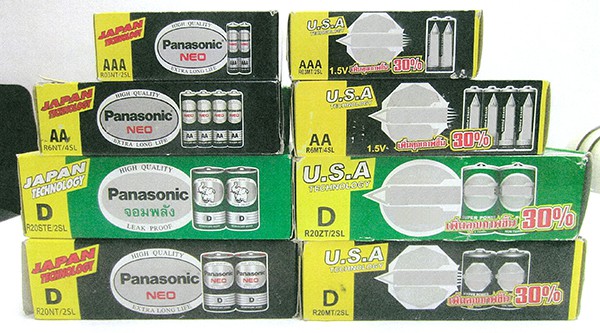
Recently, the Supreme Court rendered a remarkable and highly significant judgment on the grounds of passing off, which should serve as a landmark trademark infringement case in Thailand. Panasonic, the plaintiff, owns various trademark registrations worldwide. Among those registered marks, the most eye-catching mark is the PANASONIC mark itself. Panasonic registered this mark for use with manganese and alkaline batteries in Class 9 in Thailand in 1985. Panasonic exerted huge efforts and much research in designing the unique colors used with its batteries and the labeling on the packaging to let consumers recognize its products immediately as belonging to Panasonic.

Approximately five years ago, a Thai manufacturing company (defendants) was discovered to be manufacturing different types of batteries that were found to be similar to those manufactured by Panasonic under its own trademark. The defendants’ batteries were closely similar to Panasonic’s battery colors and the text was positioned almost identically to Panasonic’s packaging.

After trying unsuccessfully to reach an amicable settlement, Panasonic decided to bring a civil lawsuit against the defendants on the grounds of trademark infringement and passing off.
IP&IT Court Decision   

At the Intellectual Property and International Trade (IP&IT) Court, Panasonic argued that the appearance of its packaging was immediately recognizable among Thai public consumers and distinguishable from the packaging of other battery manufacturers. To support its claim, Panasonic conducted a public survey opinion poll comparing the overall appearances of its packaging and that of other battery manufacturers’ packaging. The survey results revealed that the average consumer readily recognizes Panasonic’s packaging without seeing the PANASONIC mark, and that there is a likelihood of confusion when consumers see the defendant’s packaging. Unfortunately, these survey results were not convincing evidence to the court. Without considering the defendant’s bad faith in imitating the color, size, and word arrangement of its battery packaging, the court instead took into consideration the trademark itself, and therefore considered that the defendant’s batteries were distinguishable when considering pronunciation and overall appearance.    

Panasonic disagreed with the court’s opinion and decided to appeal the case to the Supreme Court, arguing that the IP&IT Court failed to elaborate on the legal point of the defendants’ bad faith, as it was using similar packaging, labeling, and colors to its own product designs and benefiting from Panasonic’s widespread reputation.

The Supreme Court Decision   

The Supreme Court confirmed the IP&IT Court decision with regard to the dissimilarity of the registered marks, when considering pronunciation and the shape of the Roman characters of the marks. However, the Supreme Court disagreed with most other aspects of the IP&IT Court’s reasoning, especially in its failure to determine whether the defendants, by using a similar packaging, label, and product design to that of Panasonic’s, acted in bad faith and thereby infringed Panasonic’s unregistered trademark rights.    

The Supreme Court emphasized the importance of the bad faith intention of the defendants by determining the manner in which the trademark is used on goods and packages. The court found that even though the registered mark in dispute was not confusingly similar to the PANASONIC trademark in either appearance or pronunciation, the court must compare the characteristics of the batteries and the packaging of the defendants with those aspects of Panasonic’s batteries to determine whether the two companies’ products are similar.    

With regard to the color scheme, the Supreme Court took an approach contrary to the IP&IT Court’s reasoning. Even though color is a common feature that anyone can freely use, a certain color combination (e.g., green and silver; black and silver; or red, white, black and yellow), together with the placement of the colors, text, and images, creates a visual design and pattern indicating that Panasonic’s goods are different from others’ goods.   

The Supreme Court further elaborated that the appearance of the defendants’ batteries and packaging, which appear to be closely similar to Panasonic’s, clearly reflect the bad-faith intention of the defendants to use their registered mark with batteries in order to deceive the relevant consumers into believing that the batteries belong to Panasonic. The court held that such tortious conduct can only have the result of causing injury to Panasonic and is thus unlawful.    

The Supreme Court ruled that the defendants must cease using their product designs and packaging designs of similar coloring and patterns to those of Panasonic, and must not pass off their products as those of Panasonic. Moreover, the court awarded Panasonic compensatory damages, together with its attorneys’ fees and court fees.

Conclusion   

The trademark owner’s victory in this case offers a valuable lesson in determining that trademark infringement should not only consider the mark itself but also the manner in which an alleged infringer uses its mark to imitate a brand owner’s unique product designs and packaging, which can now be considered to be unregistered trademarks. This Supreme Court judgment establishes an exemplary guideline for brand owners facing similar issues, whereby brand owners can protect themselves from others imitating their unique product designs and packaging.

RELATED INSIGHTS​ 

December 15, 2023
As part of its membership in Lex Mundi, Tilleke & Gibbins has published an updated edition of its Guide to Doing Business in Thailand for 2023. This guide outlines the key factors for starting and operating a business in the Thai market. Issues covered include: Investment incentives Financial facilities Exchange controls Import and export regulations Structures for doing business Requirements for the Establishment of a Business Operation of the Business Cessation or Termination of the Business Labor legislation, relations, and supply Tax Immigration requirements This publication is part of Lex Mundi’s Country Guides series prepared by member firms in more than 100 jurisdictions worldwide. The guides serve as a useful resource for planning international business strategy and researching new markets. The full Guide to Doing Business in Thailand is available through the button below.
November 3, 2023
Vietnam’s new Law on Protection of Consumer Rights No. 19/2023/QH15 (CPL 2023) was promulgated by the National Assembly on June 20, 2023, and will replace the existing Law on Protection of Consumer Rights No. 59/2010/QH12 (CPL 2010) when it enters into effect on July 1, 2024. The main points of interest of the CPL 2023 are summarized below. 1. Definition of Consumer Under the CPL 2023, a consumer is defined to be “a person who purchases and/or uses products, goods and services with the aim of consumption for daily needs of individuals, families, or organizations, and not for commercial purposes” (Article 3.1). Compared to the CPL 2010, this definition introduces the phrase “and not for commercial purposes” to emphasize the exclusive focus on the consumption of goods and services. However, the CPL 2023 retains the use of the term “person” for defining a consumer, leading to uncertainty regarding whether an organization or a family can qualify as a consumer. Similarly, the CPL 2023, as in the CPL 2010, maintains an ambiguous comma between “purchase” and “use,” so it remains somewhat ambiguous whether purchase (without use) or use (without purchase) of goods/services is sufficient to qualify as a consumer under the law. 2. Vulnerable Consumers The CPL 2023 introduces a new concept known as the “vulnerable consumer.” This term pertains to a consumer who, at the time of purchase or use of products/services, is potentially subject to various adverse situations in terms of information access, health, property, or dispute settlement. This category encompasses individuals such as the elderly and disabled, children, ethnic minorities, people of remote or economically difficult regions, pregnant women and breastfeeding mothers of infants under 36 months, individuals with severe illnesses, and members of poor households (Article 8.1). The rights and privileges of vulnerable consumers must be
October 30, 2023
On October 9, 2023, Laos issued Presidential Decree No. 003, which raised excise tax rates for certain goods, effective immediately. The move to increase excise tax rates comes amid the marked depreciation of the Lao kip (LAK). The Lao government is trying to monitor and discourage imports of non-essential products in order to reduce the outflow of foreign currency from the country. Increasing the tax rate for some of these products is part of these efforts. The specific products and excise tax rates are listed in the table below.   This new rate policy is also in line with recent government efforts to encourage avoiding payment in foreign currency to prevent the depletion of foreign currency reserves in Laos. In this regard, commercial banks have already taken action to ration the supply of foreign currency by prioritizing imports of essential goods, such as fuel. The products listed above formalize this impetus to prioritize certain imports and discourage others deemed not essential. In addition, the increased excise tax rates on fuel-powered vehicles show the commitment of the Lao government to move toward electric vehicles, which would also lessen the country’s dependence on fuel imports. For more information on these excise tax changes, or on any aspect of Laos’ international trade regulations, please contact Tilleke & Gibbins at [email protected].
October 17, 2023
On June 20, 2023, Vietnam’s new Law on Protection of Consumers’ Rights (“CPL 2023”) was officially promulgated, followed two days later by a new Law on E-Transactions (“LOET 2023”). The new laws, which will both take effect from July 1, 2024, replacing the CPL 2010 and the LOET 2005, respectively, provide new regulations for e-commerce platforms and will impact e-commerce activities in Vietnam. Some of the more significant changes are outlined below. Law on Protection of Consumers’ Rights Regulation of offshore entities: Previously, the CPL 2010 regulated only organizations and individuals in the territory of Vietnam. Under the CPL 2023, both onshore and offshore agencies, organizations, and individuals related to protecting consumers’ rights are regulated. In other words, Vietnam intends to monitor and manage activities of platforms with no legal presence in Vietnam. Remote transactions: Previously, the laws on consumer protection regulated “remote contracts.” The CPL 2023 introduces and defines “remote transactions” as transactions made online, by electronic means or by other means wherein consumers cannot check or have direct contact with products, goods or services before participating in the transaction. In addition, the CPL 2023 also provides for additional responsibilities of business entities offering remote transactions such as adequately and precisely providing consumers with information when entering into these remote transactions, including the rights of consumers in case of incomplete or inaccurate provision of information and complaint handling mechanisms. Online businesses: The CPL 2023 introduces “online businesses,” which are defined as (i) those trading products, goods, and services via their self-established platforms or digital platforms or (ii) those establishing or operating intermediary digital platforms. According to the Vietnam Competition Commission in a recent workshop, the definitions of “digital platforms” and “intermediary digital platforms” can be referred to in the LOET 2023 (see below). Under this new category, online