You are using an outdated browser and your browsing experience will not be optimal. Please update to the latest version of Microsoft Edge, Google Chrome or Mozilla Firefox. Install Microsoft Edge

November 5, 2018

Myanmar-Language Labeling Required on Wide Range of Products

Myanmar’s Central Committee for Consumer Protection issued Notification 1/2018 on October 26, 2018, which requires labels containing certain information in Myanmar language, jointly or combined with another language, to be affixed to certain products sold in the country. The notification is intended to ensure the safety of consumers.

The notification states that Myanmar-language labels must contain the following information:

  • Directions for use;
  • Storage instructions;
  • Allergy alerts and/or warnings; and
  • Side effects (if any).

The Myanmar-language label must be affixed to consumer units, jointly or combined with labelling in another language, but the legislation does not cover other packaging, such as display boxes.

The list of priority products that require Myanmar-language labelling, jointly or combined with labelling in another language, is as follows: 
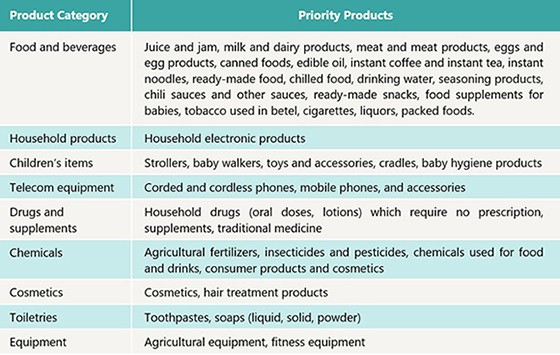
The committee may announce other products to be included in the list in the future.

Companies will have a six-month grace period from the notification date (October 26, 2018) to comply with the new regulation. Any violations after the grace period will leave companies vulnerable to the following sanctions under Section 19 of the Myanmar Consumer Protection Law 2014:

  • warning;
  • severe warning;
  • order to remedy the violation or compensate;
  • temporary prohibition of the sale and distribution of goods in violation;
  • product recall;
  • destruction of goods; and/or,
  • temporary or permanent revocation of business licenses or permits.

RELATED INSIGHTS​ 

August 26, 2013
With the ASEAN Economic Community (AEC) due to come into effect in 2015, Thailand has prioritized modernizing its customs procedures to better facilitate trade across international borders. The country is taking a step-by-step approach, with the first prototypical reforms taking root in the cosmetics industry. It is hoped that implementing a single-window system with online capabilities will improve efficiency by hastening trade processes and reducing associated costs.AEC and National Single Window
July 15, 2013
International headlines recently focused on a dramatic case of regulatory enforcement against an online pharmacy. The Pittsburgh Post-Gazette reported that a 33-year-old Thai woman was running a company with the website www.eDrugnet.com, along with at least 30 other affiliated websites. These sites sold drugs without prescriptions, despite the fact that prescriptions were required in the purchasers’ country. These e-pharmacy websites were hosted in Thailand and shipped drugs to the United States.
July 3, 2013
Pharmaceutical marketing is the term used to describe the business of promoting the sale of drugs or medicine. Due to the nature of pharmaceuticals and the potential impact that marketing could have on both patients and the health care profession, many countries have restrictions in place that limit advertising by pharmaceutical companies. One country that heavily regulates such practices is Vietnam; not only does it regulate advertisements in general, but it has a number of laws that specifically target advertisements in the health care sector.
May 7, 2013
This Q&A chapter analyzes legal issues pertaining to Vietnam’s regulatory framework in the life sciences industry. Ranging from the quality of national healthcare, manufacturing authorization, marketing, and pricing of medicinal products, to the intellectual property surrounding each product and the scope of product liability law in this industry, this Q&A chapter provides answers to the most important legal questions faced by life sciences companies. This detailed and succinctly written chapter discusses the impact of key legislation and regulatory powers.