
You are using an outdated browser and your browsing experience will not be optimal. Please update to the latest version of Microsoft Edge, Google Chrome or Mozilla Firefox. Install Microsoft Edge

November 5, 2018

Myanmar-Language Labeling Required on Wide Range of Products

Myanmar’s Central Committee for Consumer Protection issued Notification 1/2018 on October 26, 2018, which requires labels containing certain information in Myanmar language, jointly or combined with another language, to be affixed to certain products sold in the country. The notification is intended to ensure the safety of consumers.

The notification states that Myanmar-language labels must contain the following information:

  • Directions for use;
  • Storage instructions;
  • Allergy alerts and/or warnings; and
  • Side effects (if any).

The Myanmar-language label must be affixed to consumer units, jointly or combined with labelling in another language, but the legislation does not cover other packaging, such as display boxes.

The list of priority products that require Myanmar-language labelling, jointly or combined with labelling in another language, is as follows: 
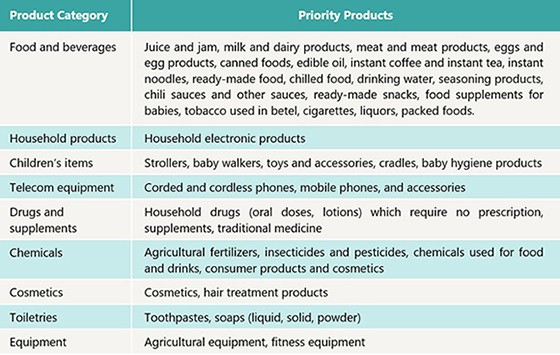
The committee may announce other products to be included in the list in the future.

Companies will have a six-month grace period from the notification date (October 26, 2018) to comply with the new regulation. Any violations after the grace period will leave companies vulnerable to the following sanctions under Section 19 of the Myanmar Consumer Protection Law 2014:

  • warning;
  • severe warning;
  • order to remedy the violation or compensate;
  • temporary prohibition of the sale and distribution of goods in violation;
  • product recall;
  • destruction of goods; and/or,
  • temporary or permanent revocation of business licenses or permits.

RELATED INSIGHTS​ 

March 20, 2013
Published by Tilleke & Gibbins in association with Lex Mundi, the Guide to Doing Business in Thailand  provides a comprehensive overview of the legal environment for investors entering the Thai market. Topics covered in the guide include the political and economic situation, import and export regulations, exchange controls, tax, requirements for establishment of a business, structures for doing business, cessation or termination of a business, labor legislation, and immigration requirements. The guide provides an invaluable primer for investors new to Thailand.
February 26, 2013
“Save 30% if you buy today!” This is just one of many familiar e-commerce advertisements that regularly bombard consumers online. By employing many of the same techniques that have proven to be successful in selling other goods, many online pharmacies advertise drugs in an aggressive fashion to increase their sales.
February 20, 2013
Foreign companies usually opt to appoint their local distributors as the local entity to apply for and maintain product registration and import licenses, as usually required by Asian FDAs and Ministries of Agriculture. Such appointments are normally set out in the distribution agreement. While on most occasions this is a mutually beneficial relationship, sometimes local partners who have built up the business for those products may begin to compete unfairly or commit other breaches that lead to difficulties in terms of terminating a partner.
