
You are using an outdated browser and your browsing experience will not be optimal. Please update to the latest version of Microsoft Edge, Google Chrome or Mozilla Firefox. Install Microsoft Edge

November 5, 2018

Myanmar-Language Labeling Required on Wide Range of Products

Myanmar’s Central Committee for Consumer Protection issued Notification 1/2018 on October 26, 2018, which requires labels containing certain information in Myanmar language, jointly or combined with another language, to be affixed to certain products sold in the country. The notification is intended to ensure the safety of consumers.

The notification states that Myanmar-language labels must contain the following information:

  • Directions for use;
  • Storage instructions;
  • Allergy alerts and/or warnings; and
  • Side effects (if any).

The Myanmar-language label must be affixed to consumer units, jointly or combined with labelling in another language, but the legislation does not cover other packaging, such as display boxes.

The list of priority products that require Myanmar-language labelling, jointly or combined with labelling in another language, is as follows: 
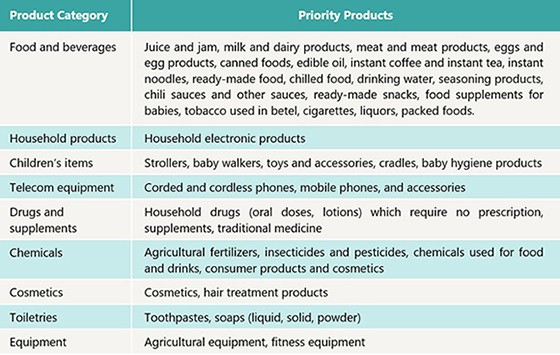
The committee may announce other products to be included in the list in the future.

Companies will have a six-month grace period from the notification date (October 26, 2018) to comply with the new regulation. Any violations after the grace period will leave companies vulnerable to the following sanctions under Section 19 of the Myanmar Consumer Protection Law 2014:

  • warning;
  • severe warning;
  • order to remedy the violation or compensate;
  • temporary prohibition of the sale and distribution of goods in violation;
  • product recall;
  • destruction of goods; and/or,
  • temporary or permanent revocation of business licenses or permits.

RELATED INSIGHTS​ 

August 28, 2015
Thailand has long been regarded as a particularly strict jurisdiction with respect to restrictions on the advertising, sale, and consumption of alcohol and tobacco products. Two recent developments demonstrate that current political uncertainties have done nothing to reverse the trend for increasingly draconian restrictions on international and local brand owners.
August 24, 2015
Expanding waistlines and increasing health awareness have given rise to a consumer culture infatuated with well-being, not only in Thailand but all over the world. For producers, this means intense pressure to create healthy or healthier versions of their products. For the government—specifically the Thai Food and Drug Administration (FDA)—this means an obligation to implement and enforce stricter regulations on food and nutrition.
July 14, 2015
The latest edition of the PLC Life Sciences Multi-jurisdictional Guide  provides a Q&A-style analysis of the current regulatory framework surrounding the life sciences industry. Lawyers at Tilleke & Gibbins authored the Vietnam chapter of the guide, which covers national healthcare, regulation of medicinal product prices, clinical trials, manufacturing, sales and marketing, advertising, data protection, packaging and labeling, product liability, patents, trademarks, and competition law.Practical Law Company is a leading provider of legal resources.
July 14, 2015
Practical Law Company has published the latest edition of the PLC Life Sciences Multi-jurisdictional Guide, a Q&A-style guide which provides country-specific analysis of the current regulatory framework surrounding the life sciences industry. Tilleke & Gibbins authored the Thailand chapter of this guide, which looks at pricing and state funding, manufacturing, marketing, clinical trials, advertising, labeling, product recall and liability, patents, trademarks, competition law, patent licensing, generic entry, abuse of dominance, and parallel imports.