
You are using an outdated browser and your browsing experience will not be optimal. Please update to the latest version of Microsoft Edge, Google Chrome or Mozilla Firefox. Install Microsoft Edge

November 5, 2018

Myanmar-Language Labeling Required on Wide Range of Products

Myanmar’s Central Committee for Consumer Protection issued Notification 1/2018 on October 26, 2018, which requires labels containing certain information in Myanmar language, jointly or combined with another language, to be affixed to certain products sold in the country. The notification is intended to ensure the safety of consumers.

The notification states that Myanmar-language labels must contain the following information:

  • Directions for use;
  • Storage instructions;
  • Allergy alerts and/or warnings; and
  • Side effects (if any).

The Myanmar-language label must be affixed to consumer units, jointly or combined with labelling in another language, but the legislation does not cover other packaging, such as display boxes.

The list of priority products that require Myanmar-language labelling, jointly or combined with labelling in another language, is as follows: 
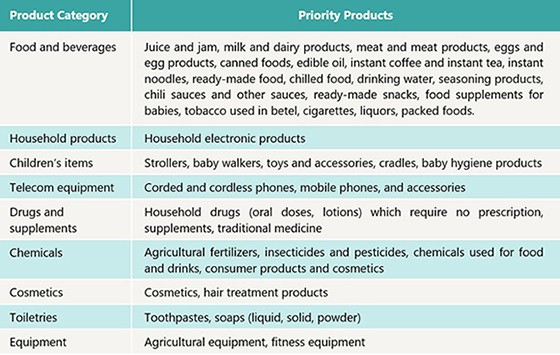
The committee may announce other products to be included in the list in the future.

Companies will have a six-month grace period from the notification date (October 26, 2018) to comply with the new regulation. Any violations after the grace period will leave companies vulnerable to the following sanctions under Section 19 of the Myanmar Consumer Protection Law 2014:

  • warning;
  • severe warning;
  • order to remedy the violation or compensate;
  • temporary prohibition of the sale and distribution of goods in violation;
  • product recall;
  • destruction of goods; and/or,
  • temporary or permanent revocation of business licenses or permits.

RELATED INSIGHTS​ 

February 6, 2017
Attorneys from Tilleke & Gibbins have written the Vietnam chapter of Practical Law Company’s Doing Business in … Global Guide, an essential handbook for businesses looking to expand their operations abroad. The guide provides a practical overview of the legal system in more than 50 jurisdictions worldwide, with the Vietnam chapter including the following main subjects:
January 24, 2017
The 2017 edition of Doing Business In…, a Q&A-style guide published by Practical Law Company in collaboration with Lex Mundi, presents an overview of recent legal developments affecting doing business in 51 jurisdictions worldwide. The Thailand chapter of the guide was written by attorneys from Tilleke & Gibbins and presents an overview of Thailand’s legal system and key laws applicable to foreign companies doing business in the Kingdom. The chapter specifically covers the following main topics:
January 23, 2017
With a population approaching 100 million, a burgeoning health care industry, increasing consumer affluence, and relatively weak competition from local pharmaceutical manufacturers, Vietnam would appear to be a very promising market for foreign pharmaceutical companies. A study of the pharmaceutical patent filing statistics in Vietnam reveals that foreign investors are indeed interested in the market—but perhaps are not protecting their innovations to the extent we might expect by filing patents. In this article, we examine the most recent available statistics on: