
You are using an outdated browser and your browsing experience will not be optimal. Please update to the latest version of Microsoft Edge, Google Chrome or Mozilla Firefox. Install Microsoft Edge

June 7, 2024

Laos Regulates Management of Foreign Currency from Exports

On March 7, 2024, Laos moved to regulate the management of foreign-currency income from the exportation of goods and services. Effective March 29, 2024, Decision No. 333 (formally the Decision on Management of Income in Foreign Currency from Exportation of Goods and Services No. 333/BOL) from the Bank of Lao PDR (BOL) aims to incentivize the inflow of such foreign currency into Laos and its sale to licensed commercial banks.

Decision No. 333 sets minimum required proportions for importing income in foreign currency derived from the exportation of goods and services, as well as the timeframe for doing so. It also stipulates the requirements for selling such foreign currency to commercial banks in Laos and the minimum proportions that must be sold.

Importing Foreign-Currency Income

Exporters must receive payments from abroad via bank transfer into a dedicated bank account designated for import-export business activities within the timeline specified in the sale-purchase agreement, but not exceeding 180 days from the date of export. Each sector must import income in foreign currency into the Lao PDR according to the minimum proportion of currency to be imported, and it must be done within the required timeframes, as specified in the table below.
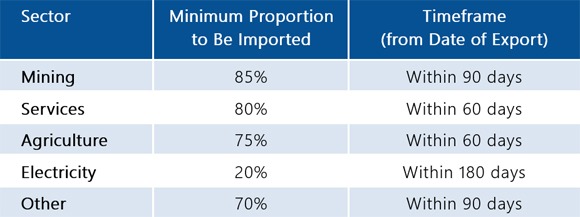
The ratios and timeframes are subject to change depending on the circumstances. If exporters cannot comply with the required ratio and timeline, exporters must provide relevant explanatory documents for the BOL’s consideration.

Selling Foreign-Currency Income

Exporters of goods and services must sell at least the minimum required proportion of their foreign-currency income (see table below) to a commercial bank in Laos. This foreign currency exchange must occur within three working days of receiving the foreign currency into the dedicated bank account in Laos. The selling rate will be determined by the prevailing rate of the commercial bank on the day of the transaction.
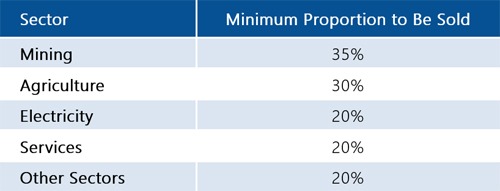
In conducting these transactions, commercial banks are required to carefully consider and manage their reserves and overall liquidity to ensure that they can meet public demand.

If an exporter does not sell at least the minimum required amount of foreign currency within three working days, the relevant commercial bank must proceed with the minimum required exchange and notify the exporter that they are doing so.

These requirements do not apply to re-exporters, such as importers of unprocessed raw materials for re-export to other countries, as determined by the Department of Foreign Currency Management (DFCM).

After selling the minimum required amount to a commercial bank, the remaining foreign-currency income must be used for foreign-currency exchange purposes, such as payments to parties in foreign countries, fulfilling obligations to the state, and so on.

Exporters can sell foreign currency to the BOL by notifying it of the need to sell the foreign currency to the DFCM in the BOL, after which they can sell the currency to the BOL through a commercial bank.

Registration

Decision No. 333 requires service exporters to register as importers and exporters to bring in income generated from exporting services. Although it doesn’t specify the types of service businesses that need to register, a March 2024 notice from the Ministry of Industry and Commerce offers examples of such businesses, including those in international transport, insurance, tourism and hotels, construction, and consulting.

Violations

First-time violations of Decision No. 333 that do not cause damage are subject to training on the importance of complying with Lao law or a warning. If the violation persists after the training or warning, the violator will face suspension of its ability to export goods and services.

For more information on Decision No. 333, or on any aspect of foreign currency management in Laos, please contact Tilleke & Gibbins at [email protected].

RELATED INSIGHTS​ 

October 20, 2025
Global trade has become an everyday issue with immense effects on trade and the economy. Today’s global trade climate sees countries around the world engaged in trade negotiations aspiring to eliminate trade barriers. Customs tariffs and associated privileges are among the issues that most impact global trade flows and the import-export sector. Thailand has negotiated customs tariff privileges as part of its 14 free trade agreements (FTAs) with 18 countries, including six bilateral and eight regional agreements. These FTAs set forth criteria for member states to comply with and adopt into national law. To achieve customs privileges, one of the most important criteria is rules of origin, which indicate the originating country of imported or exported goods and the accompanying duty rates or privileges for reduction or exemption. Rules of Origin Under FTAs The rules of origin mapped out in FTAs allow for duty exemptions or rate reductions based on the determination of goods’ country of origin. This largely includes two main categories: Wholly obtained (WO) means the product was entirely produced in a single originating country and does not include any foreign (non-originating) content or manufacturing process. Product specific rules (PSR) are detailed criteria that define how each product’s origin is determined. PSR criteria that are often found in FTAs include “change in tariff classification” (determining origin based on sufficient transformation of materials), “regional value content” (requiring a minimum percentage of value to be added locally), and specific manufacturing or processing operations (mandating particular production steps occur in the originating country). These criteria also extend to cover other subordinated methods of verification, such as accumulation rules and de minimis rules, to provide more flexibility for the establishment of origins and tariff privileges under such FTAs. Compliance Challenges Despite attempts to promote international trade and eliminate trade barriers through
October 17, 2025
The Department of Trade under Myanmar’s Ministry of Commerce (MOC) issued a schedule of revised service fees for trade-related services, effective October 15, 2025. The revised fees are contained in Newsletter of Export/Import 6/2025, which supersedes the previous rates set out in 2018 and 2020. Service Fees The revised fees include the following: Annual fee for TradeNet 2.0, the MOC online platform for trade submissions: MMK 50,000 (approx. USD 23.81) Online service application fee: MMK 10,000 (approx. USD 4.76) Import or export license renewal (including for all imported goods exempt from the license fees): MMK 50,000 (approx. USD 23.81) for initial renewal (two months) MMK 30,000 (approx. USD 14.29) for second renewal (one month) Amendment of license information: MMK 10,000 (approx. USD 4.76) per amendment Return of export/import license: MMK 30,000 (approx. USD 14.29) Late fees for renewal/amendment of import or export license: MMK 5,000 (approx. USD 2.38) if within one month of expiry MMK 10,000 (approx. USD 4.76) if later than one month after expiry Submission Schedule License renewal applications submitted more than 14 days after the license expiration date will not be processed. Applications for license amendment must be submitted in advance of the relevant goods’ arrival at Myanmar ports or airports. For more information on this announcement, or on any aspect of import and export matters in Myanmar, please contact Tilleke & Gibbins at [email protected].
September 24, 2025
On September 12, 2025, the Bank of Thailand (BOT) officially released its AI Risk Management Guidelines for Financial Service Providers, building upon the draft guidelines issued in June 2025. The guidelines reflect a balanced approach, encouraging innovation while safeguarding financial stability and consumer protection. The guidelines are targeted at all financial service providers, including financial institutions and special financial institutions under the Financial Institution Business Act, as well as payment providers under the Payment Systems Act. The guidelines apply to both AI systems developed in-house and those developed by third parties that are adopted for use by financial service providers. AI Risk Management Guidelines The two main pillars in managing AI risk are (1) governance of AI system implementation and (2) AI system development and security controls, consisting of the following key elements: 1. Governance Stakeholder roles and responsibilities. Boards and senior management assume accountability for decisions and operations involving AI systems, and are responsible for defining roles and responsibilities for AI oversight. This includes establishing an AI system usage policy, designating personnel responsible for AI risk management, and building awareness of AI-related risk within the organization. Organizations are expected to foster internal capabilities to use AI securely and avoid overreliance that could compromise business continuity or customer service. AI system usage policy. Policies governing AI usage should align with organizational goals, regulatory obligations, and recognized responsible AI frameworks—such as the FEAT principles (fairness, ethics, accountability, and transparency). These policies should be reviewed regularly to respond to technological advancements and evolving risk profiles. Risk management throughout the AI lifecycle. Risk management should encompass the entire AI lifecycle, from establishing risk appetite to implementing continuous risk assessment and control measures tailored to specific use cases. Financial service providers should assess risks and impacts of AI usage on operations and customer services.
September 12, 2025
On September 10, 2025, Vietnam’s National Credit Information Center (CIC) reported to the Vietnam Cybersecurity Emergency Response Team (VNCERT) a suspected significant cybersecurity incident involving unauthorized access to the CIC’s credit information database. A hacker group has claimed responsibility and allegedly posted over 160 million records for sale, including sensitive personal and financial data. Implications for Banks and Financial Institutions Companies that share customers’ or potential customers’ personal data with the CIC for credit scoring or other purposes—and continue to act as a data controller for such data—may be obligated under Vietnam’s Personal Data Protection Decree (PDPD) and related regulations to: Notify A05 (Department of Cybersecurity and High-Tech Crime Prevention) and the State Bank of Vietnam without delay. Inform affected individuals if their personal data is at risk. Recommended Actions Companies that could be impacted by this data breach should take the following actions: Conduct an internal review of CIC-related data in their systems, and identify whether and how the systems have been affected by this incident. Assess whether to notify regulators and customers/potential customers. Enhance cybersecurity controls, monitor for suspicious activity, and implement additional safeguards to prevent secondary breaches.