You are using an outdated browser and your browsing experience will not be optimal. Please update to the latest version of Microsoft Edge, Google Chrome or Mozilla Firefox. Install Microsoft Edge

September 8, 2025

Foreign Halal Certificate Registration in Indonesia

The Indonesian government has implemented mandatory halal certification to protect its predominantly Muslim population. To ensure halal standards, the government has issued several key regulations, including Law No. 33 of 2014 concerning Halal Product Assurance, Government Regulation No. 42 of 2024 concerning Implementation of Halal Product Assurance, and specifically for imported products, Decision of the Head of Halal Product Assurance Agency (BPJPH) No. 90 of 2023 concerning Procedures of Implementing Foreign Halal Certificate Registration.

Compliance Deadlines

The government has established statutory deadlines for products and services to obtain halal certification under Government Regulation No. 39 of 2021 concerning Implementation of Halal Product Assurance. The deadline for imported food, beverages, and slaughtering products and services to comply with halal certification was extended to October 17, 2026 (from October 17, 2024, originally) with the issuance of Government Regulation No. 42 of 2024.

Other product categories have varying deadlines:

  • October 17, 2026: Natural drugs, quasi-drugs, health supplements, cosmetics, chemical products, genetically engineered products, clothing and accessories, household supplies, prayer equipment, stationery, and class A medical devices
  • October 17, 2029: Over-the-counter drugs and class B medical devices
  • October 17, 2034: Prescription drugs (excluding psychotropics) and class C medical devices

SHLN Registration for Imports

To simplify the halal certification process for imported products, BPJPH offers a foreign halal certificate registration (Registrasi Sertifikat Halal Luar Negeri, or SHLN registration) pathway. This allows eligible imported products to obtain halal certification without filing the standard national halal certification procedure.

Under the Halal Law, imported products are not required to apply for national halal certification if their halal certificate is issued by a foreign halal institution that has entered into a mutual recognition agreement (MRA) with BPJPH.

Currently, 89 foreign halal institutions from countries (including the United States, South Korea, Thailand, and the United Kingdom) have entered into MRAs with BPJPH, with an additional 29 institutions in the process. These agreements cover product categories including food, beverages, cosmetics, drugs, chemical products, and others. The list of registered foreign halal institutions and product categories is updated regularly based on new agreements.

Application Process

SHLN registration is filed electronically through the Halal Information System (SIHALAL) by the importer or their official representative in Indonesia. Required documents include:

  • Application letter signed by the importer
  • Name and address of both the importer and the foreign manufacturer
  • Product HS code
  • Letter of appointment
  • Copy of the importer’s business license
  • Apostilled foreign halal certificate from an MRA-recognized institution

Timeline and Fees

After the required documents are submitted, BPJPH will conduct a formality examination within five working days of the date the application is received (with up to five additional days allowed if documents are incomplete). The next step is the substantive examination, which takes five working days after all documents are complete.

In total, the maximum processing time is 20 working days from the date the application is received.

After approval, BPJPH issues a payment order, which must be paid within one week. Following payment, BPJPH issues the registration number through SIHALAL. The registration remains valid for the same period as the underlying foreign halal certificate.

Labeling Requirements

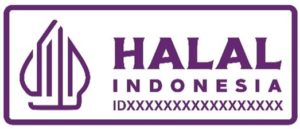
Once registered, products must display the registration number near the halal label. BPJPH permits the following labeling options:

  • Indonesian halal logo only (vertical or horizontal)

  • Indonesian halal logo combined with a foreign halal institution logo (vertical or horizontal)

Compliance and Enforcement

The regulations establish comprehensive compliance requirements for business actors, covering everything from maintaining accurate information and separating halal and non-halal operations to proper labeling and timely renewal of certificates.

Noncompliance can result in progressive administrative sanctions, including:

  • Written warnings for all violations;
  • Administrative fines for specific violations, including failure to maintain halal standards, improper labeling, and failure to register or renew certificates;
  • Revocation of halal certificates for certain types of violations; and
  • Withdrawal of goods from circulation.

Businesses may file objections to administrative fines, certificate revocations, or product withdrawals within five working days of the sanction issuance. BPJPH must respond to objections within five working days.

Strategic Considerations

For companies importing halal products into Indonesia, SHLN registration offers a significantly streamlined and more cost-effective path to compliance compared to full national certification. However, eligibility depends entirely on whether the foreign certifying institution has an MRA with BPJPH. Companies should verify their certifying institution’s status early in their market entry planning.

Given the approaching 2026 deadline for many product categories, businesses should begin the registration process well in advance to ensure uninterrupted market access. The 20-day maximum processing time, while relatively quick, should be factored into supply chain and launch timelines.


RELATED INSIGHTS​ 

August 25, 2025
Indonesia’s current regulations on franchises, as stipulated under Government Regulation No. 35/2024 on Franchising and its implementing regulation, Ministry of Trade (MOT) Regulation No. 71/2019 regarding Implementation of Franchising, highlight fundamental changes in franchise registration. These changes have introduced additional complexities and challenges in the franchise registration procedure, making it more difficult for franchise owners to navigate the process. New procedure Franchise applications are still submitted through the Online Single Submission (OSS) portal of the Capital Investment Coordinating Board (BKPM). However, the new procedure requires each applicant, including foreign franchisors, to have an OSS account and a business registration number (NIB) issued by BKPM. An application for franchise registration must be submitted under the applicant’s own account—submissions can no longer be made through the account of a consultant. Once a franchise application is submitted, the authority will distribute the submission to the MOT—the authorized ministry for franchise registration. Any notification or decision upon the registration made by the MOT will be available in the OSS system. Applicants should regularly monitor the status of the franchise application because no notifications will be sent to applicants to alert them of any deficiency. Here is the summary of the new procedure for franchisors: Notable Requirements The disclosure document, or prospectus, is the key focus for the MOT in examining a franchise registration for a franchisor. This document is subject to thorough scrutiny by the MOT to ensure that all mandatory information meets the requirements set in the franchise regulations. The current regulations specifically require that the mandatory clause “business system” in the prospectus cover operational standards and procedures, which should include human resource management, administration, operational management, standard operating methods, business location selection, business premises design, employee requirements, and marketing strategies. Other clauses that are equally important to pay attention to are:
August 15, 2025
More than a decade after the issuance of Decree No. 52/2013/ND-CP (as amended by Decree No. 85/2021/ND-CP; collectively, “Decree 52”), Vietnam’s legal framework for e-commerce is under growing pressure to keep pace with the evolving digital economy. While Decree 52 has provided a foundational framework, it has shown certain limitations in keeping up with issues such as counterfeit goods, intellectual property enforcement, unqualified products, and emerging models like livestream selling and affiliate marketing. To address these regulatory gaps, the Ministry of Industry and Trade (MOIT) has released the 2025 Draft E-Commerce Law (“Draft Law”) for public consultation. The Draft Law is intended to supersede the current framework under Decree 52 and establish a more detailed and comprehensive legal foundation for the regulations of e-commerce activities in Vietnam. It is currently expected to be submitted to the National Assembly for review and potential adoption during its 10th session in October 2025. In this article, we discuss the Draft Law’s most significant updates and legal developments in comparison to existing regulations, and assess the practical challenges that businesses may face in preparing for implementation in the near future. Platform Classification: Toward a More Nuanced Framework Unlike Decree 52’s simpler structure, which broadly categorized platforms into either (i) websites selling goods and services or (ii) websites providing e-commerce services, the Draft Law introduces a more detailed framework that aims to classify platforms based on their technical functions and business models. Specifically, the Draft Law introduces a four-tier classification system for e-commerce platforms, consisting of: (i) Direct Business Platforms, (ii) Intermediary Platforms, (iii) Social Networks with E-Commerce Functions, and (iv) Multi-Service Integrated Platforms. This approach reflects an effort to more accurately capture the complexity of today’s e-commerce landscape, including hybrid platforms such as TikTok Shop. While this approach reflects the growing complexity of
July 9, 2025
On June 16, 2025, the National Assembly of Vietnam adopted Law No. 75/2025/QH15 amending and supplementing a number of articles of the 2012 Advertising Law, with an effective date of January 1, 2026. The amended Advertising Law was enacted to further refine the legal framework for advertising activities in the modern era. Online Advertising Under the amended Advertising Law, “online advertising” is defined to encompass not only advertising on electronic newspapers and electronic information pages (as provided under the 2012 Advertising Law) but also advertising on other electronic venues, including social media, online applications, and digital platforms with internet connection. The amended Advertising Law also imposes new requirements for online advertising, including: Identification signs: Advertisements must have clear identifiable signs in numbers, letters, symbols, images, or sounds to distinguish them from non-advertising content. Control features: For advertisements not in fixed areas, there must be easily recognizable features and icons that allow recipients to turn off the advertisement, notify the service provider of violating advertising content, and refuse to view inappropriate advertising content. Linked content: Content in the links embedded in advertisements must comply with the law. Advertising service providers and publishers must have measures to check and monitor the linked content. Advertising on social media: Organizations and enterprises providing social media services must offer users features to distinguish advertising content from other content. Signage for sponsored content: When advertising, users of social media services must use signs to differentiate advertising or sponsored content from other content they provide. In response to the above requirements for online advertising, the amended Advertising Law sets out obligations of advertisers, advertising service providers, advertising publishers, and advertising conveyors in relation to online advertising. Among these, it is notably the responsibility of individuals and organizations engaging in online advertising to prevent and remove violating
May 28, 2025
Tilleke & Gibbins attorneys in Vietnam have contributed the 2025 edition of Doing Business in Vietnam, a comprehensive Q&A-style resource from Thomson Reuters Practical Law that provides essential insights for companies navigating business operations in Vietnam. The guide presents a detailed overview of the country’s legal framework and regulatory environment, reflecting recent updates in Vietnamese legislation and practice. This annually updated guide offers key information on the following areas: Legal system: Structure of the Vietnamese judiciary and the role of codified law. Foreign investment: Conditions for market access, licensing requirements, foreign ownership restrictions, and investment incentives. Business vehicles: Formation and operation of legal entities, including limited liability companies, joint-stock companies, and representative offices. Employment: Employment contracts, social insurance, labor rights, and procedures for hiring foreign nationals. Tax: Overview of corporate income tax, personal income tax, value-added tax, and other tax obligations. Intellectual property: Procedures for protecting and enforcing patents, trademarks, copyrights, and other IP rights. Data protection: Compliance requirements under Vietnam’s data privacy laws, including the Personal Data Protection Decree. Competition law: Antitrust rules and regulatory oversight under the Law on Competition. Anti-bribery and corruption: Legal framework and enforcement practices aimed at curbing corrupt activities. E-commerce and digital business: Regulations governing online platforms, digital content, and cross-border services. Marketing and advertising: Laws and guidelines on advertising standards and consumer protection. Product regulation and liability: Safety requirements, product liability issues, and roles of relevant authorities. Doing Business in Vietnam is part of Practical Law’s global series of legal guides designed to support international practitioners and businesses. To access the most recent edition of the Vietnam guide, visit the Practical Law website and sign up for a free trial.