
You are using an outdated browser and your browsing experience will not be optimal. Please update to the latest version of Microsoft Edge, Google Chrome or Mozilla Firefox. Install Microsoft Edge

September 7, 2021

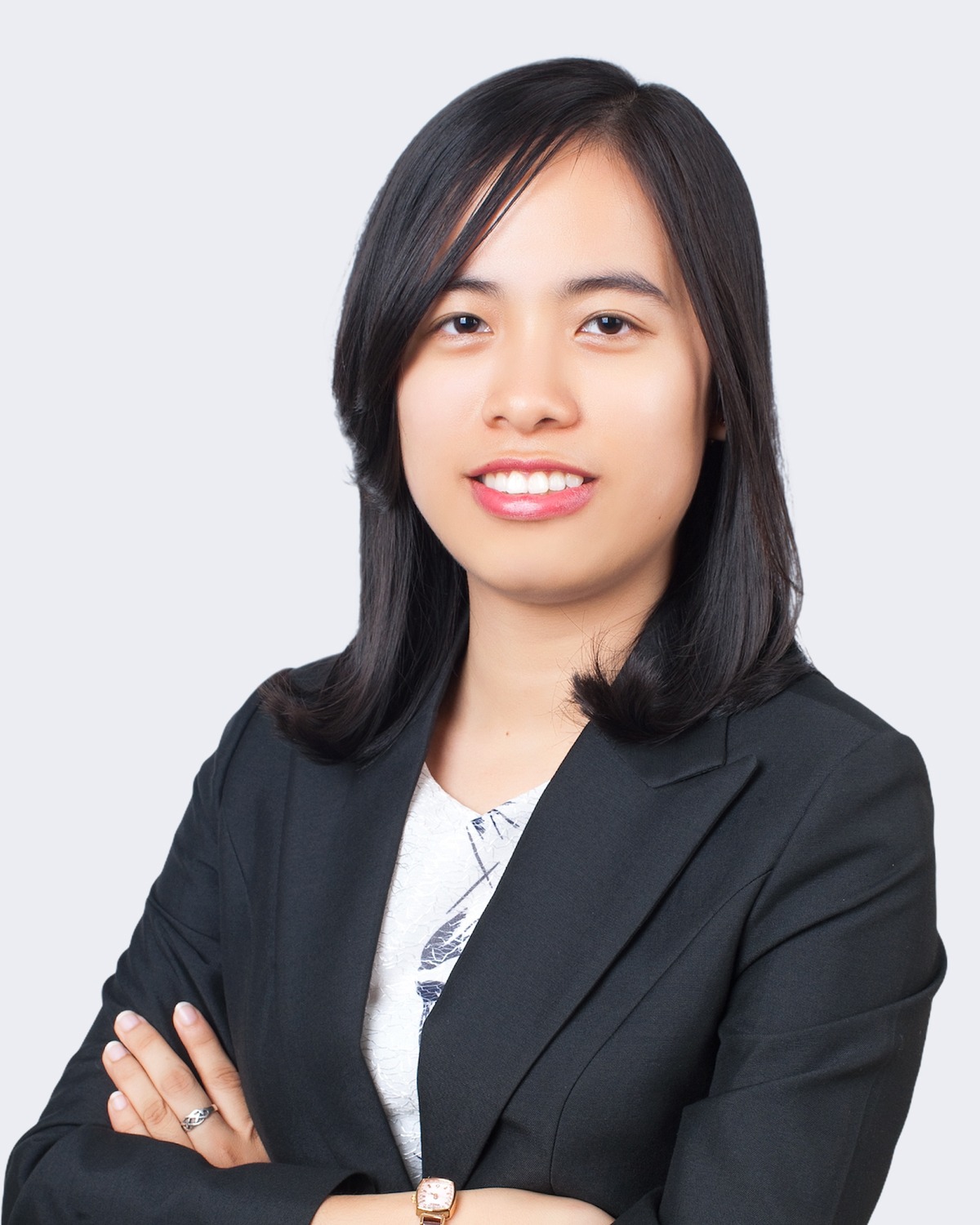
Chandavya Ing Writes about Dependent Patents in Southeast Asia for les Nouvelles Journal

Chandavya Ing, an associate in the intellectual property group of Tilleke & Gibbins’ Phnom Penh office, coauthored an article titled “The Fate of Dependent Patents in Cambodia, Laos, Myanmar, Thailand, and Vietnam—A Comparison with the Situation in Germany and India” with Prof. Dr. Heinz Goddar, a patent attorney and partner in the Munich office of Boehmer & Boehmer. The article appeared in the September 2021 issue of les Nouvelles, the journal of the Licensing Executives Society International (LESI).

Dependent patents are new patents that also rely on a previous one, such as when an invention builds on or adds new technology to a previous patented invention. This approach to securing commercial rights for progressive inventions is often seen in patent-heavy fields such as telecommunications and advanced technology. Commercializing a dependent patent without infringing the earlier patent (i.e., the one that it depends on) requires licensing from the holder of the earlier patent. If this proves unworkable, the dependent patent cannot go to market. While this may ensure that the original patent rights are upheld, such an impasse can also block innovation and progress.

As the authors explain in the article, Germany and India (as well as other countries such as Russia and Taiwan) will enlist a state party in an effort to resolve any such situation that arises, often through a de-blocking mechanism such as a compulsory or non-voluntary license. The article then looks in detail at the de-blocking mechanisms and provisions in the legal and regulatory environment of various countries in Southeast Asia, before offering comparison to the situation in Germany and India.

Overall, the authors conclude that a more active (but balanced) use of compulsory licensing—which already exists in many Southeast Asian countries but is not frequently employed outside of the pharmaceutical sector—might help clear patent-related obstacles to further technological development in patent-heavy fields, thus enabling technology transfer that would benefit Southeast Asian countries’ economies and technological development.

The full article is available on the LESI website (subscription required).
RELATED INSIGHTS​ 

February 12, 2014
Nic Garnett, a consultant in Tilleke & Gibbins’ intellectual property group, will be giving a talk on “Innovation and the Law: An International Perspective,” at the latest in a series of IP Lunch Talks jointly organized by the National Innovation Agency and Tilleke & Gibbins. Nic will discuss a number of topics, among which include:
February 6, 2014
Jeffrey J. Blatt, of counsel and a key member of the Tilleke & Gibbins technology, media, and telecommunications (TMT) practice, has been recognized as a leading telecoms and media expert by The International Who’s Who of Telecoms & Media Lawyers 2014. Jeffrey is just one of two experts listed in this category in Thailand. The nominees were selected based upon comprehensive, independent survey work with both general counsel and private practice lawyers across the world.
November 19, 2013
Tilleke & Gibbins has been nominated by Chambers and Partners for the Thailand Law Firm of the Year award. Four other firms were shortlisted for the award, with the winner set to be announced at the Chambers Asia Pacific Awards on February 17, 2014, at the JW Marriott Hotel in Hong Kong.Lex Mundi, the world’s leading association of independent law firms, is sponsoring the Chambers Asia Pacific Awards 2014. Tilleke & Gibbins is the exclusive Lex Mundi member firm for Thailand.
November 13, 2013
Jeffrey J. Blatt, an of counsel at Tilleke & Gibbins with more than 30 years of experience in the telecommunications industry, will be speaking at the Cloud World Forum Asia on the topic “Customer-Centric Cloud and Web-Based Business Service Models.” He will discuss, among other things, the recent Edward Snowden scandal; the Patriot Act and lawful interception; the effects of the New World Order on U.S.-based Cloud Services; opportunities for non-U.S. based cloud providers; the movement toward an encryption-based Internet model; possible differentiators for non-U.S.