You are using an outdated browser and your browsing experience will not be optimal. Please update to the latest version of Microsoft Edge, Google Chrome or Mozilla Firefox. Install Microsoft Edge

November 23, 2021

Vietnam: The Registrability of Media-Hype and Sensational Marks

Managing Intellectual Property

Given the highly polarized state of U.S. politics, one may find it difficult to imagine a scenario where Donald Trump and Joe Biden appear together outside of a debate stage. Surprisingly, these names were united on a Vietnamese trademark application filed during the heat of the U.S. presidential election in 2020.
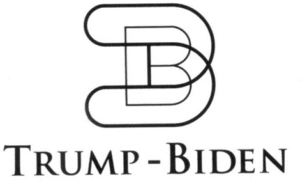
This “TRUMP-BIDEN” mark was filed for food, beverages, and restaurants in Classes 29, 30 and 43 — items with no link to the two presidents. The only reason for such filing, obviously, was to gain consumers’ attention and to ride a wave of popularity, although in a rather unusual way.

Attention-seeking entrepreneurs are often inspired by celebrities and recent events when seeking new brand names and slogans. They may attempt to register their ideas as trademarks while the influence of the person or event is still strong. Others take a different but similarly sensational approach, crafting marks loaded with double entendre with the hope of sneaking past the gatekeepers.

While the idea of registering celebrity-driven or sensational marks may be beneficial for business, is it possible under Vietnam’s IP laws?

Famous People’s Names

In addition to the TRUMP-BIDEN mark mentioned above, a quick search on the public database of the IP Office of Vietnam reveals several dozen “TRUMP” marks, with most of them filed after Donald Trump’s inauguration in 2017. The IP Office’s decisions have shown that marks explicitly referring to the former president (such as the full-name trademark DONALD TRUMP) will be refused protection, but more subtle indicators can survive to registration, such as DONTRUMP (Reg. 327991), BETATRUMP (Reg. No. 329952), TRUMP GOLD (Reg. No. 313441), TRUMP WATER  (Reg. No. 355166 – see image below), and even TRUMP by itself (Reg. No. 342771).

Under Article 73.3 of the IP Law, “signs identical or confusingly similar to real names, aliases, pseudonyms or images of leaders, national heroes or famous personalities of Vietnam or foreign countries” are ineligible for protection as marks, regardless of the goods/services applied for. This is why the “DONALD TRUMP” mark was refused, but it seems to apply only to obvious cases, such as where the full name of the famous person is exploited. If only a part of the name is used, it could still be accepted. From that view, it is likely that the TRUMP-BIDEN mark could be considered inherently distinctive, as it includes neither the full names nor the images of the presidents.

Another interesting TRUMP-derived mark is found in a pending application for TRUMPKIDS KINDERGARTEN:

While the Trump inspiration in the faceless image is undeniable, could this mark still be considered registrable? It consists of the name and image of a famous person, but both are stylized and combined with other elements. In our opinion, the mark is likely to get through. If so, this is an example of a clever way to utilize the fame of a person, while skirting the prohibitions of Article 73.3.

On the other hand, names or signs similar to those of well-known people with decidedly negative reputations – war criminals or terrorists, for example – may be refused for being contrary to social ethics and public order as stipulated in Article 8.1 of the IP Law, regardless of how “creative” the marks are. The mark BILLADEN for pesticides in Class 05 was refused for being confusingly similar to the name of Osama Bin Laden. Although the applicant argued that BILLADEN was fanciful and in no way related to the infamous terrorist, the IP Office held that the registration of the mark was against morality and public policy, and maintained its refusal.

Vulgar or Sensational Slogans

Some companies, especially in youth-oriented sectors like video games or beverages, adopt ridiculous, ear/eye-catching marks in the hope of gaining more attention for their products or services. One of Vietnam’s most popular craft breweries has applied for a series of winkingly raunchy bilingual marks for beer in Class 32, including BOM VU DU XAI [roughly “breast augmentation big enough to use”] FIFTY-TWO TRIPLE Z; COI DO RA [take off your clothes] LET’S GET NAKED; and AN BANH TRA TIEN [slang for “buy/use prostitute”] NO COOKIE NO NOOKIE. While such names are commonplace in the freewheeling craft beer industry, it remains to be seen if they are registrable in Vietnam.

Although the marks are pending without any issued opinion from the IP Office, a similar case was refused for protection. The stylized mark “NUDE” for trading services of food, clothing, household appliances, etc., in Class 35 was refused for again being contrary to social ethics and public order.

The standards for judging this are quite subjective and dependent on the particular examiner’s viewpoint. For example, we found the mark FASCIST was successfully registered for insecticides in Class 05, while DAP DA (literally “beat the rock” but slang for “use drugs”) was registered for restaurant services in Class 43. Based on this precedent, it is highly likely that the pending LET’S GET NAKED mark will be refused but the others will survive to registration, due to their indirect wording.

Our Perspective

We respect our clients’ choices, but we maintain certain standards. While some phrases, symbols, and other sensitive components may evoke powerful emotions that increase sales of the goods they designate, limits must also be set. Bearing in mind that Vietnam is an Asian country with high standards regarding social ethics, foreign companies should be mindful in choosing trademarks to be used in the country. The purpose is not only to have their marks registered, but also to have them accepted by mass Vietnamese consumers.

In addition, media-hype trademarks often have short shelf-lives, while the registration procedure in Vietnam is lengthy, normally 20-24 months. If and when the trademark registrations are granted, it may already be too late to draw the public’s attention. In the end, investing in thoughtful, sustainable trademarks will always be the right choice.

This article first appeared in Managing Intellectual Property.

RELATED INSIGHTS​ 

July 27, 2026
Tilleke & Gibbins’ intellectual property specialists have authored the Thailand chapter of Trade Secrets 2026 from Chambers and Partners. This global guide examines the legal frameworks governing trade secret protection, enforcement, and litigation across jurisdictions worldwide. The Thailand chapter provides a comprehensive overview of the country’s legal regime for protecting confidential business information, covering the legal framework, trade secret misappropriation, litigation procedures, remedies, and dispute resolution. Some topics covered include: Protectable trade secrets Reasonable measures to maintain secrecy Employee confidentiality Trade secret licensing Civil and criminal remedies Litigation procedures and injunctions Damages and other remedies Mediation and arbitration The guide also examines practical issues relating to safeguarding trade secrets, defending against allegations of misappropriation, and managing trade secret disputes in Thailand. Chambers and Partners’ Global Practice Guides provide in-house counsel with authoritative commentary on practical legal issues affecting business, enabling readers to compare legislation and procedures across multiple jurisdictions. The Thailand chapter of Trade Secrets 2026 is available as a PDF through the button below. The full guide can be accessed for free on the Chambers and Partners website.
July 27, 2026
In March 2025, Thailand’s Central Intellectual Property and International Trade Court (IP&IT Court) issued a landmark judgment in favor of Luckin Coffee, China’s leading retail coffee chain. The judgment marked a significant turnaround following earlier trademark litigation involving Luckin Coffee from 2021 to 2023 that had generated widespread public attention and raised questions about the protection available to legitimate foreign brand owners in Thailand. In a significant subsequent development, Thailand’s Court of Appeal for Specialized Cases has now affirmed the IP&IT Court’s judgment in its entirety. The appellate decision brings clarity to one of Thailand’s most closely watched trademark disputes. Significantly, this is the first case in Thailand to formally recognize the trademark squatting principle. The Court of Appeal confirmed that Luckin Coffee has a better right to the disputed mark and ordered cancellation of the defendants’ trademark registration—a key application of the “better right” doctrine. The court also upheld the substantial damages awarded at first instance, providing important guidance on assessing harm from systematic trademark squatting. Award-Winning Judgment Affirmed in Its Entirety The significance of the first-instance judgment extended beyond the outcome for Luckin Coffee. The IP&IT Court judgment was subsequently recognized in the IP&IT Court’s Distinguished Judgment Awards in 2025, reflecting the complexity, novelty, and legal significance of the issues considered in the case. The defendants nevertheless appealed the judgment, challenging several key aspects of the IP&IT Court’s decision. Luckin Coffee continued to entrust Tilleke & Gibbins as their sole attorney to pursue the case at the appellate level. After considering the defendants’ appeal and Luckin Coffee’s submissions in response, the Court of Appeal affirmed the first-instance judgment in its entirety. The judgment was announced on July 8, 2026. Better Right to the Marks The Court of Appeal confirmed Luckin Coffee’s superior rights. The orders include cancellation
July 24, 2026
As food innovation continues to accelerate, manufacturers are increasingly introducing ingredients derived from new sources, produced using novel technologies, or lacking a significant history of human consumption. While these innovations create new opportunities for the food industry, they also raise important questions regarding consumer safety. For this reason, many jurisdictions, including Thailand, the European Union, Australia and New Zealand, Canada, and Singapore, require a premarket safety assessment for novel food ingredients before they can be placed on the market. The objective of this assessment is to ensure that each ingredient is safe for its intended use and level of consumption, does not present toxicological, allergenic, microbiological, or nutritional concerns, and will not mislead consumers. Scientific authorities typically evaluate the ingredient’s identity, manufacturing process, composition, specifications, anticipated dietary exposure, toxicological information, nutritional impact, and history of use before determining whether it can be marketed. Against this background, the Thai Food and Drug Administration (FDA) recently took an important step toward improving regulatory transparency by publishing, for the first time, a consolidated public list of substances that have successfully completed the Thai FDA’s safety assessment process, including substances determined to be novel foods and those determined not to fall within the novel food category. The list identifies the approved substances, the corresponding manufacturers or importers, approval dates, and the approved conditions of use. Although the publication does not change the existing legal framework governing novel food approvals, it provides businesses with greater visibility into the Thai FDA’s regulatory precedents and the types of substances that have previously been accepted through the safety assessment process. The full announcement is available on the Thai FDA’s website. As the list is now publicly available, it also provides useful insight into the types of substances that have successfully completed the Thai FDA’s safety assessment process.
July 24, 2026
Indonesia has updated its fee framework for intellectual property (IP)-related government services, with implications for IP owners, licensees, lenders, digital platforms, and businesses operating in the country. Government Regulation No. 30 of 2026 on Types and Tariffs of Non-Tax State Revenue Applicable to the Ministry of Law (GR 30/2026) was promulgated on July 2, 2026, and will take effect on August 1, 2026. Key Takeaways GR 30/2026, which replaces the relevant IP service fees under Government Regulation No. 45 of 2024, reorganizes the fee schedule into separate categories for copyright, industrial designs, patents, layout designs of integrated circuits, trade secrets, trademarks, geographical indications, IP enforcement, and other categories. The most commercially relevant changes include a new copyright recordation tariff exemption for songs and music, higher fees for several trademark and geographical indication services, new IP enforcement service fees, and a new fee type for registration of fiduciary security over IP rights objects. In addition, this is the first major update for trademark fees in approximately 10 years. GR 30/2026 is significant not only as a fee update but also as a further indication of Indonesia’s increasing recognition of IP as a financeable commercial asset. By expressly assigning fees to the registration of fiduciary security over IP rights objects, the regulation places IP-backed collateral filings within the Ministry of Law’s administrative service framework. While GR 30/2026 does not create a new secured-transactions regime, this development is relevant for lenders, borrowers, and IP owners structuring financing arrangements secured by trademarks, patents, copyrights, industrial designs, or other registrable IP rights in Indonesia. Copyright: New Fee Exemption for Songs and Music Recordation For copyright, GR 30/2026 creates a fee-exempt category for recordation of works or related-rights products for songs or music, while maintaining a separate category for other works and related-rights products. It