You are using an outdated browser and your browsing experience will not be optimal. Please update to the latest version of Microsoft Edge, Google Chrome or Mozilla Firefox. Install Microsoft Edge

November 23, 2021

Vietnam: The Registrability of Media-Hype and Sensational Marks

Managing Intellectual Property

Given the highly polarized state of U.S. politics, one may find it difficult to imagine a scenario where Donald Trump and Joe Biden appear together outside of a debate stage. Surprisingly, these names were united on a Vietnamese trademark application filed during the heat of the U.S. presidential election in 2020.
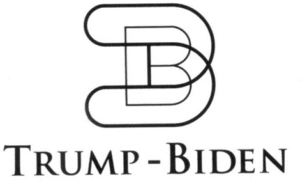
This “TRUMP-BIDEN” mark was filed for food, beverages, and restaurants in Classes 29, 30 and 43 — items with no link to the two presidents. The only reason for such filing, obviously, was to gain consumers’ attention and to ride a wave of popularity, although in a rather unusual way.

Attention-seeking entrepreneurs are often inspired by celebrities and recent events when seeking new brand names and slogans. They may attempt to register their ideas as trademarks while the influence of the person or event is still strong. Others take a different but similarly sensational approach, crafting marks loaded with double entendre with the hope of sneaking past the gatekeepers.

While the idea of registering celebrity-driven or sensational marks may be beneficial for business, is it possible under Vietnam’s IP laws?

Famous People’s Names

In addition to the TRUMP-BIDEN mark mentioned above, a quick search on the public database of the IP Office of Vietnam reveals several dozen “TRUMP” marks, with most of them filed after Donald Trump’s inauguration in 2017. The IP Office’s decisions have shown that marks explicitly referring to the former president (such as the full-name trademark DONALD TRUMP) will be refused protection, but more subtle indicators can survive to registration, such as DONTRUMP (Reg. 327991), BETATRUMP (Reg. No. 329952), TRUMP GOLD (Reg. No. 313441), TRUMP WATER  (Reg. No. 355166 – see image below), and even TRUMP by itself (Reg. No. 342771).

Under Article 73.3 of the IP Law, “signs identical or confusingly similar to real names, aliases, pseudonyms or images of leaders, national heroes or famous personalities of Vietnam or foreign countries” are ineligible for protection as marks, regardless of the goods/services applied for. This is why the “DONALD TRUMP” mark was refused, but it seems to apply only to obvious cases, such as where the full name of the famous person is exploited. If only a part of the name is used, it could still be accepted. From that view, it is likely that the TRUMP-BIDEN mark could be considered inherently distinctive, as it includes neither the full names nor the images of the presidents.

Another interesting TRUMP-derived mark is found in a pending application for TRUMPKIDS KINDERGARTEN:

While the Trump inspiration in the faceless image is undeniable, could this mark still be considered registrable? It consists of the name and image of a famous person, but both are stylized and combined with other elements. In our opinion, the mark is likely to get through. If so, this is an example of a clever way to utilize the fame of a person, while skirting the prohibitions of Article 73.3.

On the other hand, names or signs similar to those of well-known people with decidedly negative reputations – war criminals or terrorists, for example – may be refused for being contrary to social ethics and public order as stipulated in Article 8.1 of the IP Law, regardless of how “creative” the marks are. The mark BILLADEN for pesticides in Class 05 was refused for being confusingly similar to the name of Osama Bin Laden. Although the applicant argued that BILLADEN was fanciful and in no way related to the infamous terrorist, the IP Office held that the registration of the mark was against morality and public policy, and maintained its refusal.

Vulgar or Sensational Slogans

Some companies, especially in youth-oriented sectors like video games or beverages, adopt ridiculous, ear/eye-catching marks in the hope of gaining more attention for their products or services. One of Vietnam’s most popular craft breweries has applied for a series of winkingly raunchy bilingual marks for beer in Class 32, including BOM VU DU XAI [roughly “breast augmentation big enough to use”] FIFTY-TWO TRIPLE Z; COI DO RA [take off your clothes] LET’S GET NAKED; and AN BANH TRA TIEN [slang for “buy/use prostitute”] NO COOKIE NO NOOKIE. While such names are commonplace in the freewheeling craft beer industry, it remains to be seen if they are registrable in Vietnam.

Although the marks are pending without any issued opinion from the IP Office, a similar case was refused for protection. The stylized mark “NUDE” for trading services of food, clothing, household appliances, etc., in Class 35 was refused for again being contrary to social ethics and public order.

The standards for judging this are quite subjective and dependent on the particular examiner’s viewpoint. For example, we found the mark FASCIST was successfully registered for insecticides in Class 05, while DAP DA (literally “beat the rock” but slang for “use drugs”) was registered for restaurant services in Class 43. Based on this precedent, it is highly likely that the pending LET’S GET NAKED mark will be refused but the others will survive to registration, due to their indirect wording.

Our Perspective

We respect our clients’ choices, but we maintain certain standards. While some phrases, symbols, and other sensitive components may evoke powerful emotions that increase sales of the goods they designate, limits must also be set. Bearing in mind that Vietnam is an Asian country with high standards regarding social ethics, foreign companies should be mindful in choosing trademarks to be used in the country. The purpose is not only to have their marks registered, but also to have them accepted by mass Vietnamese consumers.

In addition, media-hype trademarks often have short shelf-lives, while the registration procedure in Vietnam is lengthy, normally 20-24 months. If and when the trademark registrations are granted, it may already be too late to draw the public’s attention. In the end, investing in thoughtful, sustainable trademarks will always be the right choice.

This article first appeared in Managing Intellectual Property.

RELATED INSIGHTS​ 

August 15, 2025
Indonesia’s Directorate General of Intellectual Property (DGIP) has introduced a temporary feature in its online filing system to accommodate the submission of annual patent working statements. The requirement to submit these annual working statements was introduced under the amended Patent Law enacted on October 28, 2024, but the implementing regulation has still not been issued. Annual Working Statements Article 20A of the amended Patent Law requires all patentees to submit an annual statement regarding the implementation of their patents in Indonesia. This obligation applies to all active patents, regardless of when they were granted. The annual working statement declares the status of implementation of the patented invention within Indonesia. Acceptable forms of implementation include: Manufacturing the patented product (whether commercialized or not) Utilizing the patented process (whether commercialized or not) Importation Licensing If the patent has not yet been implemented in Indonesia, the DGIP provides an option to indicate: “The mentioned registered patent has not been implemented in Indonesia.” The statement must be made using the official template provided by the DGIP through the online filing system. Submission The working statement must be submitted annually no later than December 31 of each calendar year. No supporting documents are needed for the submission apart from the signed form itself. A color scanned copy will suffice; the original document is not required. There is currently no official fee for submitting the working statement. While the submission process may eventually align with annuity fee payments, the current process remains separate due to the pending implementing regulation. The submission process may be subject to change upon issuance of the implementing regulation, which is under discussion and expected in the coming months. In the interim, the DGIP accepts submissions of overdue working statements, allowing patentees to fulfill their obligations retroactively. This flexibility is expected
July 31, 2025
The Madrid System for international trademark registration provides the opportunity for a simplified and cost-effective way to register trademarks in multiple countries through a single application. Indonesia joined the Madrid System in 2018, and in 2024 alone, it received over 8,600 applications through this system. Despite the system’s effectiveness, it is important for trademark owners to be aware of the potential risks of refusal that can arise during the process of registration. Trademark applicants must pay close attention to these critical points when designating Indonesia. Appointing a Local Representative to Respond An applicant or representative of an international registration (IR) application that has been provisionally refused must appoint a local Indonesian representative in order to submit a response to the provisional refusal. This appointment is solely for the purpose of responding to the refusal in Indonesia; it is not necessary if the IR has not received any rejection. Furthermore, the local representative should not be registered with WIPO, as doing so would affect representation across all designated countries. Timing When it comes to calculating the deadline for responding to a provisional refusal, there is a discrepancy between the methods used by the DGIP and WIPO. Under the Indonesian Trademark Law, trademark owners can file a response within 30 working days, excluding weekends and national holidays. However, the WIPO cover letter accompanying the DGIP’s provisional refusal notice specifies both the start date and the deadline for responding to the notification, which is calculated as 30 calendar days, including weekends and national holidays. Therefore, a response to the provisional refusal of IR should be submitted in accordance with the WIPO cover letter to prevent any formality issue. Grounds for Refusal After an IR application is published in Indonesia’s Trademark Gazette, it undergoes substantive examination by the Directorate General of Intellectual Property (DGIP) examiners. The
July 30, 2025
Artificial intelligence (AI) model training and data scraping are essential processes in the development of modern AI systems. AI model training involves using large datasets to teach machine learning algorithms to recognize patterns, make predictions, or generate new content. Data scraping refers to the automated extraction of information from websites or digital sources, often to assemble the vast datasets required for effective AI training. As these practices become more widespread, questions about the legality of using third-party content—especially copyrighted works—have become increasingly important. In Thailand, the legal landscape for AI developers is shaped primarily by the Copyright Act, which presents unique challenges due to the absence of a fair-use exception. This article examines the copyright-related risks and legal uncertainties facing AI developers under Thailand’s current copyright law and practices, offering strategic guidance for navigating this complex environment. Copyright Risks in AI Scraping and Training Thailand’s Copyright Act does not provide a broad fair use or fair dealing exception, unlike some other jurisdictions, such as the United States. This absence has significant consequences for AI developers: No general defense for AI training: Any use of copyrighted material for AI model training is presumed to be infringing unless a specific, narrow statutory exception applies or explicit permission is obtained from the rights holder. There is no general legal basis for using copyrighted works in AI training without authorization. Increased rights clearance burden: Developers must identify and secure licenses for every copyrighted work included in their training datasets. Given the scale and diversity of data required for effective AI models, this process can be both impractical and costly. Legal ambiguity and litigation risk: The lack of clear statutory guidance or case law leaves developers in a legal gray area. There is no established precedent clarifying whether certain uses of copyrighted material for
July 25, 2025
Over the first half of 2025, the government of Vietnam has implemented a comprehensive suite of legislative reforms that significantly impact the country’s intellectual property (IP) framework. These amendments, most of which took effect on 1 July 2025, span the criminal, civil, administrative, and judicial sectors, and are part of a broader initiative to modernize Vietnam’s legal infrastructure, strengthen enforcement mechanisms, and harmonize domestic regulations with international standards. A summary of the key legislative changes and their potential implications for IP protection and enforcement across Vietnam is provided below. Criminal Code: Stricter penalties Under the 2025 amendments to Vietnam’s Criminal Code, penalties for offenses involving the manufacturing and trading of counterfeit goods have been significantly escalated. Individuals convicted of such violations now face fines ranging from VND 200 million to VND 2 billion (approximately USD 7,700 to USD 77,000; up from VND 100 million to VND 1 billion). For corporate entities, the penalties are even more severe, with fines ranging from VND 2 billion to VND 40 billion (roughly USD 77,000 to USD 1.54 million; up from VND 1 billion to VND 20 billion). These heightened penalties reflect the government’s intensified efforts to deter counterfeit-related crimes and protect consumer rights. Law on Handling Administrative Violations: Extended statute of limitations and application of electronic procedure The statute of limitations for addressing administrative violations in the IP sector is still two years. However, in cases where such violations are referred by procedural authorities, this period is extended by one year. The time taken by these authorities to process the case is now included within the overall limitation period. In addition, the Law on Handling Administrative Violations facilitates the use of electronic procedures, provided that the necessary infrastructure, technical systems, and information conditions are in place. Specifically, enforcement authorities are now permitted