You are using an outdated browser and your browsing experience will not be optimal. Please update to the latest version of Microsoft Edge, Google Chrome or Mozilla Firefox. Install Microsoft Edge

November 23, 2021

Vietnam: The Registrability of Media-Hype and Sensational Marks

Managing Intellectual Property

Given the highly polarized state of U.S. politics, one may find it difficult to imagine a scenario where Donald Trump and Joe Biden appear together outside of a debate stage. Surprisingly, these names were united on a Vietnamese trademark application filed during the heat of the U.S. presidential election in 2020.
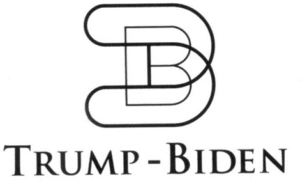
This “TRUMP-BIDEN” mark was filed for food, beverages, and restaurants in Classes 29, 30 and 43 — items with no link to the two presidents. The only reason for such filing, obviously, was to gain consumers’ attention and to ride a wave of popularity, although in a rather unusual way.

Attention-seeking entrepreneurs are often inspired by celebrities and recent events when seeking new brand names and slogans. They may attempt to register their ideas as trademarks while the influence of the person or event is still strong. Others take a different but similarly sensational approach, crafting marks loaded with double entendre with the hope of sneaking past the gatekeepers.

While the idea of registering celebrity-driven or sensational marks may be beneficial for business, is it possible under Vietnam’s IP laws?

Famous People’s Names

In addition to the TRUMP-BIDEN mark mentioned above, a quick search on the public database of the IP Office of Vietnam reveals several dozen “TRUMP” marks, with most of them filed after Donald Trump’s inauguration in 2017. The IP Office’s decisions have shown that marks explicitly referring to the former president (such as the full-name trademark DONALD TRUMP) will be refused protection, but more subtle indicators can survive to registration, such as DONTRUMP (Reg. 327991), BETATRUMP (Reg. No. 329952), TRUMP GOLD (Reg. No. 313441), TRUMP WATER  (Reg. No. 355166 – see image below), and even TRUMP by itself (Reg. No. 342771).

Under Article 73.3 of the IP Law, “signs identical or confusingly similar to real names, aliases, pseudonyms or images of leaders, national heroes or famous personalities of Vietnam or foreign countries” are ineligible for protection as marks, regardless of the goods/services applied for. This is why the “DONALD TRUMP” mark was refused, but it seems to apply only to obvious cases, such as where the full name of the famous person is exploited. If only a part of the name is used, it could still be accepted. From that view, it is likely that the TRUMP-BIDEN mark could be considered inherently distinctive, as it includes neither the full names nor the images of the presidents.

Another interesting TRUMP-derived mark is found in a pending application for TRUMPKIDS KINDERGARTEN:

While the Trump inspiration in the faceless image is undeniable, could this mark still be considered registrable? It consists of the name and image of a famous person, but both are stylized and combined with other elements. In our opinion, the mark is likely to get through. If so, this is an example of a clever way to utilize the fame of a person, while skirting the prohibitions of Article 73.3.

On the other hand, names or signs similar to those of well-known people with decidedly negative reputations – war criminals or terrorists, for example – may be refused for being contrary to social ethics and public order as stipulated in Article 8.1 of the IP Law, regardless of how “creative” the marks are. The mark BILLADEN for pesticides in Class 05 was refused for being confusingly similar to the name of Osama Bin Laden. Although the applicant argued that BILLADEN was fanciful and in no way related to the infamous terrorist, the IP Office held that the registration of the mark was against morality and public policy, and maintained its refusal.

Vulgar or Sensational Slogans

Some companies, especially in youth-oriented sectors like video games or beverages, adopt ridiculous, ear/eye-catching marks in the hope of gaining more attention for their products or services. One of Vietnam’s most popular craft breweries has applied for a series of winkingly raunchy bilingual marks for beer in Class 32, including BOM VU DU XAI [roughly “breast augmentation big enough to use”] FIFTY-TWO TRIPLE Z; COI DO RA [take off your clothes] LET’S GET NAKED; and AN BANH TRA TIEN [slang for “buy/use prostitute”] NO COOKIE NO NOOKIE. While such names are commonplace in the freewheeling craft beer industry, it remains to be seen if they are registrable in Vietnam.

Although the marks are pending without any issued opinion from the IP Office, a similar case was refused for protection. The stylized mark “NUDE” for trading services of food, clothing, household appliances, etc., in Class 35 was refused for again being contrary to social ethics and public order.

The standards for judging this are quite subjective and dependent on the particular examiner’s viewpoint. For example, we found the mark FASCIST was successfully registered for insecticides in Class 05, while DAP DA (literally “beat the rock” but slang for “use drugs”) was registered for restaurant services in Class 43. Based on this precedent, it is highly likely that the pending LET’S GET NAKED mark will be refused but the others will survive to registration, due to their indirect wording.

Our Perspective

We respect our clients’ choices, but we maintain certain standards. While some phrases, symbols, and other sensitive components may evoke powerful emotions that increase sales of the goods they designate, limits must also be set. Bearing in mind that Vietnam is an Asian country with high standards regarding social ethics, foreign companies should be mindful in choosing trademarks to be used in the country. The purpose is not only to have their marks registered, but also to have them accepted by mass Vietnamese consumers.

In addition, media-hype trademarks often have short shelf-lives, while the registration procedure in Vietnam is lengthy, normally 20-24 months. If and when the trademark registrations are granted, it may already be too late to draw the public’s attention. In the end, investing in thoughtful, sustainable trademarks will always be the right choice.

This article first appeared in Managing Intellectual Property.

RELATED INSIGHTS​ 

May 13, 2026
Laos has significantly broadened its industrial property administrative review framework, most notably by extending it to cover copyright and related rights for the first time. Decision No. 0306/IC on the Administrative Resolution of Disputes Concerning Industrial Property Registration, New Plant Variety Registration, and Copyright and Related Rights Recordation took effect on April 24, 2026, replacing the previous rules from 2023, which had covered only industrial property and new plant variety matters. Decision No. 0306/IC governs how Laos’ Department of Intellectual Property (DIP) and provincial offices handle formal challenges to industrial property registrations and applications. The proceedings covered include oppositions to pending applications, appeals of refused applications, requests for cancellation of existing registrations, and—newly—disputes concerning the recordation and interpretation of copyright and related rights. These administrative proceedings within the DIP are heard by a government-appointed Administrative Dispute Resolution Committee, which functions similarly to the opposition and review boards found in other jurisdictions. Key Changes Decision No. 0306/IC covers four categories of administrative proceedings: Oppositions: Third-party challenges to a pending industrial property application before it is granted. Refusal appeals: Challenges to the DIP’s decision to refuse their application. Cancellation or deletion requests: Applications to invalidate an existing registered right on the grounds that it should not have been granted. Copyright and related rights disputes: Challenges to or interpretations of copyright and related rights recordations, including determinations of whether a work qualifies for copyright protection under Lao law. The most significant development is the committee’s new jurisdiction over copyright matters. The committee is now empowered to resolve disputes concerning copyright and related rights recordation—this includes the authority to determine whether a work qualifies for copyright protection and to interpret the scope of an existing recordation. Parties who believe a competitor has improperly recorded copyright over a work, or who wish to contest
April 30, 2026
Vietnam’s Decree No. 134/2026/ND‑CP, which took effect on 9 April 2026, plays an important role in detailing and implementing Vietnam’s Intellectual Property (IP) Law in the context of rapid digital transformation and the growing application of artificial intelligence (AI). The new decree provides comprehensive guidance on the application of copyright and related‑rights regulations, addressing key issues such as authorship, ownership, statutory exceptions and limitations, registration procedures, and enforcement mechanisms. Through these measures, Decree 134 seeks to achieve an appropriate balance between safeguarding the legitimate interests of rightsholders and fostering innovation, research, and technological advancement, thereby strengthening the state’s framework for the effective management, protection, and exploitation of intellectual property in the digital and AI‑driven environment. Some notable aspects of Decree 134 are discussed below. Copyright for AI-Created Works Decree 134 provides important guidance on the determination of copyright and related rights in works created with the assistance of AI. Article 5a reaffirms the principle that human creativity remains central to copyright protection, clarifying that copyright or related rights arise only where a human makes a substantial and decisive intellectual contribution, exercises effective control over the creative outcome, and assumes responsibility for the content and its legality. At the same time, the provision confirms that AI is regarded solely as a technological tool rather than a rights‑holding subject, thus ensuring consistency with the fundamental concepts of authorship and ownership under the IP Law. By introducing requirements on transparency, proof of human contribution, and compliance with AI‑specific labelling and technical marking obligations, Decree 134 establishes a clear and enforceable legal framework for the responsible use of AI in creative activities. Lawful Use of Copyrighted Texts and Data Article 37a of Decree 134 sets out the specific conditions under which copyrighted texts and data may be lawfully used for scientific research, experimentation,
April 29, 2026
Across the region, local brands have become key drivers of economic growth, cultural identity, and innovation, and Myanmar is no exception. From traditional products and creative industries to modern startups and small and medium‑sized enterprises (SMEs), Myanmar’s local brands are increasingly shaping domestic markets. However, as local brands grow, they also face higher risks of imitation, misuse, and unfair competition. In this context, protecting brand identity, creativity, and innovation through proper intellectual property (IP) strategies is essential to ensure that Myanmar’s homegrown businesses can grow sustainably, compete confidently, and retain the value of what they create. The Key IP Laws for Local Brands In 2019, Myanmar enacted a comprehensive suite of four IP laws, aligning the nation’s IP enforcement framework with international standards. Trademark Law 2019: This law introduced the “first-to-file” system into the country, with trademark rights primarily obtained through registration with the Intellectual Property Department (IPD). Trademarks protect brand names, logos, and other signs that distinguish goods or services. Registration grants the exclusive rights to use the mark and to prevent others from using identical or confusingly similar marks. Each registration lasts for 10 years from the filing date and can be renewed for subsequent 10-year periods. Copyright Law 2019: Copyright, which arises automatically upon creation, protects literary, artistic, musical, and audiovisual works, including software, advertisements, artwork, and social media content. While registration with the IPD is not mandatory under this law, it can be helpful for establishing evidence and supporting any future enforcement. The terms of protection for economic rights associated with copyrights vary depending on the type of work involved. In contrast, the protection for moral rights lasts indefinitely—continuing even after the author’s death. Industrial Design Law 2019: Under this law, any industrial design that is new and independently created can be filed with the
April 21, 2026
Vietnam continues to refine its intellectual property framework to align with the 2025 amendments to the Law on Intellectual Property (IP Law). On March 31, 2026, the government issued Decree 100/2026/ND-CP (Decree 100), which substantially amends Decree 65/2023/ND-CP detailing the implementation of the IP Law (Decree 65). On the same day, the Ministry of Science and Technology released Circular 10/2026/TT-BKHCN (Circular 10), providing detailed procedural guidance and new forms. Both instruments took effect on April 1, 2026, along with the amended IP Law. While the updates touch on every IP right, trademark owners and brand strategists will find several practical and forward-looking changes that directly affect filing strategy, examination timelines, portfolio management, and enforcement readiness. 1. Fast-Track Substantive Examination for Eligible Applications One of the most business-friendly innovations is the new fast-track substantive examination pathway for applications meeting specified eligibility criteria. Successful fast-track applications enjoy a shortened substantive examination period of three months. This offers a significant competitive edge for tech-driven or regulated-sector brands. If the mark is identical or similar to a mark in another person’s trademark application with an earlier filing date in the case of a priority application that has not yet been processed, the fast-track process will return to the ordinary process. However, the law does not touch on cases where marks under fast-track examination face office action due to other reasons (i.e. lack of distinctiveness, confusingly similar to others’ copyright, trade name, industrial design, etc.) 2. AI-Generated Trademarks Receive Clear Protection Pathway Decree 100 explicitly addresses the use of artificial intelligence (AI) in IP creation, amending Article 10a of Decree 65 to confirm that trademarks created with AI systems are fully protectable, provided they meet the standard requirements of registration. Trademarks face no additional “human authorship” hurdle (unlike patents or industrial designs). Brand owners