You are using an outdated browser and your browsing experience will not be optimal. Please update to the latest version of Microsoft Edge, Google Chrome or Mozilla Firefox. Install Microsoft Edge

November 23, 2021

Vietnam: The Registrability of Media-Hype and Sensational Marks

Managing Intellectual Property

Given the highly polarized state of U.S. politics, one may find it difficult to imagine a scenario where Donald Trump and Joe Biden appear together outside of a debate stage. Surprisingly, these names were united on a Vietnamese trademark application filed during the heat of the U.S. presidential election in 2020.
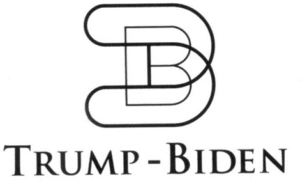
This “TRUMP-BIDEN” mark was filed for food, beverages, and restaurants in Classes 29, 30 and 43 — items with no link to the two presidents. The only reason for such filing, obviously, was to gain consumers’ attention and to ride a wave of popularity, although in a rather unusual way.

Attention-seeking entrepreneurs are often inspired by celebrities and recent events when seeking new brand names and slogans. They may attempt to register their ideas as trademarks while the influence of the person or event is still strong. Others take a different but similarly sensational approach, crafting marks loaded with double entendre with the hope of sneaking past the gatekeepers.

While the idea of registering celebrity-driven or sensational marks may be beneficial for business, is it possible under Vietnam’s IP laws?

Famous People’s Names

In addition to the TRUMP-BIDEN mark mentioned above, a quick search on the public database of the IP Office of Vietnam reveals several dozen “TRUMP” marks, with most of them filed after Donald Trump’s inauguration in 2017. The IP Office’s decisions have shown that marks explicitly referring to the former president (such as the full-name trademark DONALD TRUMP) will be refused protection, but more subtle indicators can survive to registration, such as DONTRUMP (Reg. 327991), BETATRUMP (Reg. No. 329952), TRUMP GOLD (Reg. No. 313441), TRUMP WATER  (Reg. No. 355166 – see image below), and even TRUMP by itself (Reg. No. 342771).

Under Article 73.3 of the IP Law, “signs identical or confusingly similar to real names, aliases, pseudonyms or images of leaders, national heroes or famous personalities of Vietnam or foreign countries” are ineligible for protection as marks, regardless of the goods/services applied for. This is why the “DONALD TRUMP” mark was refused, but it seems to apply only to obvious cases, such as where the full name of the famous person is exploited. If only a part of the name is used, it could still be accepted. From that view, it is likely that the TRUMP-BIDEN mark could be considered inherently distinctive, as it includes neither the full names nor the images of the presidents.

Another interesting TRUMP-derived mark is found in a pending application for TRUMPKIDS KINDERGARTEN:

While the Trump inspiration in the faceless image is undeniable, could this mark still be considered registrable? It consists of the name and image of a famous person, but both are stylized and combined with other elements. In our opinion, the mark is likely to get through. If so, this is an example of a clever way to utilize the fame of a person, while skirting the prohibitions of Article 73.3.

On the other hand, names or signs similar to those of well-known people with decidedly negative reputations – war criminals or terrorists, for example – may be refused for being contrary to social ethics and public order as stipulated in Article 8.1 of the IP Law, regardless of how “creative” the marks are. The mark BILLADEN for pesticides in Class 05 was refused for being confusingly similar to the name of Osama Bin Laden. Although the applicant argued that BILLADEN was fanciful and in no way related to the infamous terrorist, the IP Office held that the registration of the mark was against morality and public policy, and maintained its refusal.

Vulgar or Sensational Slogans

Some companies, especially in youth-oriented sectors like video games or beverages, adopt ridiculous, ear/eye-catching marks in the hope of gaining more attention for their products or services. One of Vietnam’s most popular craft breweries has applied for a series of winkingly raunchy bilingual marks for beer in Class 32, including BOM VU DU XAI [roughly “breast augmentation big enough to use”] FIFTY-TWO TRIPLE Z; COI DO RA [take off your clothes] LET’S GET NAKED; and AN BANH TRA TIEN [slang for “buy/use prostitute”] NO COOKIE NO NOOKIE. While such names are commonplace in the freewheeling craft beer industry, it remains to be seen if they are registrable in Vietnam.

Although the marks are pending without any issued opinion from the IP Office, a similar case was refused for protection. The stylized mark “NUDE” for trading services of food, clothing, household appliances, etc., in Class 35 was refused for again being contrary to social ethics and public order.

The standards for judging this are quite subjective and dependent on the particular examiner’s viewpoint. For example, we found the mark FASCIST was successfully registered for insecticides in Class 05, while DAP DA (literally “beat the rock” but slang for “use drugs”) was registered for restaurant services in Class 43. Based on this precedent, it is highly likely that the pending LET’S GET NAKED mark will be refused but the others will survive to registration, due to their indirect wording.

Our Perspective

We respect our clients’ choices, but we maintain certain standards. While some phrases, symbols, and other sensitive components may evoke powerful emotions that increase sales of the goods they designate, limits must also be set. Bearing in mind that Vietnam is an Asian country with high standards regarding social ethics, foreign companies should be mindful in choosing trademarks to be used in the country. The purpose is not only to have their marks registered, but also to have them accepted by mass Vietnamese consumers.

In addition, media-hype trademarks often have short shelf-lives, while the registration procedure in Vietnam is lengthy, normally 20-24 months. If and when the trademark registrations are granted, it may already be too late to draw the public’s attention. In the end, investing in thoughtful, sustainable trademarks will always be the right choice.

This article first appeared in Managing Intellectual Property.

RELATED INSIGHTS​ 

November 15, 2024
Vietnam’s new Decree No. 147/2024/ND-CP on the management, provision, and use of internet services and online information (“Decree 147”), which will come into effect on December 25, 2024, replacing Decree No. 72/2013/ND-CP (“Decree 72”), introduces several changes to the regime for domain name dispute resolution. The new decree aims to clarify the legal framework and address some longstanding inconsistencies between Vietnam’s laws on intellectual property and information technology. The main changes related to domain name dispute resolution under Decree 147 are summarized below. Removal of Prescriptive Actions Decree 147 no longer lists specific actions for resolving domain name disputes. Decree 72 had outlined three methods: negotiation/mediation, arbitration, and court. However, IP practitioners had long criticized this approach, arguing it conflicted with the IP Law, which additionally allows administrative action. By omitting these methods, the new decree implies an acceptance of administrative action as provided in the IP Law. However, Decree 147 remains silent on establishing a dispute resolution forum aligned with the CPTPP’s requirement for a UDRP-like model. Currently, Vietnam’s available forums do not fully conform to the UDRP framework. An anticipated circular may provide further guidance on this aspect. Deactivation of Domain Names Decree 72 does not have any provision on the deactivation of a domain name. However, Decree 147 has stipulated some situations where domain names will be deactivated, such as when there is a request from an authority, or when it is discovered that incorrect information was used for registration. Clearer Criteria for Dispute Resolution Article 16 of Decree 147 sets out three clear criteria that must be met for domain name dispute resolution to proceed: (i) confusing similarity with the plaintiff’s trademark, trade name, or personal name; (ii) the defendant’s lack of legitimate rights or interests in the domain name; and (iii) bad faith. Previously,
November 4, 2024
On October 31, 2024, Myanmar’s Intellectual Property Department (IPD) announced that it would officially start accepting applications for patent and utility model registration under the Patent Law, effective immediately. Contained in IPD Announcement No. 14/2024, this significant development opens new avenues for securing patent and utility model rights in the country. Myanmar’s Patent Law (Pyidaungsu Hluttaw Law No. 7/2019) was enacted on March 11, 2019, providing a framework for the protection of inventions related to products and processes. This is the first legislation specifically addressing the protection of patents in Myanmar’s history. The Patent Law took effect on May 31, 2024, under State Administration Council Notification No. 106/2024. To implement this new framework, the Ministry of Commerce (MOC) promulgated the Patent Rules under Notification No. 43/2024 on June 4, 2024, detailing the requirements and procedures for patent- and utility model-related matters. Subsequently, the MOC specified the official forms to be used for filing of patent- and utility model-related matters under Notification No. 54/2024 on July 19, 2024. On October 22, 2024, the Intellectual Property Agency announced the official fees, including annuity fees, for patents and utility models under Notification No. 2/2024. Applicants (both individuals and legal entities) can now file to register new patents and utility models with the IPD electronically, in person (directly or through a local representative), or by post. To be patented, an invention must: Not have been disclosed to the public anywhere by any means before the filing date or priority date (if claimed); Involve an inventive step; and Be capable of use in any industry. As for utility model registration, the requirements are the same, except an inventive step is not necessary. This milestone marks a pivotal moment for innovators and investors looking to protect their inventions in Myanmar. All stakeholders are encouraged to
November 4, 2024
On September 30, 2024, Vietnam’s Ministry of Science and Technology (MOST) issued Circular No. 06/2024/TT-BKHCN (“Circular 06”), amending and supplementing certain articles of Circular No. 11/2015/TT-BKHCN dated 26 June 2015. These two circulars are the primary guidance on Decree No. 99/2013/ND-CP and Decree No. 46/2024/ND-CP on administrative sanctions in industrial property. Circular 06, which will come into force on November 15, 2024, will improve the alignment between the recently amended IP Law and its subordinate legal instruments. Some of the notable amendments of Circular 06 are set out below. Clarification of Additional Sanctions: Circular 06 clarifies the application of the additional sanction of “full or partial suspension of production, trading, or service activities for 1 to 3 months”, which was recently amended in Decree No. 46/2024/ND-CP. It specifies that only activities directly related to the violating goods or services will be partially suspended. Preventive Measures for Domain Name Disputes: Circular 06 specifies the required documents for brand owners to request the preventive security measure of placing a temporary hold on the registration of domain names during enforcement action against cybersquatters. The introduction of this regime under Circular 06 is expected to enhance cooperation between the Vietnam Internet Network Information Center, domain name registrars, and enforcement authorities to place the temporary hold on infringing domain names. Unfair Competition Relating to Domain Names: Circular 06 outlines specific requirements to prove unfair competition involving the possession and use of Vietnamese domain names that are identical or confusingly similar to another person’s registered trademark, trade name, or geographical indication. However, the regime established by Circular 06 does not fully align with the Uniform Domain Name Dispute Resolution Policy (UDRP) mechanism, a standard procedure for the settlement of domain name disputes that Vietnam is obligated to adhere to under the Comprehensive and Progressive Agreement
November 1, 2024
Tilleke & Gibbins has contributed the Thailand chapter to Franchise 2025 from the International Comparative Legal Guides (ICLG) series published by Global Legal Group. This comprehensive guide provides detailed analysis of franchise laws and regulations across multiple jurisdictions worldwide. Each chapter of the guide follows a Q&A format, organized into key sections covering critical aspects of franchise law and operations, including: Relevant legislation and rules governing franchise transactions Business organization options for franchised operations Competition law considerations Protection of intellectual property and brands Liability issues and risk mitigation Governing law and dispute resolution Real estate matters Online trading regulations Termination requirements Joint employer risks and vicarious liability Currency controls and taxation Commercial agency considerations Good faith obligations and fair dealing requirements Ongoing relationship management Franchise renewal processes Franchise migration procedures Electronic signatures and document retention The Thailand chapter, authored by Alan Adcock and Kasama Sriwatanakul, examines these topics in detail, with particular attention to recent developments like the Trade Competition Commission’s Franchising Guidelines which introduced new disclosure requirements and protections for franchisees. The complete Thailand chapter is available as a PDF below. The Thailand chapter—and the full Franchise 2025 guide—are also freely available on the ICLG website.