You are using an outdated browser and your browsing experience will not be optimal. Please update to the latest version of Microsoft Edge, Google Chrome or Mozilla Firefox. Install Microsoft Edge

November 23, 2021

Vietnam: The Registrability of Media-Hype and Sensational Marks

Managing Intellectual Property

Given the highly polarized state of U.S. politics, one may find it difficult to imagine a scenario where Donald Trump and Joe Biden appear together outside of a debate stage. Surprisingly, these names were united on a Vietnamese trademark application filed during the heat of the U.S. presidential election in 2020.
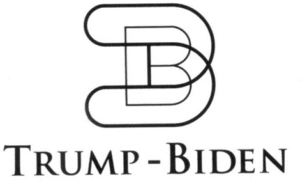
This “TRUMP-BIDEN” mark was filed for food, beverages, and restaurants in Classes 29, 30 and 43 — items with no link to the two presidents. The only reason for such filing, obviously, was to gain consumers’ attention and to ride a wave of popularity, although in a rather unusual way.

Attention-seeking entrepreneurs are often inspired by celebrities and recent events when seeking new brand names and slogans. They may attempt to register their ideas as trademarks while the influence of the person or event is still strong. Others take a different but similarly sensational approach, crafting marks loaded with double entendre with the hope of sneaking past the gatekeepers.

While the idea of registering celebrity-driven or sensational marks may be beneficial for business, is it possible under Vietnam’s IP laws?

Famous People’s Names

In addition to the TRUMP-BIDEN mark mentioned above, a quick search on the public database of the IP Office of Vietnam reveals several dozen “TRUMP” marks, with most of them filed after Donald Trump’s inauguration in 2017. The IP Office’s decisions have shown that marks explicitly referring to the former president (such as the full-name trademark DONALD TRUMP) will be refused protection, but more subtle indicators can survive to registration, such as DONTRUMP (Reg. 327991), BETATRUMP (Reg. No. 329952), TRUMP GOLD (Reg. No. 313441), TRUMP WATER  (Reg. No. 355166 – see image below), and even TRUMP by itself (Reg. No. 342771).

Under Article 73.3 of the IP Law, “signs identical or confusingly similar to real names, aliases, pseudonyms or images of leaders, national heroes or famous personalities of Vietnam or foreign countries” are ineligible for protection as marks, regardless of the goods/services applied for. This is why the “DONALD TRUMP” mark was refused, but it seems to apply only to obvious cases, such as where the full name of the famous person is exploited. If only a part of the name is used, it could still be accepted. From that view, it is likely that the TRUMP-BIDEN mark could be considered inherently distinctive, as it includes neither the full names nor the images of the presidents.

Another interesting TRUMP-derived mark is found in a pending application for TRUMPKIDS KINDERGARTEN:

While the Trump inspiration in the faceless image is undeniable, could this mark still be considered registrable? It consists of the name and image of a famous person, but both are stylized and combined with other elements. In our opinion, the mark is likely to get through. If so, this is an example of a clever way to utilize the fame of a person, while skirting the prohibitions of Article 73.3.

On the other hand, names or signs similar to those of well-known people with decidedly negative reputations – war criminals or terrorists, for example – may be refused for being contrary to social ethics and public order as stipulated in Article 8.1 of the IP Law, regardless of how “creative” the marks are. The mark BILLADEN for pesticides in Class 05 was refused for being confusingly similar to the name of Osama Bin Laden. Although the applicant argued that BILLADEN was fanciful and in no way related to the infamous terrorist, the IP Office held that the registration of the mark was against morality and public policy, and maintained its refusal.

Vulgar or Sensational Slogans

Some companies, especially in youth-oriented sectors like video games or beverages, adopt ridiculous, ear/eye-catching marks in the hope of gaining more attention for their products or services. One of Vietnam’s most popular craft breweries has applied for a series of winkingly raunchy bilingual marks for beer in Class 32, including BOM VU DU XAI [roughly “breast augmentation big enough to use”] FIFTY-TWO TRIPLE Z; COI DO RA [take off your clothes] LET’S GET NAKED; and AN BANH TRA TIEN [slang for “buy/use prostitute”] NO COOKIE NO NOOKIE. While such names are commonplace in the freewheeling craft beer industry, it remains to be seen if they are registrable in Vietnam.

Although the marks are pending without any issued opinion from the IP Office, a similar case was refused for protection. The stylized mark “NUDE” for trading services of food, clothing, household appliances, etc., in Class 35 was refused for again being contrary to social ethics and public order.

The standards for judging this are quite subjective and dependent on the particular examiner’s viewpoint. For example, we found the mark FASCIST was successfully registered for insecticides in Class 05, while DAP DA (literally “beat the rock” but slang for “use drugs”) was registered for restaurant services in Class 43. Based on this precedent, it is highly likely that the pending LET’S GET NAKED mark will be refused but the others will survive to registration, due to their indirect wording.

Our Perspective

We respect our clients’ choices, but we maintain certain standards. While some phrases, symbols, and other sensitive components may evoke powerful emotions that increase sales of the goods they designate, limits must also be set. Bearing in mind that Vietnam is an Asian country with high standards regarding social ethics, foreign companies should be mindful in choosing trademarks to be used in the country. The purpose is not only to have their marks registered, but also to have them accepted by mass Vietnamese consumers.

In addition, media-hype trademarks often have short shelf-lives, while the registration procedure in Vietnam is lengthy, normally 20-24 months. If and when the trademark registrations are granted, it may already be too late to draw the public’s attention. In the end, investing in thoughtful, sustainable trademarks will always be the right choice.

This article first appeared in Managing Intellectual Property.

RELATED INSIGHTS​ 

December 4, 2024
On December 1, 2024, Myanmar’s Intellectual Property Department (IPD) issued the first group of trademark certificates of registration for marks registered under the Trademark Law of 2019. This is the first registration announcement since the start of the IPD’s soft opening period in 2020. With the registration of marks now in place, registered owners will benefit from stronger legal protections. These protections include the exclusive right to prevent unauthorized use of identical or similar marks by third parties and the ability to take enforcement and administrative actions. Myanmar’s implementation of the “first-to-file” system further emphasizes the importance of early registration. Marks registered at an early stage will be in a stronger position when filing oppositions against subsequent applications for identical or confusingly similar marks. The IPD issues certificates of registration in an electronic format to owners who have filed their applications via the IPD’s online filing system. For applicants who submitted their marks via physical applications, the IPD will issue physical certificates of registration. The initial registration term for a mark is 10 years from the filing date and is renewable for additional periods of 10 years each time. The IPD publicly discloses the details of marks registered under Myanmar’s Trademark Law via their official website. The IPD’s issuance of mark registrations under the Trademark Law of 2019 is a decisive step forward in intellectual property protection in Myanmar. It enhances legal safeguards for mark owners and any other authorized persons, and affirms Myanmar’s commitment to aligning its practices with global standards. For more information on protecting intellectual property rights in Myanmar, please contact Tilleke & Gibbins at [email protected].
December 4, 2024
On October 28, 2024, Indonesia officially amended its existing Patent Law when the president ratified Law Number 65 of 2024. This comprehensive update—the third such amendment in the history of Indonesia’s Patent Law—introduces several key changes that will significantly impact patent protection and application processes in Indonesia. Key highlights and changes are outlined below. Definition of Invention The new law broadens the definition of “invention” to explicitly include systems, methods, and uses. Additionally, the law introduces formal definitions for traditional knowledge and genetic resources. Patentability Criteria Notable changes include: Computer programs are now excluded, with an exception for computer-implemented inventions. Theories and methods in science and mathematics are added to the list of excluded inventions. Previous restrictions on new uses of existing products are removed. Grace Periods The grace periods for some patent-related actions have been adjusted: The grace period for disclosures has been extended to 12 months (from 6 months previously), providing inventors with more flexibility in filing patent applications after initial disclosure. A newly introduced item is the grace period for a conventional patent application claiming priority rights, which is 4 months after the 12-month filing deadline under the Paris Convention. The grace period for annuity payments is 6 months (from 12 months previously) with a fine for late payments of 100% of the annual fee payable. Patent Holder Rights and Obligations Patent holders can now grant permissions to enforce patents. There is a new requirement for patent holders to submit annual statements on patent implementation in Indonesia. Compulsory Licensing Significant changes to compulsory licensing include: Establishment of licenses based on the principle of expediency. Limitations on license scope and transferability. Prioritization of domestic market needs. New provisions for technical improvements and economic significance. Government Patent Exploitation The new law contains specific provisions for the government’s implementation
December 4, 2024
Thailand Legal Basics, a valuable primer for foreign investors, explores all aspects of living and doing business in Thailand. Written by specialists at Tilleke & Gibbins in Bangkok, it is the only comprehensive English-language guide to the Thai legal system with a focus on the concerns of foreign business and investment.
November 25, 2024
Trademark registration for marks composed of combinations of Roman letters and/or Arabic numerals has long been challenging in Thailand, particularly for those that are neither stylised nor pronounceable. There have been conflicting perspectives regarding the interpretation of “invented letter(s) and numeral(s)” under Section 7 of the Thai Trademark Act. The Department of Intellectual Property (DIP) has considered that letters and numerals must feature notable visual enhancements to be inherently distinctive, and “invented” must be in the form of stylisation, such as overlapping or interlocking letters, or intricate designs like traditional Thai oral patterns or geometric motifs. Some examples of acceptable letter and numeral marks according to the DIP The courts, however, have consistently recognised that three-letter marks, even when presented without stylisation, can be inherently distinctive. The rationale is that these marks, viewed as random and unusual combinations, can in many cases be distinguishable from common words and sufficient for the public to identify the associated goods/services, and distinguish them from others. Following Supreme Court precedents on registrability, the DIP officially updated its Examination Guidelines in January 2022 to recognise that combinations of three or more letters, even if not stylised or forming pronounceable words, can be deemed inherently distinctive. Challenges persist, however, for two-letter marks, which still face significant obstacles in achieving registrability. The JD case Background Beijing Jing Dong 360 Du E-Commerce, one of China’s largest e-commerce companies, led trademark applications for the marks JD.COM (and device) and JD.CO.TH (and device) for services in Class 35 related to advertising and business management: The registrar rejected the applications, citing insufficient stylisation of ‘JD’ and describing ‘.com’ and ‘.co.th’ as common descriptive terms. The applicant appealed to the Board of Trademarks, which upheld the refusal, echoing the registrar’s reasoning and asserting that the marks were devoid of inherent distinctiveness