You are using an outdated browser and your browsing experience will not be optimal. Please update to the latest version of Microsoft Edge, Google Chrome or Mozilla Firefox. Install Microsoft Edge

November 23, 2021

Vietnam: The Registrability of Media-Hype and Sensational Marks

Managing Intellectual Property

Given the highly polarized state of U.S. politics, one may find it difficult to imagine a scenario where Donald Trump and Joe Biden appear together outside of a debate stage. Surprisingly, these names were united on a Vietnamese trademark application filed during the heat of the U.S. presidential election in 2020.
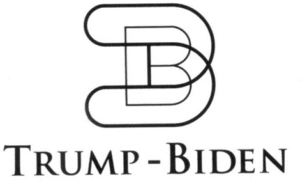
This “TRUMP-BIDEN” mark was filed for food, beverages, and restaurants in Classes 29, 30 and 43 — items with no link to the two presidents. The only reason for such filing, obviously, was to gain consumers’ attention and to ride a wave of popularity, although in a rather unusual way.

Attention-seeking entrepreneurs are often inspired by celebrities and recent events when seeking new brand names and slogans. They may attempt to register their ideas as trademarks while the influence of the person or event is still strong. Others take a different but similarly sensational approach, crafting marks loaded with double entendre with the hope of sneaking past the gatekeepers.

While the idea of registering celebrity-driven or sensational marks may be beneficial for business, is it possible under Vietnam’s IP laws?

Famous People’s Names

In addition to the TRUMP-BIDEN mark mentioned above, a quick search on the public database of the IP Office of Vietnam reveals several dozen “TRUMP” marks, with most of them filed after Donald Trump’s inauguration in 2017. The IP Office’s decisions have shown that marks explicitly referring to the former president (such as the full-name trademark DONALD TRUMP) will be refused protection, but more subtle indicators can survive to registration, such as DONTRUMP (Reg. 327991), BETATRUMP (Reg. No. 329952), TRUMP GOLD (Reg. No. 313441), TRUMP WATER  (Reg. No. 355166 – see image below), and even TRUMP by itself (Reg. No. 342771).

Under Article 73.3 of the IP Law, “signs identical or confusingly similar to real names, aliases, pseudonyms or images of leaders, national heroes or famous personalities of Vietnam or foreign countries” are ineligible for protection as marks, regardless of the goods/services applied for. This is why the “DONALD TRUMP” mark was refused, but it seems to apply only to obvious cases, such as where the full name of the famous person is exploited. If only a part of the name is used, it could still be accepted. From that view, it is likely that the TRUMP-BIDEN mark could be considered inherently distinctive, as it includes neither the full names nor the images of the presidents.

Another interesting TRUMP-derived mark is found in a pending application for TRUMPKIDS KINDERGARTEN:

While the Trump inspiration in the faceless image is undeniable, could this mark still be considered registrable? It consists of the name and image of a famous person, but both are stylized and combined with other elements. In our opinion, the mark is likely to get through. If so, this is an example of a clever way to utilize the fame of a person, while skirting the prohibitions of Article 73.3.

On the other hand, names or signs similar to those of well-known people with decidedly negative reputations – war criminals or terrorists, for example – may be refused for being contrary to social ethics and public order as stipulated in Article 8.1 of the IP Law, regardless of how “creative” the marks are. The mark BILLADEN for pesticides in Class 05 was refused for being confusingly similar to the name of Osama Bin Laden. Although the applicant argued that BILLADEN was fanciful and in no way related to the infamous terrorist, the IP Office held that the registration of the mark was against morality and public policy, and maintained its refusal.

Vulgar or Sensational Slogans

Some companies, especially in youth-oriented sectors like video games or beverages, adopt ridiculous, ear/eye-catching marks in the hope of gaining more attention for their products or services. One of Vietnam’s most popular craft breweries has applied for a series of winkingly raunchy bilingual marks for beer in Class 32, including BOM VU DU XAI [roughly “breast augmentation big enough to use”] FIFTY-TWO TRIPLE Z; COI DO RA [take off your clothes] LET’S GET NAKED; and AN BANH TRA TIEN [slang for “buy/use prostitute”] NO COOKIE NO NOOKIE. While such names are commonplace in the freewheeling craft beer industry, it remains to be seen if they are registrable in Vietnam.

Although the marks are pending without any issued opinion from the IP Office, a similar case was refused for protection. The stylized mark “NUDE” for trading services of food, clothing, household appliances, etc., in Class 35 was refused for again being contrary to social ethics and public order.

The standards for judging this are quite subjective and dependent on the particular examiner’s viewpoint. For example, we found the mark FASCIST was successfully registered for insecticides in Class 05, while DAP DA (literally “beat the rock” but slang for “use drugs”) was registered for restaurant services in Class 43. Based on this precedent, it is highly likely that the pending LET’S GET NAKED mark will be refused but the others will survive to registration, due to their indirect wording.

Our Perspective

We respect our clients’ choices, but we maintain certain standards. While some phrases, symbols, and other sensitive components may evoke powerful emotions that increase sales of the goods they designate, limits must also be set. Bearing in mind that Vietnam is an Asian country with high standards regarding social ethics, foreign companies should be mindful in choosing trademarks to be used in the country. The purpose is not only to have their marks registered, but also to have them accepted by mass Vietnamese consumers.

In addition, media-hype trademarks often have short shelf-lives, while the registration procedure in Vietnam is lengthy, normally 20-24 months. If and when the trademark registrations are granted, it may already be too late to draw the public’s attention. In the end, investing in thoughtful, sustainable trademarks will always be the right choice.

This article first appeared in Managing Intellectual Property.

RELATED INSIGHTS​ 

October 26, 2025
AI-generated songs are now making waves in Vietnam on platforms like TikTok, with tracks such as “Say mot doi vi em” quickly gaining popularity and sparking widespread attention. This phenomenon raises a host of legal and ethical questions: Who is the author of these songs? Can they be protected by copyright? Who is responsible if there is an infringement? These questions are becoming increasingly urgent as AI music becomes more mainstream in Vietnam. Copyright Protection for AI-Generated Music in Vietnam Under current Vietnamese law, copyright protection is reserved for works that bear the mark of human creativity. The 2022 amendments to Vietnam’s Intellectual Property Law reaffirm that only works created by humans are eligible for copyright. In practice, if a human meaningfully contributes to the creative process—by providing prompts, making selections, editing, or arranging—their contribution may be protected. However, if a song is generated entirely by AI without significant human input, it is unlikely to qualify for copyright protection. When an AI-generated song does not qualify for copyright protection, the question arises as to whether the person who writes the prompts, edits, or compiles the work can still be considered the owner of an asset under the Vietnamese Civil Code. According to Article 105 of the Civil Code 2015, assets include objects, money, valuable papers, and property rights. While AI-generated music that is not protected by copyright is not considered money or valuable papers, it may be regarded as an object (in the form of a digital file or recording) or as a property right if it can be possessed, used, transferred, or exploited for value. Use of AI-Generated Works Without Copyright Protection If a song is not protected by copyright, does that mean anyone can use it freely? Not necessarily. The absence of copyright does not mean the
October 24, 2025
Thailand currently lacks a specific franchise act. Consequently, the legality of any franchise agreement is determined by its compliance with various existing laws, such as the Civil and Commercial Code, the Trademark Act B.E. 2534 (1991) (as amended), and the Unfair Contract Terms Act B.E. 2530 (1997). Thailand is a freedom-to-contract jurisdiction. This allows for a high degree of flexibility and autonomy in contractual arrangements, provided that the terms do not violate any laws or public policy and do not fall under the scope of unfair contract terms. Given this, the requirement for fairness in franchise agreement terms often leads to uncertainty, but decisions from the Trade Competition Commission of Thailand (TCCT) can provide guidance on whether specific contentious terms are in fact fair.  One issue worth examining in this light is the inclusion of terms on nonrefundable franchise fees and strict purchasing conditions. Franchise Fee: Unfair to Refuse Refund? Nonrefundable franchise fees represent a significant upfront investment for franchisees, often becoming a point of contention if the franchise relationship deteriorates or the franchisor ceases operations. Their fairness and enforceability are frequently scrutinized by regulatory bodies like the TCCT, highlighting the critical balance between contractual freedom and franchisee protection. Faced with one such case, the TCCT considered whether it was unfair for the franchisor to refuse to refund the franchise fee after the franchisor ceased operations.  The franchisee had entered into a service agreement on August 2, 2021, and begun operating on October 9, 2021. However, by November 21, 2023, the franchisee was notified that the system would be shut down for maintenance, and by December 26, 2023, the franchisor announced the cessation of operations due to financial losses. The franchisee then requested a refund of the franchise fee. Unfortunately for the franchisee, the TCCT found that the franchisor’s
October 23, 2025
Myanmar’s customs authorities have introduced new procedures allowing copyright holders to protect their intellectual property from infringing goods at the border. The Ministry of Finance and Revenue issued Notification No. 107/2025 on September 11, 2025, establishing rules and requirements for customs recordation under the Copyright Law of 2019. The notification includes eight official forms for copyright-related customs matters—three for applicants and five for the Customs Department. This was followed by Customs Department Announcement No. 1/2025, dated September 29, 2025, which details the security required for suspended goods. Customs recordation provides a proactive mechanism for rights holders to prevent importation of pirated works. By registering their works with the Customs Department, rights holders gain access to enhanced border enforcement measures, empowering customs officials to identify and intercept pirated goods before they enter the market. While copyright protection in Myanmar arises automatically under the Copyright Law of 2019, a registration certificate for copyright or related rights is required to apply for customs recordation. Customs Recordation Registered copyright and related rights holders can apply directly or through authorized legal representatives for customs recordation to prevent cross-border trade in pirated works. Applications must use the prescribed form and include all supporting documentary evidence specified in the form. The Customs Department will notify applicants within 15 days of receiving their application. Each recordation remains valid for two years from the date of acceptance and may be renewed for successive two-year periods by submitting a renewal application at least 30 days before expiration. Rights holders whose works are recorded must notify the Customs Department within five days of any amendment or withdrawal of information at the Intellectual Property Department. Suspension Orders Registered copyright and related rights holders can request a suspension order to prevent release of pirated goods into free circulation, regardless of whether they
October 3, 2025
In Thailand, the rise in online intellectual property infringement has prompted authorities to strengthen enforcement efforts, including the use of website-blocking orders under Section 20(3) of the Computer Crime Act B.E. 2560 (2017) (CCA). This provision authorizes the Ministry of Digital Economy and Society (MDES), with court approval, to block or remove computer data that constitutes a criminal offence under IP law. Since its implementation, the procedure has undergone several developments, which is an encouraging sign of progress. Website-blocking procedure In practice, website-blocking orders under Section 20(3) of the CCA are primarily used for copyright and trademark infringement. While such orders are legally applicable to patent infringement, their use remains challenging due to the difficulty of proving infringement through administrative procedures. The website-blocking procedure begins when an IP owner identifies online infringing content. For copyright infringement, which is considered a compoundable offence, the IP owner is required to first file a police report with the specialized police unit known as the Economic Crime Suppression Division (ECD) prior to filing the website-blocking application with the Department of Intellectual Property (DIP). For trademark infringement cases, the application can be filed directly with the DIP without a prior police report. The DIP reviews the evidence and, if infringement is confirmed, forwards it to the MDES for further consideration. If the case is deemed valid, the MDES requests a court order to block the infringing website. Once granted, the MDES notifies the internet service providers (ISPs) to block access to the specified website. Website blocking procedure in Thailand Recent advancements in website-blocking actions Seamless collaboration through digital integration. Thailand has made significant progress in digitizing its website-blocking procedures to improve efficiency and transparency. At present, all website-blocking applications and supporting evidence must be submitted in electronic format. These systems have significantly reduced processing