
You are using an outdated browser and your browsing experience will not be optimal. Please update to the latest version of Microsoft Edge, Google Chrome or Mozilla Firefox. Install Microsoft Edge

January 4, 2023

Thai Court Upholds Trademark Protection for Service Station Layout

Managing Intellectual Property

In early November 2022, a Thai appeals court overruled the Trademark Registrar’s decision and the Board of Trademarks’ ruling by upholding the registrability of an oil company’s trademark application for its branded service station layout. This is the latest word in a long-running dispute between ExxonMobil and the country’s Department of Intellectual Property (DIP), which had previously rejected the mark as indistinctive.

ExxonMobil first filed applications in April 2015 for a trademark bearing a unique colorful drawing of the layout of a service station bearing its well-known registered “ESSO” mark in International Classes 4 and 35 in Thailand.
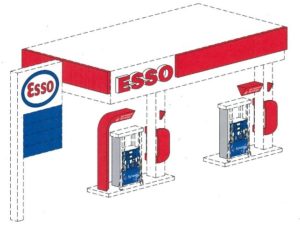
However, the Thai Trademark Registrar refused to register the mark, arguing that the mark was devoid of inherent distinctiveness because the service station layout drawing is directly descriptive of the applied-for goods and services related to oil products. According to the Registrar, the public would not be able to distinguish between the goods and services bearing ExxonMobil’s mark and those bearing the marks of others.

ExxonMobil appealed this refusal to the Board of Trademarks, which ultimately agreed that ExxonMobil’s marks are devoid of inherent distinctiveness. The Board explained that the dominant elements in the drawing consist of a common service station with fuel dispensers, which is directly related to the applied-for goods and services related to oil products. The Board also deemed that the submitted evidence was insufficient to prove that the mark had gained distinctiveness through use.

ExxonMobil disagreed with these rulings and thus filed a civil complaint with the Intellectual Property and International Trade Court (IP&IT Court) to revoke the Registrar’s decisions and the Board’s rulings.

The IP&IT Court examined the case and issued its judgment in favor of ExxonMobil, ruling that the marks are inherently distinctive. The Court noted that to consider a mark’s distinctiveness, it is crucial to determine the elements that are recognizable and stand out in people’s minds. ExxonMobil’s mark consists of its registered mark ESSO being placed in a position and text size that can be readily seen in the layout. Moreover, the mark ESSO has been used in Thailand over a long period of time and has gained public recognition in Thailand and overseas. The Court recognized that the ESSO mark is recognizable and stands out in people’s minds, and thus it is the dominant element of the mark when considering the mark’s distinctiveness—even though it is smaller in size than the pictured service station and fuel dispensers.

In addition, the Court noted that ExxonMobil’s mark is different from other marks because it features other invented words—“Fuel Technology” and “Synergy”—plus an arbitrary placement of colors and shapes as elements of the service station and fuel dispensers. These are also dominant elements to be considered when examining the mark’s distinctiveness because they contribute to the general public’s ability to recognize that the goods and services bearing this mark originate from ExxonMobil.

The DIP then appealed the case to the Court of Appeal for Specialized Cases, which agreed that ExxonMobil’s mark is inherently distinctive and registrable under the Thai Trademark Act, because the well-known ESSO mark enables the public to understand that the goods bearing this mark originate from ExxonMobil. However, the Court held a differing opinion from the IP&IT Court regarding the service station and fuel dispensers featured in the mark, pointing out that the physical characteristics of these elements are common to service stations and fuel dispensers in general. Therefore, these elements are descriptive and are not subject to exclusive rights, though the mark as a whole remains inherently distinctive.

In our opinion, these judgments are valid proof that both courts have moved toward taking a more positive judicial perspective of nontraditional trademarks in Thailand. For this case, even though the Court of Appeal for Specialized Cases determined that the physical characteristics of the service station and fuel dispensers featured in the mark are descriptive, it found ExxonMobil’s mark inherently distinctive in its entirety and accepted it for registration. Overall, the judgment stands as a remarkable development in the acceptance of nontraditional trademarks in Thailand and will likely encourage brand owners to seek trademark protection for new types of marks.

This article first appeared in Managing Intellectual Property.

RELATED INSIGHTS​ 

February 25, 2026
Tilleke & Gibbins has updated the Vietnam chapter in the newly released Licensing 2026 guide, published by Lexology Panoramic. The comparative guide provides companies and other interested readers with information on licensing law and practice in various countries around the world. Licensing 2026 provides detailed information on the following topics: Restrictions, laws and licensing arrangements Intellectual property issues: Paris Convention for the Protection of Industrial Property, contesting the validity of licensor’s IP rights, invalidity and expiry of IP rights, security interests, proceedings against third parties, sublicensing, jointly owned IP, first to file, scope of patent protection, trade secrets, copyright Software licensing: Perpetual licensing, legal requirements, user restrictions Royalties and payments, currency conversion, and taxes: Relevant legislation, restrictions, taxation of foreign licensors Competition law issues: Restrictions on trade, legal restrictions, and IP-related court rulings Indemnification, disclaimers, and damages: Prevalence and enforceability of indemnity provisions and contractual waivers of damages Termination: Right to terminate, impact of termination Bankruptcy: Impact of licensee or licensor bankruptcy Dispute resolution: Governing law, arbitration, enforceability, injunctive relief, contractual waivers The Vietnam chapter is available below as a PDF. Readers can gain 30 days of complementary access to the full Licensing 2026 guide and the rest of Lexology Panoramic’s varied offerings through this link.
January 30, 2026
On December 26, 2025, the government of Vietnam promulgated Decree No. 341/2025/ND-CP on administrative sanctions for violations of copyright and related rights (Decree 341), with an effective date of February 15, 2026. The new decree replaces Decree No. 131/2013/ND-CP, as amended, and represents the first comprehensive revision of the administrative enforcement framework in this area in eight years. Legislative Context and Objectives Decree 341 reflects Vietnam’s evolving copyright and related-rights framework, particularly in light of the country’s commitments under bilateral, regional, and multilateral treaties governing the digital environment. While the decree retains a number of provisions from the previous regime, it also introduces significant amendments to infringing acts, penalty thresholds, remedial measures, and enforcement procedures. The primary objectives of the new decree are to (i) enhance the deterrent effect of administrative sanctions; (ii) harmonize sanctions with the 2025 amendments to the Law on Intellectual Property and criminal law principles; and (iii) address enforcement challenges arising from online and cross-border exploitation of copyrighted works. Expanded Scope of Sanctionable Subjects Under Decree 341, administrative sanctions apply not only to Vietnamese entities committing infringing acts within Vietnam, but also to Vietnamese and foreign entities that commit acts of infringement on the internet where the protected content is accessed, consumed, or exploited by users in Vietnam. This expansion reflects the realities of cross-border digital exploitation. However, the decree does not yet provide precise definitions of key terms such as “users” or “consumers” of digital content in Vietnam, which may require further regulatory clarification. Monetary Penalties and Penalty Structure The statutory maximum fines remain unchanged, at VND 250 million for individuals and VND 500 million for organizations, but the penalty framework is substantially restructured. Fines are now calibrated based on three core criteria: (i) the amount of illegal profit obtained; (ii) the level of
January 30, 2026
Vietnam’s Intellectual Property (IP) Law, despite being amended in 2022, underwent another significant revision at the end of 2025. The latest amendment aimed to address five major policy objectives set by the Vietnamese government, including promoting innovation, digital transformation, and international integration. Among the most notable changes in the 2025 IP Law, which takes effect on 1 April 2026, is the expansion of industrial design protection under Article 4.13. The revised definition now includes partial designs and intangible designs, marking a transformative shift in Vietnam’s industrial design regime. This change has particularly significant implications on designs classified under Class 32 of the Locarno Classification—which covers graphic designs, logos, ornamentation, surface patterns, arrangements, and other intangible products. These designs, previously excluded from protection in Vietnam, are now recognized under the new legal framework. Background: Status of Class 32 Designs Before 2026 Th Intellectual Property Office of Vietnam currently applies the 13th edition of the Locarno Classification for industrial design filings. However, not all classes in this system have historically been eligible for protection. Under the 2022 IP Law, Class 32 designs were explicitly excluded based on the following legal grounds: Definition under Article 4.13 (2022 IP Law): “An industrial design is the external appearance of a product or a component for assembly into a complex product, expressed in shapes, lines, colors, or a combination thereof, and visible during the exploitation of the product’s utility or the complex product.” Product requirements under Article 21.2 of Circular 23/2023/TT-BKHCN: A product is defined as an object, a tool, a device, or means, manufactured by industrial or handicraft methods, with clear structure and function. A component for assembly into a complex product must be capable of independent circulation and detachable from the complex product. Based on these definitions, Class 32 designs, such as graphical
December 30, 2025
The Intellectual Property Office of Vietnam (IP Office), with support from the Japan International Cooperation Agency (JICA), is drafting additional annexes to its Guidelines for Patent Examination, focusing on the examination of patent applications in the pharmaceutical and biotechnology sectors. The new annexes are expected to be officially issued in early 2026 as Annexes III and IV, following the successful issuance in 2023 of Annexes I and II addressing computer program-related inventions. The IP Office recently organized a seminar to gather feedback on the draft annexes from intellectual property representatives, academic institutions, research institutes, and other interested parties, emphasizing its intention to receive further constructive opinions to refine the guidelines for pharmaceuticals and biotechnology. Why These Guidelines Matter Patent examination in Vietnam has traditionally relied on the Guidelines for Patent Examination issued under Decision No. 487/QD-SHTT (2010), recently supplemented by Annexes I and II. While these documents provide a solid foundation, they do not fully address practical challenges in examining pharmaceutical and biotech inventions, particularly issues related to clarity, sufficiency of disclosure, enablement, features of function and utility, combination therapies, and inventions involving artificial intelligence (AI) applications in these fields. Annexes III and IV aim to close these gaps by introducing structured principles and illustrative examples. Guidance on Patent Specification Requirements Annex III provides detailed guidance on the requirements for patent specifications in pharmaceuticals and biotechnology, covering two main parts: Part A addresses sufficiency of disclosure, clarity of specifications, and consistency between claims and descriptions. Part B covers inventions related to Markush-type compounds, claims containing exclusion statements (disclaimers), and additional experimental data submitted during examination. The Guidelines outline specific disclosure requirements for subject matters such as compounds, formulations, pharmaceutical compositions, genes, polypeptides, proteins, vectors, transgenic organisms, modified organisms, and hybrid cells. Annex III emphasizes that disclaimers are not accepted