
You are using an outdated browser and your browsing experience will not be optimal. Please update to the latest version of Microsoft Edge, Google Chrome or Mozilla Firefox. Install Microsoft Edge

August 27, 2026

Text, Trademarks, and Symbols in Representations in Thai Design Patent Applications

It is generally understood that patents are granted for new designs that have not been widely known or used in Thailand and not been disclosed anywhere prior to the date of the patent application.

It is trite law that design law protects the distinctive appearance or products. Under Section 3 of the Thai Patent Act B.E. 2522, as amended by the Patent Act (No. 2) B.E. 2535 and the Patent Act (No. 3) B.E. 2542, a design is defined as “any form or composition of lines or colors that gives a product a special appearance and can serve as a pattern for an industrial or handicraft product.”

This raises an important question. Can a patent be issued for a product design that contains text, numerals, trademarks, or symbols that do not fall under the definition of a design? This issue commonly arises when attempting to register packaging, labels, and graphical user interfaces (GUIs).

Until a few years ago, applicants could file design applications with the Thai Patent Office for designs that contained such elements, provided that an appropriate disclaimer was included. This practice was generally accepted by Thai design examiners at that time, but the Patent Office has since implemented a change in its practice that could have a significant impact on applicants for design patents. Where design representations are submitted as line drawings or computer-aided design (CAD) drawings, the examiner may now issue an office action requiring their removal.

This practice, however, appears to be applied inconsistently, as some examiners still exercise their own discretion in determining whether drawings containing these elements are acceptable.

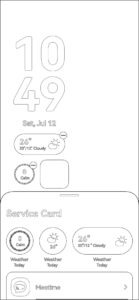
Below are examples of a GUI design, a CAD drawing design, and a photographic design representation that illustrates issues relating to the presence of nonallowable elements.
GUI design

For this GUI design, the submitted representations included text, numerals, and symbols. During examination of the application, the examiner issued an office action requiring the removal of the text, numerals, and commonly used symbols, while allowing only newly created symbols to remain.

In response, the applicant submitted an explanation that these elements were incorporated solely to illustrate their placement within the product design and that no claim of exclusivity was made with respect to them. The applicant further clarified that protection was sought only for the novel arrangement, configuration, and positioning of the graphical elements shown in the design. The applicant also amended the claim to include a disclaimer stating this explicitly.

Following the amendment, the application was determined to satisfy all official requirements and was subsequently allowed.

Nonetheless, recent experience indicates that Thai design examiners have adopted a markedly stricter approach. Examiners now have consistently maintained that line drawings and CAD drawings must not include any text, numerals, trademarks, or symbols. In contrast to past practice, explanatory letters or arguments stating that protection is not claimed for such elements are generally no longer accepted by the Thai Patent Office.

As illustrated by the above example, GUI design proprietors may question the practical scope of protection available if all text, numerals, and symbols are removed from the drawings, leaving only basic graphical features such as rounded-corner rectangles. How Thai design examiners will approach the examination of GUI design drawings under the stricter standard remains uncertain; also uncertain is whether additional guidance will become available once proposed amendments to the current Patent Act relating to GUI protection are adopted and come into effect.

The next example below a CAD drawing filed for a label design in which no text, numerals, trademarks, or symbols appear in the design representation. If the original design incorporates any such elements, they should be removed before filing; otherwise, the examiner will likely raise an objection and issue an office action requiring their removal as a condition for further prosecution of the application.

CAD drawing

Lastly, by contrast, where photographs of the design are submitted, such elements are generally permitted to appear in the photographs. An example of such a design representation is shown below.

Photograph of a design

In such cases, however, applicants are typically required to include a disclaimer excluding those elements from the scope of protection.

Practical Takeaways

When a design incorporates text, numerals, trademarks, or symbols, applicants should carefully assess the most appropriate form of design representations to be filed. If such elements constitute part of the product’s visual appearance, photographic representations may be advantageous, as they are generally accepted when accompanied by a suitable disclaimer. By contrast, line drawings and CAD drawings should not contain any text, numerals, trademarks, or symbols.

Taking these considerations into account at the filing stage may reduce the likelihood of objections being raised during examination, streamline prosecution, and increase the prospects of obtaining registration in a timely manner.

RELATED INSIGHTS​ 

November 26, 2025
On November 21, 2025, Myanmar’s Ministry of Commerce (MOC) issued Notification No. 103/2025 promulgating the Geographical Indication Rules (GI Rules), establishing a comprehensive framework for the registration and administration of geographical indications (GI), which are primarily governed by the Trademark Law of 2019. On the same day, the MOC released Notification No. 104/2025 specifying the required forms for GI-related matters. The GI Rules establish a comprehensive set of procedures for the entire GI application process, including filing applications, oppositions, cancellations, and invalidations, and appointing a local representative for GI-related matters. Under the Trademark Law and the GI Rules, domestic and foreign legal entities (organizations) that formally represent a defined group of stakeholders (such as producers or manufacturers of natural products or resources, agricultural products, handicrafts, or industrial products) and other competent authorities from government departments are eligible to apply for GI registration with the Intellectual Property Department (IPD) in Myanmar. Application A GI application can be submitted in either English or Myanmar language electronically, in person, or via post. Foreign applicants seeking to register a GI in Myanmar are required to submit a copy of the registration certificate from their country of origin with the GI application. This certificate must explicitly state the GI name of the protected product. Notably, foreign applicants are mandated to appoint a local representative in Myanmar to act on their behalf for GI-related matters with the IPD and appeal-related matters with the IP Agency. The form for appointing the local representative must be duly notarized in the applicant’s home country to ensure its legal validity and acceptance in accordance with the GI Rules. Application for Use of GI Logo Pursuant to the GI Rules, any interested individual, local or foreign, may submit an application to the IPD for authorization to use the GI logo,
November 21, 2025
Tilleke & Gibbins has contributed the Thailand chapter to Asia IP’s ASEAN Guide to IP Protection 2025, an annual reference covering key developments and practical considerations for intellectual property systems across Southeast Asia. The chapter offers an overview of Thailand’s current legal framework for the protection of trademarks, patents, industrial designs, and copyrights. It summarizes registration requirements, recent regulatory updates, and procedural considerations relevant to rights holders and practitioners. The chapter offers actionable insights for rights holders at every stage of the IP lifecycle and addresses practical strategies for managing portfolios, anticipating enforcement challenges, and maximizing the value of IP assets. The authors also highlight recent trends and developments in Thai IP law, ensuring that readers are equipped with the latest knowledge to inform their decisions. The complete Thailand chapter can be downloaded through the button below, and the chapter is also available on the Asia IP website.
November 13, 2025
Tilleke & Gibbins has contributed the Thailand chapter to Franchise 2026, part of the International Comparative Legal Guides (ICLG) series published by Global Legal Group. This annual guide offers comparative analysis of franchise laws and regulations across jurisdictions worldwide, providing practical insights for businesses and legal practitioners operating in the global franchise sector. Each country chapter in the 12th edition follows a Q&A format covering key aspects of franchise law and operations, including: Relevant legislation and rules governing franchise transactions Business organization options for franchised operations Competition law considerations Protection of intellectual property and brands Liability issues and risk mitigation Governing law and dispute resolution Real estate matters Online trading regulations Termination requirements Joint employer risks and vicarious liability Currency controls and taxation Commercial agency considerations Good faith obligations and fair dealing requirements Ongoing relationship management Franchise renewal processes Franchise migration procedures Sustainability commitments Electronic signatures and document retention Current developments in the franchise sector The Thailand chapter, authored by Alan Adcock and Kasama Sriwatanakul, provides an in-depth overview of the legal landscape for franchising and franchising-related activities in Thailand. The complete Thailand chapter is available as a PDF below. The Thailand chapter—and the full Franchise 2026 guide—are also freely available on the ICLG website.
October 26, 2025
AI-generated songs are now making waves in Vietnam on platforms like TikTok, with tracks such as “Say mot doi vi em” quickly gaining popularity and sparking widespread attention. This phenomenon raises a host of legal and ethical questions: Who is the author of these songs? Can they be protected by copyright? Who is responsible if there is an infringement? These questions are becoming increasingly urgent as AI music becomes more mainstream in Vietnam. Copyright Protection for AI-Generated Music in Vietnam Under current Vietnamese law, copyright protection is reserved for works that bear the mark of human creativity. The 2022 amendments to Vietnam’s Intellectual Property Law reaffirm that only works created by humans are eligible for copyright. In practice, if a human meaningfully contributes to the creative process—by providing prompts, making selections, editing, or arranging—their contribution may be protected. However, if a song is generated entirely by AI without significant human input, it is unlikely to qualify for copyright protection. When an AI-generated song does not qualify for copyright protection, the question arises as to whether the person who writes the prompts, edits, or compiles the work can still be considered the owner of an asset under the Vietnamese Civil Code. According to Article 105 of the Civil Code 2015, assets include objects, money, valuable papers, and property rights. While AI-generated music that is not protected by copyright is not considered money or valuable papers, it may be regarded as an object (in the form of a digital file or recording) or as a property right if it can be possessed, used, transferred, or exploited for value. Use of AI-Generated Works Without Copyright Protection If a song is not protected by copyright, does that mean anyone can use it freely? Not necessarily. The absence of copyright does not mean the