
You are using an outdated browser and your browsing experience will not be optimal. Please update to the latest version of Microsoft Edge, Google Chrome or Mozilla Firefox. Install Microsoft Edge

December 6, 2018

Successful Online-to-Offline Enforcement Action Leads to Huge Seizure of Counterfeits

Informed Counsel

The ease with which counterfeiters are able to hide their identity online, simply by hiding behind a username, can often complicate the protection of IP rights. However, if an infringer’s anonymity can be pierced, it can yield huge seizures of counterfeit products, make great strides in protecting valuable intellectual assets, and close major distribution channels.

In a recent example, Panasonic Corporation successfully uncovered the identity of a Chinese infringer operating in Thailand, raided the infringer’s physical location, and seized more than 30,000 counterfeit Panasonic products (primarily bat- teries). The raid has had a deep impact on the market, disrupting the distribution channels for these counterfeit goods, removing the fake goods from online marketplaces, and protecting the Thai public from dangerous counterfeit goods.

Identifying the Online Infringers

Many e-commerce websites are open to anyone wanting to sell their goods, creating a platform for fake goods to be easily offered for sale by infringers. Using anonymous usernames, infringers can create store pages containing enticing and convincing statements, luring end-users into believing that the cheaper goods are genuine.
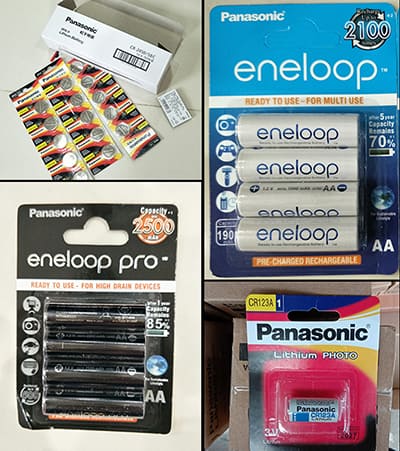
In this case, three such pages were found to be selling counterfeit Panasonic batteries on one of Thailand’s most popular online marketplaces. After contacting the online marketplace operators to request that the advertisements be taken down, two pages closed but one remained active.

An in-depth private investigation into the remaining online shop uncovered that all three pages were owned by the same entity—a Chinese national with two houses in Bangkok, from which he actively sold various types of fake Panasonic batteries in large quantities.

Warning Letter vs. Raid Action   

Sending a warning letter is usually the preferred enforce- ment action against small-scale online infringers. If the dispute can be settled after sending the warning letter, this option is more time- and cost-efficient than other legal actions.    

However, infringers with large inventories may be less receptive to this approach, either ignoring warning letters entirely, or only ceasing sales temporarily. Either way, infringers with large inventories are very likely to continue sales eventually, as they need to clear out their stock.   

In addition, attempts to negotiate with foreign nationals operating in Thailand often backfire, as they are not usually permanently established in Thailand. It is common for such infringers to simply move to another location upon receipt of a warning letter.   

In this instance the targeted infringer clearly had a large stock, was a foreign national, and was quite cautious in his activities, using the marketplace platform to hide his identity and not disclosing his name on his shop pages. A warning letter was therefore considered to pose a high risk, and a strong raid action against the target in order to seize the fake goods was considered a better solution. In addition, such action would penalize the infringers and spread the message that Panasonic takes serious legal action against infringers in order to protect its consumers.    

A criminal raid action was therefore initiated at the identified houses in order to seize the products.

Search and Seizure    

Based on investigation reports, strong evidence, and coordination with a police raid team, the court granted search warrants to gain entry to the suspect’s houses. No counterfeit Panasonic products were found at the first house, although other branded mobile phone chargers, earphones, mobile phone holders, and various unbranded products were on site. The police seized those goods for non-payment of import taxes.
The suspect and one of his staff (a Thai citizen) were found inside the second house, and they granted entry when presented with the search warrant. The search confirmed that the residential property was being used as a warehouse for commercial purposes. Batteries, chargers, watches, and other products were stored in every room, including the living room, kitchen, bedrooms, and even bathrooms. A large number of fake Panasonic products were found, along with other branded products.    

The police seized more than 30,000 counterfeit Panasonic products, including stickers labeled “Panasonic” that were obviously going to be attached to infringing products before sale. 

Arresting the Counterfeiters

The police filed charges of trademark infringement and importation tax evasion under the Customs Act against both people found in the house. In respect of the stickers labelled “Panasonic,” intended to convince the public that counterfeit goods were genuine Panasonic goods, the infringers were charged with using a mark without authorization in order to mislead the public, under the Thai Penal Code. In addition, the foreign national was charged with working without a work permit under Thailand’s immigration regime.   

This successful raid action prevented the distribution of fake goods to end-users, and will serve as a deterrent to other potential infringers in the market in accordance with Panasonic’s anticounterfeiting and customer protection policies.    

This raid is a prime example of the level of commitment necessary in order to protect Thai consumers from dangerous counterfeit products. Actions like these are rarely a one-off, and typically form part of a broader anticounterfeiting campaign. In that context, raids can also help to identify the sources of fake batteries being distributed in Thailand, and ultimately eliminate the counterfeit products once and for all.

RELATED INSIGHTS​ 

October 17, 2023
On June 20, 2023, Vietnam’s new Law on Protection of Consumers’ Rights (“CPL 2023”) was officially promulgated, followed two days later by a new Law on E-Transactions (“LOET 2023”). The new laws, which will both take effect from July 1, 2024, replacing the CPL 2010 and the LOET 2005, respectively, provide new regulations for e-commerce platforms and will impact e-commerce activities in Vietnam. Some of the more significant changes are outlined below. Law on Protection of Consumers’ Rights Regulation of offshore entities: Previously, the CPL 2010 regulated only organizations and individuals in the territory of Vietnam. Under the CPL 2023, both onshore and offshore agencies, organizations, and individuals related to protecting consumers’ rights are regulated. In other words, Vietnam intends to monitor and manage activities of platforms with no legal presence in Vietnam. Remote transactions: Previously, the laws on consumer protection regulated “remote contracts.” The CPL 2023 introduces and defines “remote transactions” as transactions made online, by electronic means or by other means wherein consumers cannot check or have direct contact with products, goods or services before participating in the transaction. In addition, the CPL 2023 also provides for additional responsibilities of business entities offering remote transactions such as adequately and precisely providing consumers with information when entering into these remote transactions, including the rights of consumers in case of incomplete or inaccurate provision of information and complaint handling mechanisms. Online businesses: The CPL 2023 introduces “online businesses,” which are defined as (i) those trading products, goods, and services via their self-established platforms or digital platforms or (ii) those establishing or operating intermediary digital platforms. According to the Vietnam Competition Commission in a recent workshop, the definitions of “digital platforms” and “intermediary digital platforms” can be referred to in the LOET 2023 (see below). Under this new category, online
October 4, 2023
Extended producer responsibility (“EPR”), a strategy whereby producers are held accountable for the environmental impact of their products throughout their entire life cycle, including disposal and recycling, has become more and more familiar to manufacturers in Vietnam. According to the director of the legal department of the Ministry of Environment and Natural Resources, EPR is an alternative financial solution for managing waste and increasing recycling without raising environmental protection taxes and fees, which may help Vietnam to maintain a closed loop of resources in manufacturing. New EPR Regulations Applicable to Producers and Importers In 2020 and 2022, the new Law on Environmental Protection 2020 and its guiding Decree No. 08/2022/ND-CP were promulgated, introducing a legal framework for EPR (“New EPR Regulations”) imposed on not only producers but also importers. Under the New EPR Regulations, producers and importers of certain types of products and packaging are responsible to collect and treat waste and recycle their products and packaging. The responsibility to collect and treat waste took effect on January 10, 2022, while there are different timelines being phased in from 2024 to 2027 for the recycling of products and packaging, depending on the type. For the purpose of compliance with the recycling requirement under the New EPR Regulations, the producers and importers can implement the recycling obligation by themselves, or engage a third party to recycle or organize the recycling, or make a financial contribution to the Vietnam Environment Protection Fund to support the recycling process. This will cause an increase in cost and, hence, an impact on prices of certain products in the near future. Exceptions to the recycling obligation include: Producers and importers of products and packaging for (i) export or temporary import for re-export or (ii) manufacture or import for research, study, or testing purposes. Packaging producers
September 28, 2023
Protecting the aesthetic features of consumer items, such as household appliances, is essential for businesses looking to gain a competitive edge, particularly in the dynamic markets of Vietnam, Indonesia, and Thailand. Industrial design registrations (or design patents in Thailand) provide an effective means to protect the unique and ornamental designs of products, ensuring that their distinctive appearance is not imitated by competitors. This article provides a general overview of design systems in Vietnam, Indonesia, and Thailand, as well as some key considerations for businesses and rights holders. All three of these countries use an examination system for assessing applications to protect designs. While all three jurisdictions are members of the Paris Convention, only Vietnam has fully completed the process of becoming a member of the Hague Agreement. The table below offers a general comparison of the three countries’ design systems, with additional details provided in the subsequent sections. Vietnam Owners of a household appliance design may seek design rights in Vietnam by filing a national design application at the Vietnam IP Office or by filing an international design application designating Vietnam either directly with the World Intellectual Property Organization (WIPO) or indirectly through the office of the applicant’s contracting party under the Hague Agreement. Vietnam’s 2022 IP Law redefines “industrial design” as the external appearance of a product or part thereof to be assembled into a complex product, represented by shapes, lines, colors, or a combination thereof, and visible in the process of exploiting the utility of the product or complex product. The two options for obtaining design rights in Vietnam are detailed below. Vietnam National Design Application As Vietnam is a signatory to the Paris Convention, applicants are entitled to a six-month convention priority period from the filing date of the corresponding application in another jurisdiction. Under Vietnam’s
September 26, 2023
Cambodia has issued a set of regulations that aim to encourage greater energy efficiency from appliances marketed in the country. The regulations follow Cambodia’s adoption of its National Energy Efficiency Policy, which sets out the government’s energy efficiency targets and policies to reach them by 2030, including the ambitious national target of reducing the country’s total energy consumption by at least 19%. This set of regulations for appliances marketed in Cambodia is contained in Sub-Decree No. 254 on the Management and Improvement of Energy Efficiency of Electrical Appliances, dated August 11, 2023. This sub-decree sets out product registration and energy efficiency labeling requirements for electrical appliances marketed in Cambodia. It further provides that appliances should meet energy efficiency standards and all other mandatory standards that apply to electrical appliances. During the product registration process, the appliances are checked against such standards, and registration is only granted if the standards are met. The sub-decree identifies the Ministry of Mines and Energy as the main ministry responsible for the implementation of the sub-decree. To assist with the wide scope of regulations as set by the sub-decree, it further appoints assisting ministries that may implement and enforce only certain aspects. These effective implementation and enforcement mechanisms suggest that once the sub-decree’s 12-month implementation period has passed, there is likely to be a rather strict enforcement approach to the requirements. Key Features of the Sub-Decree Several mandatory standards have already been applied to most electrical appliances over the past years, but the required product registration process to check for compliance with those standards has not always been completed by those importing, distributing, or manufacturing electrical appliances in Cambodia. The new sub-decree clearly mandates a product registration requirement as a check to verify the applicable standards are met, and sets penalties for non-compliance. Penalties