
You are using an outdated browser and your browsing experience will not be optimal. Please update to the latest version of Microsoft Edge, Google Chrome or Mozilla Firefox. Install Microsoft Edge

December 6, 2018

Successful Online-to-Offline Enforcement Action Leads to Huge Seizure of Counterfeits

Informed Counsel

The ease with which counterfeiters are able to hide their identity online, simply by hiding behind a username, can often complicate the protection of IP rights. However, if an infringer’s anonymity can be pierced, it can yield huge seizures of counterfeit products, make great strides in protecting valuable intellectual assets, and close major distribution channels.

In a recent example, Panasonic Corporation successfully uncovered the identity of a Chinese infringer operating in Thailand, raided the infringer’s physical location, and seized more than 30,000 counterfeit Panasonic products (primarily bat- teries). The raid has had a deep impact on the market, disrupting the distribution channels for these counterfeit goods, removing the fake goods from online marketplaces, and protecting the Thai public from dangerous counterfeit goods.

Identifying the Online Infringers

Many e-commerce websites are open to anyone wanting to sell their goods, creating a platform for fake goods to be easily offered for sale by infringers. Using anonymous usernames, infringers can create store pages containing enticing and convincing statements, luring end-users into believing that the cheaper goods are genuine.
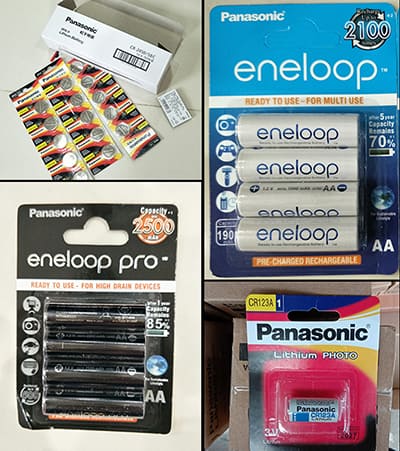
In this case, three such pages were found to be selling counterfeit Panasonic batteries on one of Thailand’s most popular online marketplaces. After contacting the online marketplace operators to request that the advertisements be taken down, two pages closed but one remained active.

An in-depth private investigation into the remaining online shop uncovered that all three pages were owned by the same entity—a Chinese national with two houses in Bangkok, from which he actively sold various types of fake Panasonic batteries in large quantities.

Warning Letter vs. Raid Action   

Sending a warning letter is usually the preferred enforce- ment action against small-scale online infringers. If the dispute can be settled after sending the warning letter, this option is more time- and cost-efficient than other legal actions.    

However, infringers with large inventories may be less receptive to this approach, either ignoring warning letters entirely, or only ceasing sales temporarily. Either way, infringers with large inventories are very likely to continue sales eventually, as they need to clear out their stock.   

In addition, attempts to negotiate with foreign nationals operating in Thailand often backfire, as they are not usually permanently established in Thailand. It is common for such infringers to simply move to another location upon receipt of a warning letter.   

In this instance the targeted infringer clearly had a large stock, was a foreign national, and was quite cautious in his activities, using the marketplace platform to hide his identity and not disclosing his name on his shop pages. A warning letter was therefore considered to pose a high risk, and a strong raid action against the target in order to seize the fake goods was considered a better solution. In addition, such action would penalize the infringers and spread the message that Panasonic takes serious legal action against infringers in order to protect its consumers.    

A criminal raid action was therefore initiated at the identified houses in order to seize the products.

Search and Seizure    

Based on investigation reports, strong evidence, and coordination with a police raid team, the court granted search warrants to gain entry to the suspect’s houses. No counterfeit Panasonic products were found at the first house, although other branded mobile phone chargers, earphones, mobile phone holders, and various unbranded products were on site. The police seized those goods for non-payment of import taxes.
The suspect and one of his staff (a Thai citizen) were found inside the second house, and they granted entry when presented with the search warrant. The search confirmed that the residential property was being used as a warehouse for commercial purposes. Batteries, chargers, watches, and other products were stored in every room, including the living room, kitchen, bedrooms, and even bathrooms. A large number of fake Panasonic products were found, along with other branded products.    

The police seized more than 30,000 counterfeit Panasonic products, including stickers labeled “Panasonic” that were obviously going to be attached to infringing products before sale. 

Arresting the Counterfeiters

The police filed charges of trademark infringement and importation tax evasion under the Customs Act against both people found in the house. In respect of the stickers labelled “Panasonic,” intended to convince the public that counterfeit goods were genuine Panasonic goods, the infringers were charged with using a mark without authorization in order to mislead the public, under the Thai Penal Code. In addition, the foreign national was charged with working without a work permit under Thailand’s immigration regime.   

This successful raid action prevented the distribution of fake goods to end-users, and will serve as a deterrent to other potential infringers in the market in accordance with Panasonic’s anticounterfeiting and customer protection policies.    

This raid is a prime example of the level of commitment necessary in order to protect Thai consumers from dangerous counterfeit products. Actions like these are rarely a one-off, and typically form part of a broader anticounterfeiting campaign. In that context, raids can also help to identify the sources of fake batteries being distributed in Thailand, and ultimately eliminate the counterfeit products once and for all.

RELATED INSIGHTS​ 

June 17, 2026
Thailand’s new labeling requirements for medical devices, which include for the first time a unique device identification (UDI) requirement for software as a medical device (SaMD), take effect on June 20, 2026. The Notification of the Ministry of Public Health regarding Criteria, Methods, and Conditions on Labeling and Instructions for Use for Medical Devices 2025, which replaces a similar notification from 2020, was published in the Government Gazette on December 22, 2025. To ensure clarity, modernity, and patient safety, the regulation requires domestic manufacturers and importers to provide labels and instructions for use (IFU) that are clearly legible, complete, and free of false or misleading claims. It also permits IFU to be provided in electronic format, such as via QR codes, websites, or other digital channels—directly relevant to SaMD, where physical labels are impractical and electronic presentation is the natural medium. The notification distinguishes two categories for labeling language. Home-use medical devices (for lay users outside healthcare facilities) must have labels and IFU in Thai. Professional-use medical devices may display labels and documentation in either Thai or English. This distinction is significant for SaMD developers: software intended for clinical professionals may use English-language interfaces and IFU, while consumer-facing health applications must provide Thai-language content. Labeling and UDI Requirements Labels and IFU must include, at a minimum: Product name and intended purpose Quantity or volume Name and address of domestic manufacturer or importer Thai FDA approval number Lot, version, or serial number Manufacturing date and expiry date For SaMD, the version number requirement is particularly relevant. The regulation also mandates display of a UDI code for SaMD in risk category 2 (moderate-risk), category 3 (moderate- to high-risk), and category 4 (high-risk), according to Thailand’s medical device risk classification system (which complies with the ASEAN Medical Device Directive and the EU
May 11, 2026
Thailand’s rise as a regional hub for luxury retail has influenced how market entry is structured and assessed across Southeast Asia. As brands consider establishing a presence in the market, regulatory and operational considerations form a key part of the overall entry assessment. Foreign Ownership Restrictions for Retailers Foreign investment in retail activities is subject to a relatively extensive regulatory framework, particularly in relation to foreign ownership and the approvals required under the Foreign Business Act B.E. 2542 (1999) (FBA). Under the FBA, a company is generally regarded as foreign if 50% or more of its shares are held by non-Thai nationals, in which case the business is required to obtain a foreign business license (FBL) issued by the director-general of the Department of Business Development, with the approval of the Foreign Business Committee. The committee will not grant an FBL unless it is convinced the proposed business demonstrates unique characteristics such as a distinctive business model, innovative processes, specialized services or products, or a clear competitive differentiation that will benefit Thailand; constitutes a highly specialized business or requires specialized technology or expertise; and will not compete with Thai business operators who engage in the same business. The committee makes its decisions on a case-by-case basis depending on the circumstances, which can make the licensing process less predictable in practice. However, there are also alternative pathways for consideration, including exemptions in specific circumstances. For example, foreign-owned businesses in Thailand with at least THB 100 million in registered capital are allowed to open five retail stores in the country. Some businesses may also be able to access preferential treatment under international agreements and treaties between Thailand and certain foreign states, subject to eligibility requirements. Structural and Business Model Challenges The determination of what constitutes a “retail store” may itself present
May 8, 2026
Thailand has liberalized its wine import regime, allowing, for the first time, multiple importers to bring in and distribute the same wine brands. On March 27, 2026, the Ministry of Finance issued the Ministerial Regulation on the Importation of Alcoholic Beverages (No. 3) 2026, which waives the requirement to appoint a sole authorized agent for alcoholic beverages to be specified in notifications from the Excise Department. The Excise Department has already issued its first such notification, expressly exempting wine and sparkling wine made from grapes from the sole agent requirement. For all other types of alcoholic beverages (e.g., beer, tequila, spirits) the sole agent requirement remains in force, and applicants for importer licenses must provide evidence of exclusive distributorship issued by the manufacturer or brand owner. The exemption may be extended to other alcoholic beverage categories through future Excise Department notifications. Implications for Competition and Tourism The reform allows multiple importers to bring in and distribute the same wine brand without routing through the brand owner’s designated exclusive importer, reducing monopolization and boosting competition. Excise Department Director-General Pornchai Thirawet noted that wine was chosen as the starting point because implementation is straightforward in this case and because domestic wine prices remain high—with increased competition expected to exert downward pressure on prices. More broadly, the reform is intended to lower market entry barriers, expand supply, and make wine more accessible to Thai consumers, while supporting Thailand’s position as a regional tourism hub. Product Quality Control and Loss of Sole Agent Accountability Under the previous framework, the designated importer bore full responsibility for the proper storage, handling, and distribution of wine and sparkling wine from importation to final sale. This arrangement helped ensure that products were maintained under appropriate conditions, including temperature control, light exposure, and humidity management, to preserve quality
April 22, 2026
A new decree in Vietnam brings significant implementation clarity to the country’s existing extended producer responsibility (EPR) legal framework. An EPR mechanism was first codified in Vietnam in the 2020 Law on Environmental Protection amid ongoing challenges surrounding the collection and treatment of product and packaging waste. The mechanism was progressively detailed through Decree No. 08/2022/ND‑CP and its successive amendments, but the regulatory framework remained insufficiently developed, notably in terms of support mechanisms for waste collection, recycling, and treatment. The newly launched regulations in Decree No. 110/2026/ND-CP (Decree 110), issued on April 1, 2026, and taking effect on May 25, 2026, stipulate fully and clearly the responsibility of manufacturers and importers to recycle products and packaging and to treat waste. Some key provisions of Decree 110 for manufacturers, importers, and related stakeholders are presented below. Subjects of EPR The Law on Environmental Protection assigns responsibility to manufacturers and importers for product and packaging recycling (under Article 54) or waste collection and treatment (under Article 55), depending on the type of products and packaging they produce or import. Decree 110 elaborates on these EPR provisions by specifying the responsible entities and listing out the types of products and packaging subject to recycling and waste treatment responsibilities. Decree 110 clarifies the responsible entities in special cases, such as when products under the same brand are made by multiple manufacturers, when there is a contract manufacturing or entrusted import relationship, and when the manufacturer or importer is part of a corporate group. Notably, exemptions may be applied in some scenarios, such as for manufacturers and importers of products and packaging exclusively for export, temporary import and re-export, or research and testing purposes, as well as for entities with annual revenue from related products not exceeding VND 30 billion. Recycling Responsibilities Decree 110