
You are using an outdated browser and your browsing experience will not be optimal. Please update to the latest version of Microsoft Edge, Google Chrome or Mozilla Firefox. Install Microsoft Edge

December 6, 2018

Successful Online-to-Offline Enforcement Action Leads to Huge Seizure of Counterfeits

Informed Counsel

The ease with which counterfeiters are able to hide their identity online, simply by hiding behind a username, can often complicate the protection of IP rights. However, if an infringer’s anonymity can be pierced, it can yield huge seizures of counterfeit products, make great strides in protecting valuable intellectual assets, and close major distribution channels.

In a recent example, Panasonic Corporation successfully uncovered the identity of a Chinese infringer operating in Thailand, raided the infringer’s physical location, and seized more than 30,000 counterfeit Panasonic products (primarily bat- teries). The raid has had a deep impact on the market, disrupting the distribution channels for these counterfeit goods, removing the fake goods from online marketplaces, and protecting the Thai public from dangerous counterfeit goods.

Identifying the Online Infringers

Many e-commerce websites are open to anyone wanting to sell their goods, creating a platform for fake goods to be easily offered for sale by infringers. Using anonymous usernames, infringers can create store pages containing enticing and convincing statements, luring end-users into believing that the cheaper goods are genuine.
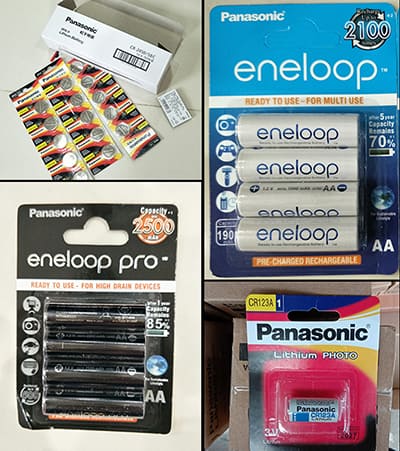
In this case, three such pages were found to be selling counterfeit Panasonic batteries on one of Thailand’s most popular online marketplaces. After contacting the online marketplace operators to request that the advertisements be taken down, two pages closed but one remained active.

An in-depth private investigation into the remaining online shop uncovered that all three pages were owned by the same entity—a Chinese national with two houses in Bangkok, from which he actively sold various types of fake Panasonic batteries in large quantities.

Warning Letter vs. Raid Action   

Sending a warning letter is usually the preferred enforce- ment action against small-scale online infringers. If the dispute can be settled after sending the warning letter, this option is more time- and cost-efficient than other legal actions.    

However, infringers with large inventories may be less receptive to this approach, either ignoring warning letters entirely, or only ceasing sales temporarily. Either way, infringers with large inventories are very likely to continue sales eventually, as they need to clear out their stock.   

In addition, attempts to negotiate with foreign nationals operating in Thailand often backfire, as they are not usually permanently established in Thailand. It is common for such infringers to simply move to another location upon receipt of a warning letter.   

In this instance the targeted infringer clearly had a large stock, was a foreign national, and was quite cautious in his activities, using the marketplace platform to hide his identity and not disclosing his name on his shop pages. A warning letter was therefore considered to pose a high risk, and a strong raid action against the target in order to seize the fake goods was considered a better solution. In addition, such action would penalize the infringers and spread the message that Panasonic takes serious legal action against infringers in order to protect its consumers.    

A criminal raid action was therefore initiated at the identified houses in order to seize the products.

Search and Seizure    

Based on investigation reports, strong evidence, and coordination with a police raid team, the court granted search warrants to gain entry to the suspect’s houses. No counterfeit Panasonic products were found at the first house, although other branded mobile phone chargers, earphones, mobile phone holders, and various unbranded products were on site. The police seized those goods for non-payment of import taxes.
The suspect and one of his staff (a Thai citizen) were found inside the second house, and they granted entry when presented with the search warrant. The search confirmed that the residential property was being used as a warehouse for commercial purposes. Batteries, chargers, watches, and other products were stored in every room, including the living room, kitchen, bedrooms, and even bathrooms. A large number of fake Panasonic products were found, along with other branded products.    

The police seized more than 30,000 counterfeit Panasonic products, including stickers labeled “Panasonic” that were obviously going to be attached to infringing products before sale. 

Arresting the Counterfeiters

The police filed charges of trademark infringement and importation tax evasion under the Customs Act against both people found in the house. In respect of the stickers labelled “Panasonic,” intended to convince the public that counterfeit goods were genuine Panasonic goods, the infringers were charged with using a mark without authorization in order to mislead the public, under the Thai Penal Code. In addition, the foreign national was charged with working without a work permit under Thailand’s immigration regime.   

This successful raid action prevented the distribution of fake goods to end-users, and will serve as a deterrent to other potential infringers in the market in accordance with Panasonic’s anticounterfeiting and customer protection policies.    

This raid is a prime example of the level of commitment necessary in order to protect Thai consumers from dangerous counterfeit products. Actions like these are rarely a one-off, and typically form part of a broader anticounterfeiting campaign. In that context, raids can also help to identify the sources of fake batteries being distributed in Thailand, and ultimately eliminate the counterfeit products once and for all.

RELATED INSIGHTS​ 

September 26, 2024
Indonesia enacted a new franchise regulation, Government Regulation No. 35 of 2024 on Franchising (“GR 35/2024”), on September 2, 2024. Franchising in Indonesia was previously governed by Government Regulation No. 42 of 2007 on Franchising (“GR 42/2007”), along with an implementing regulation, Ministry of Trade Regulation No. 71 of 2019 regarding Implementation of Franchising (“MOT Regulation 71/2019”). This new regulation repeals GR 42/2007. However, MOT Regulation No. 71/2019 remains in effect until a new MOT regulation can be enacted. The new franchise regulation contains several amendments and provides more detailed requirements to complement MOT Regulation No. 71/2019. Comparison of GR 35/2024 to GR 42/2007 Minimum years of business operation. The new regulation reduces the minimum duration that a franchise registration applicant must have been operating from five years to three years. Intellectual property (IP) status. Any relevant IP must now be registered before a franchise registration application can be submitted. This is a change from the previous regulations, under which it was possible to obtain a franchise registration (STPW) while an IP application was still pending, and if the IP application could not be registered, the STPW would be canceled. Registration requirements for foreign franchisors. Under the new regulation, foreign franchisors must provide a legalized or apostilled business permit document from the country of origin in addition to the previously required franchise offering prospectus and statement letter from the relevant Indonesian authority. Administrative sanctions. The new regulation has adjusted the three escalating stages of administrative sanctions to (1) two warning letters, (2) a 14-day suspension from business activities, and (3) STPW revocation. This varies from the three stages under the previous regulation (three warning letters, fine, and STPW revocation). The new regulation also expands the list of noncompliant actions that are subject to these administrative sanctions. In addition to
September 9, 2024
The popularity of the franchise business model has been growing rapidly in Southeast Asia in recent years, with some of the world’s top brands becoming common sights in the commercial districts and shopping malls of major regional cities in Cambodia, Indonesia, Laos, Myanmar, Thailand, and Vietnam. While for most countries in this part of the world, franchising has not been explicitly mentioned in legislation, well prepared franchise business operations can comfortably adapt to each country’s regulatory framework, and the growth is poised to continue even as the global retail sector redesigns and redoubles its efforts in the wake of the COVID-19 outbreak. In fact, the franchise business model, which is both global and hyper-local at once, is one of the most promising solutions that entrepreneurs are turning to in their quest to overcome the challenges of the new economic reality. The Regional Guide to Franchising Law in Southeast Asia provides key, up-to-date insights into the legal frameworks regulating franchise operations in these Southeast Asian countries, and helps brand owners understand the most relevant laws, authorities, and procedures for their business. Some of the essential topics covered for each jurisdiction include considerations in negotiating and designing franchise agreements, protecting intellectual property rights, and important information on judicial and arbitral procedures should a dispute arise between franchisor and franchisee. Practitioners from Tilleke & Gibbins’ offices in Cambodia, Indonesia, Laos, Myanmar, Thailand, and Vietnam contributed to guide—not only by providing legal expertise on the laws and mechanisms applicable in each jurisdiction, but also by examining strategies for establishing and running resilient franchise operations in Southeast Asia. The full guide can be accessed as a PDF through the button below.
July 9, 2024
On July 3, 2024, the Committee on Contracts of Thailand’s Consumer Protection Board announced the Notification re: Stipulation of Cash-on-Delivery (COD) Logistics Services as a Controlled-Receipt Business under the Consumer Protection Act B.E. 2522 (1979). The notification regulates businesses “providing goods transportation services that collect cash on delivery,” which refers to business operators responsible for transporting goods from sender (i.e., the merchant of the goods) to consumer (i.e., the purchaser of the goods) and upon delivery collects payment from the consumer either in cash or via bank transfer. The obligations that the notification imposes on these business operators are described below. Receipts Business operators must prepare a receipt as evidence of payment according to the specified requirements and deliver it to the consumer immediately upon receiving payment for the goods. The receipt must include text in Thai that is clearly visible and legible, with a font size of at least two millimeters and no more than 11 characters per inch. The text must contain essential information and conditions as specified in the notification, including: The duration that the business operator will hold the money received from the consumer before releasing it to the sender; The timeframe within which the consumer must notify the business operator to return the goods and request a refund; Information about the employees who deliver the goods and collect payment from consumers; The name of the person authorized to issue the receipt; Details about the parcel specifying the nature of the goods, including the name, type, kind, characteristics, size, weight, quantity, color, volume or capacity, and price of the goods; and A statement that the consumer has the right to reject the delivered goods or receive a refund. The receipt also must not contain any statement prohibited by the notification. Examples include: Text stipulating that
March 25, 2024
Attorneys from Tilleke & Gibbins in Vietnam have provided an updated Vietnam chapter for Fashion Law 2024, a guide to law surrounding the business of fashion in jurisdictions around the world. The guide, which covers 20 key jurisdictions in the global fashion industry, offers insights into local legal frameworks for a range of issues, such as brand enforcement and protection, e-commerce and marketing, and sustainability. The Vietnam chapter of Fashion Law 2024 provides detailed information on the following topics: Main intellectual property rights for fashion products Contractual arrangements in manufacturing, distribution, and advertising Regulations and enforcement of online marketing Unfair competition rules and judicial interpretation Specific regulations on sustainability and ESG in fashion Special import and export rules for fashion products The full Vietnam chapter is available for free through the button below and on the Global Legal Post website. Tilleke & Gibbins also contributed the Thailand chapter to the guide.