You are using an outdated browser and your browsing experience will not be optimal. Please update to the latest version of Microsoft Edge, Google Chrome or Mozilla Firefox. Install Microsoft Edge

March 2, 2020

Registering an Individual’s Name as a Trademark in Thailand

Informed Counsel

Thailand’s trademark registrar and the Board of Trademarks have, in the past, rejected several trademark applications consisting of the personal names, surnames, or full names of individuals, displayed in block letters, on the basis that they were insufficiently distinctive. These included applications for marks such as CATHERINE ZETA-JONES and PARIS HILTON. At the same time, registration has been granted to several names in block letters, such as BECKHAM, JIMMY CHOO, and CHRISTIAN PAUL. These seemingly contradictory rejections and acceptances raise questions of whether an application for an individual’s name in block letters can actually be registered in Thailand.    

The Trademark Act addresses the registration of a personal name and surname under section 7, which relates to the distinctiveness of the mark. One of the provisions states that a mark can be deemed distinctive if it consists of “a personal name, a surname of a natural person that is not, according to its ordinary signification, a surname, a full name, a name of a legal entity under the relevant law, or a trade name represented in a special manner and is not directly descriptive of the nature or characteristics of the goods” (emphasis added).   

The Examination Guidelines of the registrar provide the following examples of names that are capable of registration:
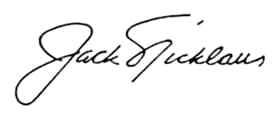
Although these examples seem to support the view that a name represented in a special manner can be registrable, section 7 of the Trademark Act can be interpreted in another way—that is, that the phrase “represented in a special manner” only applies to trade names, not to other types of names. Also, it should be noted here that the Examination Guidelines are not law—merely persuasive guidelines which examiners follow when assessing applications.

A few cases relating to this issue have been heard by the courts. In 2017, in Supreme Court Case no. 617/2560 between a brand owner and the Department of Intellectual Property (DIP), the Supreme Court ruled in favor of the brand owner and affirmed the Intellectual Property and International Trade (IP&IT) Court’s judgment that the personal name VALENTINO, in its non-stylized form, is sufficiently distinctive to be registrable. In doing so it held the decision of the examining registrar and the Board of Trademarks to be incorrect, and opined that the wording “represented in a special manner” in section 7 of the Trademark Act should be applied only to trade names—not to the names of individuals.   

However, the DIP continues to maintain the contrary interpretation that the wording “represented in a special manner” applies to all the categories listed in the relevant paragraph of section 7, which includes personal names, surnames of natural persons, names of legal entities, and trade names. The DIP strongly disagreed with the above Supreme Court decision and has continued its practice of rejecting the personal names or surnames of individuals if not presented in a stylized form. In fact, the DIP was successful in its arguments in another, similar case (no. 3499/2561), with the Supreme Court ruling that the mark JENNIFER ANISTON was not presented in a stylized form and could not be registered. The Supreme Court in this case clearly stated that the mark, which consists of a personal name and a surname, would be considered distinctive only if it was presented in a special manner and if it was not directly descriptive of the nature or characteristics of the goods to which it was being applied. The Supreme Court noted that although the mark JENNIFER ANISTON is not descriptive of goods, the mark is presented in block letters. Therefore, the mark was determined to be non-distinctive. However, the Supreme Court further decided that the  mark JENNIFER ANISTON could be registered because it had gained secondary meaning through use (and much evidence of this use was submitted). As these examples show, decisions by Supreme Court judges in Thailand can differ from one case to another.

Interestingly, in the same year that the Supreme Court decided the JENNIFER ANISTON case, the Court of Appeal rendered its own decision regarding the VALENTINO mark, ruling in favor of the brand owner. This case involved a similar issue to the VALENTINO case described above but concerned a different trademark application. Under this Court of Appeal decision (case no. 2716/2561), both the IP&IT Court and the Court of Appeal used the same criteria as the Supreme Court did in the case described earlier (no. 617/2560), and held that the term “represented in a special manner” applies only to trade names. In this case, the mark VALENTINO (in block letters) was found to be distinctive. This Court of Appeal decision has been deemed final, as the DIP did not ask the Supreme Court for permission to appeal the decision further.

As is demonstrated above, this issue of registering an individual’s name is still treated inconsistently in the courts, which creates challenges for both brand owners and the DIP.  The registrar and the Board of Trademarks continue the practice of rejecting applications for names and surnames of individual persons that are not presented in a stylized form. For the time being, if a brand owner wishes to register a trademark for their name or surname, it is advisable that the mark be represented in a special manner.

RELATED INSIGHTS​ 

June 10, 2026
For multinational franchisors operating in Thailand, a key risk after franchise termination is that former outlets may continue operating in ways that could easily mislead consumers into believing they remain within the authorized network. To justify such operations, former franchisees often argue that the termination was invalid or ineffective. As a result, these cases are often treated as contractual disputes, making it difficult for franchisors to obtain injunctive relief before a final judgment confirms that the termination was lawful. Franchisors face significant commercial and reputational harm during lengthy proceedings, including consumer confusion, disruption to franchise restructuring, and damage to brand reputation and customer trust. In an encouraging development, the Thai court in a 2025 case responded to the problem of unauthorized post-termination franchise operations by granting interim relief, recognizing broader brand and consumer harm, and awarding substantial damages, highlighting a successful litigation strategy of framing the dispute not merely as a contractual termination issue but as trademark infringement causing ongoing commercial injury. The Subway Case From December 2024 to mid-2025, an unauthorized “Subway®” franchise operation in Thailand attracted substantial public and media attention. Reports and online discussions about unauthorized Subway® stores circulated widely after complaints arose about food quality and customer experience at certain outlets that were allegedly operating after their franchise rights had expired. Because these stores continued to use Subway® trademarks, trade dress, and overall commercial appearance, many consumers were unable to distinguish them from authorized operations, resulting in reputational risks and customer confusion that affected the franchisor’s brand and franchise system in Thailand. Subway treated this matter with the utmost seriousness and moved promptly to protect its brand, franchise system, and customers. It filed a civil action with the IP&IT Court seeking a permanent injunction and damages. During the proceedings, the court granted a preliminary injunction
May 22, 2026
Intellectual property specialists from Tilleke & Gibbins in Vietnam have contributed an updated Intellectual Property Transactions in Vietnam overview for Thomson Reuters Practical Law, an online publication that provides comprehensive legal guides for jurisdictions worldwide. The Vietnam overview was authored by Linh Thi Mai Nguyen, Thanh Phuong Vu, Chi Lan Dang, Son Thai Hoang, and Duc Anh Tran. The chapter provides a high-level examination of key aspects of IP transactions law in Vietnam, including IP assignment and licensing, research and development collaborations, IP in mergers and acquisitions (M&A), lending and taking security over intellectual property rights, settlement agreements, employee- and consultant-created IP, competition law, taxation, and non-tariff trade barriers. Key topics covered in the chapter include: IP assignment: Basis and formalities for assignments of patents, utility models, trade marks, copyright, design rights, trade secrets, confidential information, and domain names in Vietnam. IP licensing: Scope, formalities, and recordal requirements for licensing patents, trade marks, copyright, design rights, and trade secrets. Research and development collaborations: Treatment of improvements, derivatives, and joint ownership of IP, including exploitation and enforcement issues. IP aspects of M&A and security: Due diligence, warranties, transfer formalities, and taking security over intellectual property rights. Practical Law, a legal reference resource from Thomson Reuters, publishes a range of guides for hundreds of jurisdictions and practice areas. The Intellectual Property Transactions Global Guide is a valuable resource for legal practitioners seeking comparative insight into transactional IP issues across multiple jurisdictions. To view the latest version of the Intellectual Property Transactions in Vietnam overview, please visit the Practical Law website and enroll in the free Practical Law trial to gain full access.
May 13, 2026
Laos has significantly broadened its industrial property administrative review framework, most notably by extending it to cover copyright and related rights for the first time. Decision No. 0306/IC on the Administrative Resolution of Disputes Concerning Industrial Property Registration, New Plant Variety Registration, and Copyright and Related Rights Recordation took effect on April 24, 2026, replacing the previous rules from 2023, which had covered only industrial property and new plant variety matters. Decision No. 0306/IC governs how Laos’ Department of Intellectual Property (DIP) and provincial offices handle formal challenges to industrial property registrations and applications. The proceedings covered include oppositions to pending applications, appeals of refused applications, requests for cancellation of existing registrations, and—newly—disputes concerning the recordation and interpretation of copyright and related rights. These administrative proceedings within the DIP are heard by a government-appointed Administrative Dispute Resolution Committee, which functions similarly to the opposition and review boards found in other jurisdictions. Key Changes Decision No. 0306/IC covers four categories of administrative proceedings: Oppositions: Third-party challenges to a pending industrial property application before it is granted. Refusal appeals: Challenges to the DIP’s decision to refuse their application. Cancellation or deletion requests: Applications to invalidate an existing registered right on the grounds that it should not have been granted. Copyright and related rights disputes: Challenges to or interpretations of copyright and related rights recordations, including determinations of whether a work qualifies for copyright protection under Lao law. The most significant development is the committee’s new jurisdiction over copyright matters. The committee is now empowered to resolve disputes concerning copyright and related rights recordation—this includes the authority to determine whether a work qualifies for copyright protection and to interpret the scope of an existing recordation. Parties who believe a competitor has improperly recorded copyright over a work, or who wish to contest
April 30, 2026
Vietnam’s Decree No. 134/2026/ND‑CP, which took effect on 9 April 2026, plays an important role in detailing and implementing Vietnam’s Intellectual Property (IP) Law in the context of rapid digital transformation and the growing application of artificial intelligence (AI). The new decree provides comprehensive guidance on the application of copyright and related‑rights regulations, addressing key issues such as authorship, ownership, statutory exceptions and limitations, registration procedures, and enforcement mechanisms. Through these measures, Decree 134 seeks to achieve an appropriate balance between safeguarding the legitimate interests of rightsholders and fostering innovation, research, and technological advancement, thereby strengthening the state’s framework for the effective management, protection, and exploitation of intellectual property in the digital and AI‑driven environment. Some notable aspects of Decree 134 are discussed below. Copyright for AI-Created Works Decree 134 provides important guidance on the determination of copyright and related rights in works created with the assistance of AI. Article 5a reaffirms the principle that human creativity remains central to copyright protection, clarifying that copyright or related rights arise only where a human makes a substantial and decisive intellectual contribution, exercises effective control over the creative outcome, and assumes responsibility for the content and its legality. At the same time, the provision confirms that AI is regarded solely as a technological tool rather than a rights‑holding subject, thus ensuring consistency with the fundamental concepts of authorship and ownership under the IP Law. By introducing requirements on transparency, proof of human contribution, and compliance with AI‑specific labelling and technical marking obligations, Decree 134 establishes a clear and enforceable legal framework for the responsible use of AI in creative activities. Lawful Use of Copyrighted Texts and Data Article 37a of Decree 134 sets out the specific conditions under which copyrighted texts and data may be lawfully used for scientific research, experimentation,