You are using an outdated browser and your browsing experience will not be optimal. Please update to the latest version of Microsoft Edge, Google Chrome or Mozilla Firefox. Install Microsoft Edge

March 2, 2020

Registering an Individual’s Name as a Trademark in Thailand

Informed Counsel

Thailand’s trademark registrar and the Board of Trademarks have, in the past, rejected several trademark applications consisting of the personal names, surnames, or full names of individuals, displayed in block letters, on the basis that they were insufficiently distinctive. These included applications for marks such as CATHERINE ZETA-JONES and PARIS HILTON. At the same time, registration has been granted to several names in block letters, such as BECKHAM, JIMMY CHOO, and CHRISTIAN PAUL. These seemingly contradictory rejections and acceptances raise questions of whether an application for an individual’s name in block letters can actually be registered in Thailand.    

The Trademark Act addresses the registration of a personal name and surname under section 7, which relates to the distinctiveness of the mark. One of the provisions states that a mark can be deemed distinctive if it consists of “a personal name, a surname of a natural person that is not, according to its ordinary signification, a surname, a full name, a name of a legal entity under the relevant law, or a trade name represented in a special manner and is not directly descriptive of the nature or characteristics of the goods” (emphasis added).   

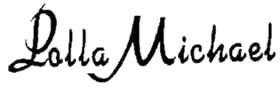
The Examination Guidelines of the registrar provide the following examples of names that are capable of registration:
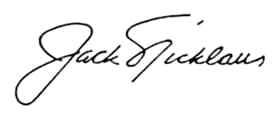
Although these examples seem to support the view that a name represented in a special manner can be registrable, section 7 of the Trademark Act can be interpreted in another way—that is, that the phrase “represented in a special manner” only applies to trade names, not to other types of names. Also, it should be noted here that the Examination Guidelines are not law—merely persuasive guidelines which examiners follow when assessing applications.

A few cases relating to this issue have been heard by the courts. In 2017, in Supreme Court Case no. 617/2560 between a brand owner and the Department of Intellectual Property (DIP), the Supreme Court ruled in favor of the brand owner and affirmed the Intellectual Property and International Trade (IP&IT) Court’s judgment that the personal name VALENTINO, in its non-stylized form, is sufficiently distinctive to be registrable. In doing so it held the decision of the examining registrar and the Board of Trademarks to be incorrect, and opined that the wording “represented in a special manner” in section 7 of the Trademark Act should be applied only to trade names—not to the names of individuals.   

However, the DIP continues to maintain the contrary interpretation that the wording “represented in a special manner” applies to all the categories listed in the relevant paragraph of section 7, which includes personal names, surnames of natural persons, names of legal entities, and trade names. The DIP strongly disagreed with the above Supreme Court decision and has continued its practice of rejecting the personal names or surnames of individuals if not presented in a stylized form. In fact, the DIP was successful in its arguments in another, similar case (no. 3499/2561), with the Supreme Court ruling that the mark JENNIFER ANISTON was not presented in a stylized form and could not be registered. The Supreme Court in this case clearly stated that the mark, which consists of a personal name and a surname, would be considered distinctive only if it was presented in a special manner and if it was not directly descriptive of the nature or characteristics of the goods to which it was being applied. The Supreme Court noted that although the mark JENNIFER ANISTON is not descriptive of goods, the mark is presented in block letters. Therefore, the mark was determined to be non-distinctive. However, the Supreme Court further decided that the  mark JENNIFER ANISTON could be registered because it had gained secondary meaning through use (and much evidence of this use was submitted). As these examples show, decisions by Supreme Court judges in Thailand can differ from one case to another.

Interestingly, in the same year that the Supreme Court decided the JENNIFER ANISTON case, the Court of Appeal rendered its own decision regarding the VALENTINO mark, ruling in favor of the brand owner. This case involved a similar issue to the VALENTINO case described above but concerned a different trademark application. Under this Court of Appeal decision (case no. 2716/2561), both the IP&IT Court and the Court of Appeal used the same criteria as the Supreme Court did in the case described earlier (no. 617/2560), and held that the term “represented in a special manner” applies only to trade names. In this case, the mark VALENTINO (in block letters) was found to be distinctive. This Court of Appeal decision has been deemed final, as the DIP did not ask the Supreme Court for permission to appeal the decision further.

As is demonstrated above, this issue of registering an individual’s name is still treated inconsistently in the courts, which creates challenges for both brand owners and the DIP.  The registrar and the Board of Trademarks continue the practice of rejecting applications for names and surnames of individual persons that are not presented in a stylized form. For the time being, if a brand owner wishes to register a trademark for their name or surname, it is advisable that the mark be represented in a special manner.

RELATED INSIGHTS​ 

August 4, 2026
Intellectual property (IP) protection sometimes hinges on fame and recognition. However, this alone will not always be sufficient to overcome an IP dispute when it involves contractual obligations or registered rights. Below are five cases from around the world that tackle some of the basic issues in IP registration, ownership, commercialization, and enforcement. 1. USA: Taylor Swift Trademark Application Refused Taylor Swift recently filed a trademark application to register “The Life of a Showgirl,” which is the title of her 12th studio album. When examining a trademark application, the examiner considers various factors before deciding whether it should be registered. One of these factors is whether there is a likelihood of confusion (i.e., would a regular consumer mistake the origin of the trademark). In Taylor Swift’s case, the US Patent and Trademark Office (USPTO) decided that that there would be a risk of confusion. This decision was based on the existing registered trademark, “Confessions of a Showgirl,” owned by Maren Wade, which was registered in 2015. The USPTO refused Taylor Swift’s application based on the shared key distinctive element “of a showgirl,” the lack of sufficient distinguishing terms, the marks being used in overlapping markets (entertainment and performances), and because consumers may assume a common commercial source. Maren Wade then filed a lawsuit in California against Taylor Swift and her affiliated companies, arguing that Taylor Swfit’s branding is confusingly similar in structure, wording, and overall commercial impression to her registered mark. She is also drawing on the USPTO’s refusal of Taylor Swift’s application to support her argument of a likelihood of confusion. A judgment has not yet been reached in this case, but it serves as an important reminder of the importance of satisfying the essential elements required for IP registration. 2. Australia: Katy Perry v. Katie Perry In
July 27, 2026
Vietnam’s new E-Commerce Law, which took effect on 1 July 2026 along with its implementing Decree No. 248/2026/ND-CP (Decree 248), marks a significant development in the country’s approach to online intellectual property (IP) enforcement, reflecting a clear shift from a reactive model of intermediary liability to one that expects platforms to play a more active role in preventing infringement. From notice-and-takedown to platform responsibility The most significant change introduced by the E-Commerce Law is the transformation of the legal role of e-commerce platforms. The existing safe harbor provisions under the IP Law and the copyright notice-and-takedown regime established by Decree 17/2023/ND-CP (Decree 17) largely required intermediaries to act only after receiving notice of infringement. Once infringing content had been removed, the platform’s legal obligation was generally considered fulfilled. The new legislation adopts a fundamentally different approach. Article 17 of the E-Commerce Law requires intermediary platforms to screen information relating to goods and services before publication in order to prevent listings involving counterfeit or IP-infringing goods, and goods of unknown origin. Rather than relying exclusively on complaints from rights holders, platforms are now expected to implement preventive measures before infringing listings become publicly available. Decree 248 further requires platforms to update keyword filters based on recommendations issued by competent authorities. These filtering mechanisms are intended to prevent prohibited listings from appearing on the platform and represent a further move away from a purely complaint-driven enforcement model. The legislation also introduces Vietnam’s first statutory stay-down obligation. Under the E-Commerce Law and Decree 248, major digital platforms must maintain automated systems capable of reviewing, warning against, and removing unlawful listings while also implementing measures to prevent repeat violations, defined under Decree 248 as conduct that has previously been identified and handled by the platform, but continues to recur. This obligation addresses one
July 27, 2026
Tilleke & Gibbins’ intellectual property specialists have authored the Thailand chapter of Trade Secrets 2026 from Chambers and Partners. This global guide examines the legal frameworks governing trade secret protection, enforcement, and litigation across jurisdictions worldwide. The Thailand chapter provides a comprehensive overview of the country’s legal regime for protecting confidential business information, covering the legal framework, trade secret misappropriation, litigation procedures, remedies, and dispute resolution. Some topics covered include: Protectable trade secrets Reasonable measures to maintain secrecy Employee confidentiality Trade secret licensing Civil and criminal remedies Litigation procedures and injunctions Damages and other remedies Mediation and arbitration The guide also examines practical issues relating to safeguarding trade secrets, defending against allegations of misappropriation, and managing trade secret disputes in Thailand. Chambers and Partners’ Global Practice Guides provide in-house counsel with authoritative commentary on practical legal issues affecting business, enabling readers to compare legislation and procedures across multiple jurisdictions. The Thailand chapter of Trade Secrets 2026 is available as a PDF through the button below. The full guide can be accessed for free on the Chambers and Partners website.
July 27, 2026
In March 2025, Thailand’s Central Intellectual Property and International Trade Court (IP&IT Court) issued a landmark judgment in favor of Luckin Coffee, China’s leading retail coffee chain. The judgment marked a significant turnaround following earlier trademark litigation involving Luckin Coffee from 2021 to 2023 that had generated widespread public attention and raised questions about the protection available to legitimate foreign brand owners in Thailand. In a significant subsequent development, Thailand’s Court of Appeal for Specialized Cases has now affirmed the IP&IT Court’s judgment in its entirety. The appellate decision brings clarity to one of Thailand’s most closely watched trademark disputes. Significantly, this is the first case in Thailand to formally recognize the trademark squatting principle. The Court of Appeal confirmed that Luckin Coffee has a better right to the disputed mark and ordered cancellation of the defendants’ trademark registration—a key application of the “better right” doctrine. The court also upheld the substantial damages awarded at first instance, providing important guidance on assessing harm from systematic trademark squatting. Award-Winning Judgment Affirmed in Its Entirety The significance of the first-instance judgment extended beyond the outcome for Luckin Coffee. The IP&IT Court judgment was subsequently recognized in the IP&IT Court’s Distinguished Judgment Awards in 2025, reflecting the complexity, novelty, and legal significance of the issues considered in the case. The defendants nevertheless appealed the judgment, challenging several key aspects of the IP&IT Court’s decision. Luckin Coffee continued to entrust Tilleke & Gibbins as their sole attorney to pursue the case at the appellate level. After considering the defendants’ appeal and Luckin Coffee’s submissions in response, the Court of Appeal affirmed the first-instance judgment in its entirety. The judgment was announced on July 8, 2026. Better Right to the Marks The Court of Appeal confirmed Luckin Coffee’s superior rights. The orders include cancellation