
You are using an outdated browser and your browsing experience will not be optimal. Please update to the latest version of Microsoft Edge, Google Chrome or Mozilla Firefox. Install Microsoft Edge

August 29, 2018

Panasonic Wins Passing Off Case for Packaging and Product Designs

Informed Counsel

Although the Thai Trademark Act provides protection for passing off, filing a lawsuit to defend an IP owner’s unregistered rights can still pose certain challenges. This is especially true where two registered trademarks are different, but the product packaging designs of both marks are confusingly similar. In these circumstances, the court occasionally decides upon a mere comparison of the two marks and may determine that the similarities of their packaging designs are not likely to cause confusion among public consumers due to their dissimilarity.

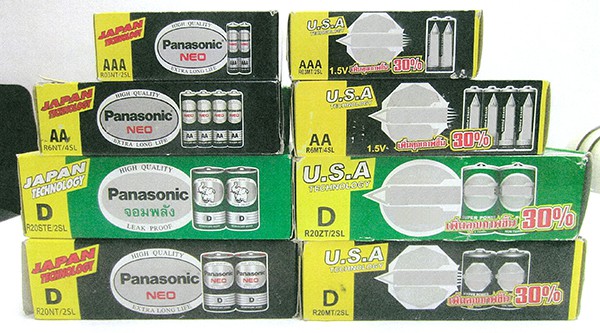
Recently, the Supreme Court rendered a remarkable and highly significant judgment on the grounds of passing off, which should serve as a landmark trademark infringement case in Thailand. Panasonic, the plaintiff, owns various trademark registrations worldwide. Among those registered marks, the most eye-catching mark is the PANASONIC mark itself. Panasonic registered this mark for use with manganese and alkaline batteries in Class 9 in Thailand in 1985. Panasonic exerted huge efforts and much research in designing the unique colors used with its batteries and the labeling on the packaging to let consumers recognize its products immediately as belonging to Panasonic.

Approximately five years ago, a Thai manufacturing company (defendants) was discovered to be manufacturing different types of batteries that were found to be similar to those manufactured by Panasonic under its own trademark. The defendants’ batteries were closely similar to Panasonic’s battery colors and the text was positioned almost identically to Panasonic’s packaging.

After trying unsuccessfully to reach an amicable settlement, Panasonic decided to bring a civil lawsuit against the defendants on the grounds of trademark infringement and passing off.
IP&IT Court Decision   

At the Intellectual Property and International Trade (IP&IT) Court, Panasonic argued that the appearance of its packaging was immediately recognizable among Thai public consumers and distinguishable from the packaging of other battery manufacturers. To support its claim, Panasonic conducted a public survey opinion poll comparing the overall appearances of its packaging and that of other battery manufacturers’ packaging. The survey results revealed that the average consumer readily recognizes Panasonic’s packaging without seeing the PANASONIC mark, and that there is a likelihood of confusion when consumers see the defendant’s packaging. Unfortunately, these survey results were not convincing evidence to the court. Without considering the defendant’s bad faith in imitating the color, size, and word arrangement of its battery packaging, the court instead took into consideration the trademark itself, and therefore considered that the defendant’s batteries were distinguishable when considering pronunciation and overall appearance.    

Panasonic disagreed with the court’s opinion and decided to appeal the case to the Supreme Court, arguing that the IP&IT Court failed to elaborate on the legal point of the defendants’ bad faith, as it was using similar packaging, labeling, and colors to its own product designs and benefiting from Panasonic’s widespread reputation.

The Supreme Court Decision   

The Supreme Court confirmed the IP&IT Court decision with regard to the dissimilarity of the registered marks, when considering pronunciation and the shape of the Roman characters of the marks. However, the Supreme Court disagreed with most other aspects of the IP&IT Court’s reasoning, especially in its failure to determine whether the defendants, by using a similar packaging, label, and product design to that of Panasonic’s, acted in bad faith and thereby infringed Panasonic’s unregistered trademark rights.    

The Supreme Court emphasized the importance of the bad faith intention of the defendants by determining the manner in which the trademark is used on goods and packages. The court found that even though the registered mark in dispute was not confusingly similar to the PANASONIC trademark in either appearance or pronunciation, the court must compare the characteristics of the batteries and the packaging of the defendants with those aspects of Panasonic’s batteries to determine whether the two companies’ products are similar.    

With regard to the color scheme, the Supreme Court took an approach contrary to the IP&IT Court’s reasoning. Even though color is a common feature that anyone can freely use, a certain color combination (e.g., green and silver; black and silver; or red, white, black and yellow), together with the placement of the colors, text, and images, creates a visual design and pattern indicating that Panasonic’s goods are different from others’ goods.   

The Supreme Court further elaborated that the appearance of the defendants’ batteries and packaging, which appear to be closely similar to Panasonic’s, clearly reflect the bad-faith intention of the defendants to use their registered mark with batteries in order to deceive the relevant consumers into believing that the batteries belong to Panasonic. The court held that such tortious conduct can only have the result of causing injury to Panasonic and is thus unlawful.    

The Supreme Court ruled that the defendants must cease using their product designs and packaging designs of similar coloring and patterns to those of Panasonic, and must not pass off their products as those of Panasonic. Moreover, the court awarded Panasonic compensatory damages, together with its attorneys’ fees and court fees.

Conclusion   

The trademark owner’s victory in this case offers a valuable lesson in determining that trademark infringement should not only consider the mark itself but also the manner in which an alleged infringer uses its mark to imitate a brand owner’s unique product designs and packaging, which can now be considered to be unregistered trademarks. This Supreme Court judgment establishes an exemplary guideline for brand owners facing similar issues, whereby brand owners can protect themselves from others imitating their unique product designs and packaging.

RELATED INSIGHTS​ 

March 4, 2021
E-commerce platforms have become some of the most significant marketplaces in Thailand, with millions of daily business transactions and huge numbers of online users. The increasing number of online shops operating on e-commerce platforms requires new techniques to be employed in online IP rights infringement cases. Both the private sector and the government have developed tools to enhance online IP enforcement, including ones using the latest legal technologies and artificial intelligence (AI). Many legal technologies and AI operations are still nascent and typically do not yet offer the best approach for online IP rights enforcement. For example, AI and other technologies available today are still unable to consistently differentiate between original and counterfeit products from the images and information displayed on the e-commerce platforms and the internet. Therefore, some of the most effective measures for online IP enforcement still involve manual online searches by experienced local investigators with deep understanding of the behaviors of local users (both sellers and buyers) and the ability to link relevant information across online platforms. Thailand’s Department of Intellectual Property (DIP), as the governmental office responsible for IP-related matters in Thailand, has initiated its new Memorandum of Understanding on the Protection of Intellectual Property Rights on the Internet. This memorandum of understanding (MOU) does not create additional rights for IP owners, but acts as a mechanism to gather all the relevant stakeholders to address issues related to online IP infringement in a unified, mutually agreeable manner. The signatories of the MOU fall into four categories: Governmental authorities: DIP, Department of Business Development, and Department of International Trade Promotion; E-commerce platform operators: Lazada, Shopee, and JD Central (the most popular e-commerce platforms in Thailand); IP rights holders: Particularly including trademark owners facing ongoing counterfeiting problems in Thailand; and Law firms. Although the MOU is not
March 4, 2021
Vietnam has become a big player in the global fashion industry. Garments made in Vietnam now appear all over the world, especially in the U.S. and the EU. In this value chain, however, Vietnamese companies usually play the role of garment processors, fulfilling the orders of big brands for immediate export purposes. While the goods bearing the registered marks are made in Vietnam by local companies, the brand owners are often overseas or global corporations. As a brand owner can lose protection of its mark in Vietnam due to non-use, this situation leads to the question of what constitutes “use” of a mark when the mark-bearing goods are processed for export only, and not sold in the Vietnam market. Article 124.5 of Vietnam’s IP Law provides that: Use of a mark means the performance of the following acts: Affixing the protected mark on goods, packaging, business facilities, means of service provision, or transaction documents in business activities; Circulating, offering, advertising, or stocking for sale goods bearing the protected mark; Importing goods or services bearing the protected mark. At first glance, the above provision seems quite clear. While importing goods appears on the list, exporting goods is conspicuously absent, and therefore it is not an act of use. However, it is also clear that for the purpose of exporting, a product should go through a manufacturing or processing stage in which the mark will be physically affixed to the product or its packaging. For fashion goods, this could be in the form of a removable tag or package, a tag sewn onto the item, or a fundamental part of the garment’s design (such as a T-shirt emblazoned with a brand name, or a shoe featuring a distinctive logo). Then, the question becomes whether this act of affixing the mark on
March 4, 2021
Myanmar, which is now more than halfway through the scheduled soft opening of its Intellectual Property Department (IPD) under the country’s New Trademark Law, is well on its way to the full realization of its plans for a modernized IP system operating on par with international standards. As the first of four IP-related laws passed in 2019, the ongoing implementation of the Trademark Law affects definitions of trademarks and types of trademark applications. Section 2 of the law defines a “mark” as “either a visible sign or a combination of signs, including one’s own names, alphabet letters, numbers, graphical representations, or compositions of color and tints to distinguish the goods or services of an enterprise from those of another enterprise. Within this scope, trademark, service mark, collective mark and certification mark are also included. The ‘series mark’ consists of a number of these marks, which resemble each other on the material particulars, but may differ in some aspect—for instance, a mark with different color variations. However, there is no specific definition of what makes up a series mark in the Trademark Law itself, and there has also not yet been any clear guidance on the issue. The Trademark Rules, which set the guidelines for the trademark application and registration procedures, are still in the process of being finalized, are expected to include information on the possibility of filing series marks under the soft opening period. On December 29 2020, the IPD held a workshop to clarify various issues, and informed attendees that applications containing more than one trademark in a single application are prohibited under the new system. However, this seemed to contradict the Ministry of Commerce’s Order No. 63/2020, which had declared that the refiling of old marks under the soft opening period of the new Trademark Law