
You are using an outdated browser and your browsing experience will not be optimal. Please update to the latest version of Microsoft Edge, Google Chrome or Mozilla Firefox. Install Microsoft Edge

November 5, 2018

Myanmar-Language Labeling Required on Wide Range of Products

Myanmar’s Central Committee for Consumer Protection issued Notification 1/2018 on October 26, 2018, which requires labels containing certain information in Myanmar language, jointly or combined with another language, to be affixed to certain products sold in the country. The notification is intended to ensure the safety of consumers.

The notification states that Myanmar-language labels must contain the following information:

  • Directions for use;
  • Storage instructions;
  • Allergy alerts and/or warnings; and
  • Side effects (if any).

The Myanmar-language label must be affixed to consumer units, jointly or combined with labelling in another language, but the legislation does not cover other packaging, such as display boxes.

The list of priority products that require Myanmar-language labelling, jointly or combined with labelling in another language, is as follows: 
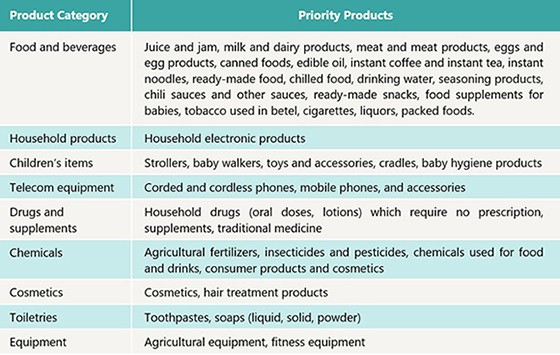
The committee may announce other products to be included in the list in the future.

Companies will have a six-month grace period from the notification date (October 26, 2018) to comply with the new regulation. Any violations after the grace period will leave companies vulnerable to the following sanctions under Section 19 of the Myanmar Consumer Protection Law 2014:

  • warning;
  • severe warning;
  • order to remedy the violation or compensate;
  • temporary prohibition of the sale and distribution of goods in violation;
  • product recall;
  • destruction of goods; and/or,
  • temporary or permanent revocation of business licenses or permits.

RELATED INSIGHTS​ 

May 3, 2011
In Thailand, the importation, manufacture, and sale of medicine is governed by the Medicine Act B.E. 2510 (1967). The Act also stipulates the requirements/procedures to apply for a license to import, manufacture, or sell medicine and the duties and obligations with which such license holder must comply. This article provides an overview of the requirements.
May 3, 2011
Written in a Q&A format, this chapter provides a comprehensive overview of the issues faced by life sciences companies in Thailand. Topics covered include the regulatory framework, manufacturing of medicinal products, clinical trials, marketing restrictions, packaging and labeling requirements, intellectual property issues, and product liability.
May 3, 2011
Before being marketed in Thailand, a wide variety of products must be registered at the Thai Food and Drug Administration (FDA). These products range from food, food supplements, beverages and medical devices to animal health products, cosmetics, hazardous substances, and all types of pharmaceuticals. Due to the large number of product applications that are filed at the Thai FDA and the stringency of registration requirements, registration timelines—particularly for pharmaceutical products—can be very long.