
You are using an outdated browser and your browsing experience will not be optimal. Please update to the latest version of Microsoft Edge, Google Chrome or Mozilla Firefox. Install Microsoft Edge

November 5, 2018

Myanmar-Language Labeling Required on Wide Range of Products

Myanmar’s Central Committee for Consumer Protection issued Notification 1/2018 on October 26, 2018, which requires labels containing certain information in Myanmar language, jointly or combined with another language, to be affixed to certain products sold in the country. The notification is intended to ensure the safety of consumers.

The notification states that Myanmar-language labels must contain the following information:

  • Directions for use;
  • Storage instructions;
  • Allergy alerts and/or warnings; and
  • Side effects (if any).

The Myanmar-language label must be affixed to consumer units, jointly or combined with labelling in another language, but the legislation does not cover other packaging, such as display boxes.

The list of priority products that require Myanmar-language labelling, jointly or combined with labelling in another language, is as follows: 
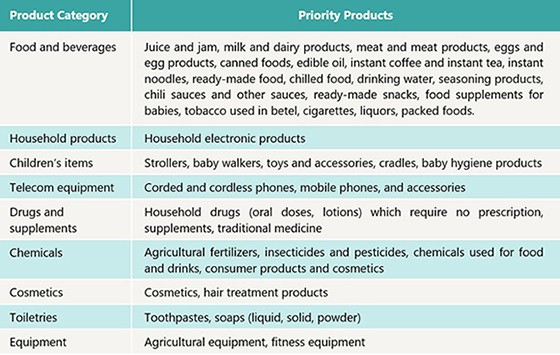
The committee may announce other products to be included in the list in the future.

Companies will have a six-month grace period from the notification date (October 26, 2018) to comply with the new regulation. Any violations after the grace period will leave companies vulnerable to the following sanctions under Section 19 of the Myanmar Consumer Protection Law 2014:

  • warning;
  • severe warning;
  • order to remedy the violation or compensate;
  • temporary prohibition of the sale and distribution of goods in violation;
  • product recall;
  • destruction of goods; and/or,
  • temporary or permanent revocation of business licenses or permits.

RELATED INSIGHTS​ 

May 21, 2012
Medicine is an integral part of our lives, helping us to recover from illness and allowing us to live a longer and healthier life. However, the great benefits derived from medicine are also accompanied by a great many risks, which may be derived from the properties of the drug substance, the quality of the medicine, or in some cases, the defectiveness of the drug product itself.
March 14, 2012
The 10 nation members of the Association of Southeast Asian Nations (ASEAN) have committed to implement an ASEAN Economic Community (AEC) by 2015. As of January 1, 2010, with the full implementation of the ASEAN Free Trade Agreement (now called the ASEAN Trade in Goods Agreement), the trading bloc has created a single market of more than 600 million people, making it the world’s ninth largest economy, with a GDP growth of 7.5 percent.
March 9, 2012
With its diverse range of consumers seeking both traditional wares and more modern Western-influenced products, Thailand, like Vietnam and many other Asean countries, has become a hugely attractive and a lucrative market for foreign and local food manufacturers alike.
February 23, 2012
The formation of a single market and single production base by 2015 will permit companies within ASEAN member states to more freely move their capital and will serve to effectively break down existing trade barriers that currently stunt intra-regional trade within the ten-member bloc. The implementation of consistent standards within ASEAN countries for each product, including related rules and regulations that conform to international standards, will, in theory, ensure the removal of such trade barriers or obstacles.