
You are using an outdated browser and your browsing experience will not be optimal. Please update to the latest version of Microsoft Edge, Google Chrome or Mozilla Firefox. Install Microsoft Edge

November 5, 2018

Myanmar-Language Labeling Required on Wide Range of Products

Myanmar’s Central Committee for Consumer Protection issued Notification 1/2018 on October 26, 2018, which requires labels containing certain information in Myanmar language, jointly or combined with another language, to be affixed to certain products sold in the country. The notification is intended to ensure the safety of consumers.

The notification states that Myanmar-language labels must contain the following information:

  • Directions for use;
  • Storage instructions;
  • Allergy alerts and/or warnings; and
  • Side effects (if any).

The Myanmar-language label must be affixed to consumer units, jointly or combined with labelling in another language, but the legislation does not cover other packaging, such as display boxes.

The list of priority products that require Myanmar-language labelling, jointly or combined with labelling in another language, is as follows: 
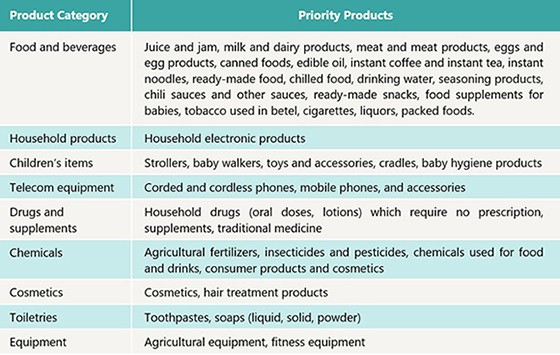
The committee may announce other products to be included in the list in the future.

Companies will have a six-month grace period from the notification date (October 26, 2018) to comply with the new regulation. Any violations after the grace period will leave companies vulnerable to the following sanctions under Section 19 of the Myanmar Consumer Protection Law 2014:

  • warning;
  • severe warning;
  • order to remedy the violation or compensate;
  • temporary prohibition of the sale and distribution of goods in violation;
  • product recall;
  • destruction of goods; and/or,
  • temporary or permanent revocation of business licenses or permits.

RELATED INSIGHTS​ 

May 14, 2015
Vietnam’s Drug Distribution PolicyUnder its WTO commitments, Vietnam agreed to allow foreign-invested entities (FIEs) to conduct distribution services (i.e., commission agent, wholesale, and retail services) for most types of products, but it specifically excluded “pharmaceutical products and drugs.” Consequently, foreign pharmaceutical producers typically establish legal presence in Vietnam by way of representative offices through which they can conduct marketing activities, and use local drug distributors to conduct sales and delivery of their products.
May 14, 2015
To ensure harmony in regulations between ASEAN countries as well as tighten the management of drug registration, the Ministry of Health (MOH) issued Circular No. 44/2014/TT-BYT dated November 25, 2014, on Registration of Drugs (Circular 44) to replace its previous Circular No. 22/2009/TT-BYT (Circular 22) dated November 24, 2009. Circular 44 took effect on January 15, 2015. Among the contents of Circular 44, there are four main points changed from Circular 22:
May 14, 2015
As a developing country with a large population, Vietnam has long viewed parallel imports as an effective antidote to the high price of innovator drugs. The parallel importation of medicines for the prevention and treatment of human diseases is permitted, and even encouraged, under Vietnamese law. Many pharmaceutical manufacturers, however, are understandably concerned that parallel importation could lead to diminished profits, thereby reducing research and development efforts, and leading to a slowdown in the innovation of new drugs.
January 7, 2015
Tilleke & Gibbins, in association with Lex Mundi, has published the latest edition of the Guide to Doing Business in Thailand. The guide provides a comprehensive overview of the legal and business environment for investors entering the Thai market. In particular, it covers topics such as the current political climate, investment incentives, financial facilities, exchange controls, import and export regulations, establishing and operating a business, labor and employment, tax, and immigration requirements.