
You are using an outdated browser and your browsing experience will not be optimal. Please update to the latest version of Microsoft Edge, Google Chrome or Mozilla Firefox. Install Microsoft Edge

November 5, 2018

Myanmar-Language Labeling Required on Wide Range of Products

Myanmar’s Central Committee for Consumer Protection issued Notification 1/2018 on October 26, 2018, which requires labels containing certain information in Myanmar language, jointly or combined with another language, to be affixed to certain products sold in the country. The notification is intended to ensure the safety of consumers.

The notification states that Myanmar-language labels must contain the following information:

  • Directions for use;
  • Storage instructions;
  • Allergy alerts and/or warnings; and
  • Side effects (if any).

The Myanmar-language label must be affixed to consumer units, jointly or combined with labelling in another language, but the legislation does not cover other packaging, such as display boxes.

The list of priority products that require Myanmar-language labelling, jointly or combined with labelling in another language, is as follows: 
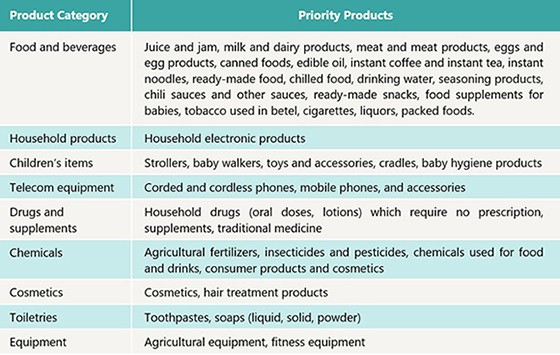
The committee may announce other products to be included in the list in the future.

Companies will have a six-month grace period from the notification date (October 26, 2018) to comply with the new regulation. Any violations after the grace period will leave companies vulnerable to the following sanctions under Section 19 of the Myanmar Consumer Protection Law 2014:

  • warning;
  • severe warning;
  • order to remedy the violation or compensate;
  • temporary prohibition of the sale and distribution of goods in violation;
  • product recall;
  • destruction of goods; and/or,
  • temporary or permanent revocation of business licenses or permits.

RELATED INSIGHTS​ 

December 22, 2017
Vietnam’s Ministry of Health (MOH) has recently issued a very important notification and new regulations relating to the implementation of Decree No. 36/2017/ND-CP (Decree 36) on medical device management. The key notification was issued under Official Dispatch No. 7165/BYT-TB-CT dated December 14, 2017 (Dispatch 7165). The new implementing guidelines for Decree 36 were issued under Circular No. 46/2017/TT-BYT dated December 15, 2017 (Circular 46). These developments are crucial to the registration regime for medical devices in Vietnam.Dispatch 7165
December 20, 2017
Tilleke & Gibbins’ fourth annual Vietnam Pharma Update  provides a compilation of articles on the life sciences sector in Vietnam written by our lawyers, IP executives, and regulatory affairs experts. This year’s edition includes the following content:
November 28, 2017
Higher life expectancy, a growing middle-income population, and the government’s policy of promoting access to medicine are key drivers boosting demand for healthcare-related businesses in Thailand. In 2015, healthcare expenditures accounted for 4.6 percent of Thailand’s GDP, and there is an increasing trend in government budgetary spending in healthcare. Due to these factors, the healthcare market is experiencing strong growth, bringing opportunities in cosmetics, health supplements, medical devices, and pharmaceuticals.
November 28, 2017
The private sector in Indonesia has been vocal about their concern for the government’s plan to make halal certification mandatory, believing that this requirement will add a greater burden to their business. Amid criticism, the government is moving forward with its halal assurance system, citing, among other reasons, the need for a government agency to be the new halal certification authority to create greater transparency in the existing certification process.Halal Regulators