
You are using an outdated browser and your browsing experience will not be optimal. Please update to the latest version of Microsoft Edge, Google Chrome or Mozilla Firefox. Install Microsoft Edge

November 5, 2018

Myanmar-Language Labeling Required on Wide Range of Products

Myanmar’s Central Committee for Consumer Protection issued Notification 1/2018 on October 26, 2018, which requires labels containing certain information in Myanmar language, jointly or combined with another language, to be affixed to certain products sold in the country. The notification is intended to ensure the safety of consumers.

The notification states that Myanmar-language labels must contain the following information:

  • Directions for use;
  • Storage instructions;
  • Allergy alerts and/or warnings; and
  • Side effects (if any).

The Myanmar-language label must be affixed to consumer units, jointly or combined with labelling in another language, but the legislation does not cover other packaging, such as display boxes.

The list of priority products that require Myanmar-language labelling, jointly or combined with labelling in another language, is as follows: 
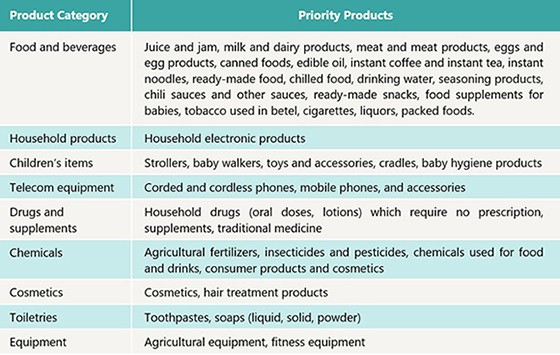
The committee may announce other products to be included in the list in the future.

Companies will have a six-month grace period from the notification date (October 26, 2018) to comply with the new regulation. Any violations after the grace period will leave companies vulnerable to the following sanctions under Section 19 of the Myanmar Consumer Protection Law 2014:

  • warning;
  • severe warning;
  • order to remedy the violation or compensate;
  • temporary prohibition of the sale and distribution of goods in violation;
  • product recall;
  • destruction of goods; and/or,
  • temporary or permanent revocation of business licenses or permits.

RELATED INSIGHTS​ 

May 21, 2019
On April 16, 2019, the Drug Act (No. 6) B.E. 2562 was published in the Government Gazette, amending the previous drug registration processes, clinical research processes, and fee schedules. The changes will apply to all pending applications and those filed from October 13, 2019 onward.New Requirements for RegistrationAn additional requirement has been added to the registration process for new drugs. Along with the drug registration dossier, the following documents must now be submitted for each drug classification:
April 23, 2019
Due to significant changes to the intellectual property (IP) landscape, the Comprehensive and Progressive Agreement for Trans-Pacific Partnership (CPTPP) indeed poses major challenges to Vietnam in implementing its obligations. Most of the obligations aim to enhance protection for IP proprietors. This will have a particular impact on the life science sectors, benefitting foreign pharmaceutical and agrochemical companies but reducing opportunities, at least in the short-term, for Vietnamese companies.
April 23, 2019
The market for ­pharmaceuticals in Vietnam is developing rapidly, in step with the country’s growing and aging population, rising per capita income, and increasing awareness of foreign ­brand-name drugs, which many ­Vietnamese consumers consider to be more reliable than generics and local brands. ­Naturally, Vietnam has ­become an attractive ­investment ­destination for ­foreign pharmaceutical companies eager to ­target new ­customers.
April 5, 2019
Pyihtaungsu Hluttaw Law No. 9/2019—Myanmar’s new Consumer Protection Law—was enacted on March 15, 2019, repealing the previous law and providing a clearer legal framework for the protection of consumers in Myanmar. The date of implementation is March 15, 2019, with the exception of the product label requirement, which will enter into force one year after the date of enactment.