
You are using an outdated browser and your browsing experience will not be optimal. Please update to the latest version of Microsoft Edge, Google Chrome or Mozilla Firefox. Install Microsoft Edge

November 5, 2018

Myanmar-Language Labeling Required on Wide Range of Products

Myanmar’s Central Committee for Consumer Protection issued Notification 1/2018 on October 26, 2018, which requires labels containing certain information in Myanmar language, jointly or combined with another language, to be affixed to certain products sold in the country. The notification is intended to ensure the safety of consumers.

The notification states that Myanmar-language labels must contain the following information:

  • Directions for use;
  • Storage instructions;
  • Allergy alerts and/or warnings; and
  • Side effects (if any).

The Myanmar-language label must be affixed to consumer units, jointly or combined with labelling in another language, but the legislation does not cover other packaging, such as display boxes.

The list of priority products that require Myanmar-language labelling, jointly or combined with labelling in another language, is as follows: 
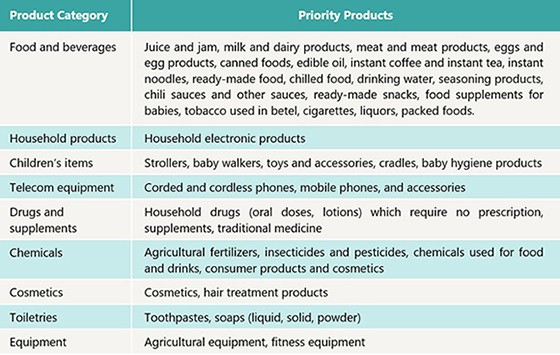
The committee may announce other products to be included in the list in the future.

Companies will have a six-month grace period from the notification date (October 26, 2018) to comply with the new regulation. Any violations after the grace period will leave companies vulnerable to the following sanctions under Section 19 of the Myanmar Consumer Protection Law 2014:

  • warning;
  • severe warning;
  • order to remedy the violation or compensate;
  • temporary prohibition of the sale and distribution of goods in violation;
  • product recall;
  • destruction of goods; and/or,
  • temporary or permanent revocation of business licenses or permits.

RELATED INSIGHTS​ 

February 5, 2020
Southeast Asian food exporters to China should be aware of new regulations announced in late November 2019 by China’s General Administration of Customs (GAC) for all food products. The first is still in draft form and seeks to expand the scope of the GAC’s role in policing all food products, while the second update—already implemented–makes the application process for an import license for animal and plant food products much more rigorous.
January 28, 2020
Tilleke & Gibbins authors have provided the latest update to the Thailand Q&A section of Doing Business in… , a Q&A-style guide published by Thomson Reuters Practical Law that presents an overview of recent legal developments affecting doing business in 59 jurisdictions worldwide. The Thailand chapter of the guide was written by attorneys from Tilleke & Gibbins and presents an overview of Thailand’s legal system and key laws applicable to foreign companies doing business in the country.
January 6, 2020
On December 13, 2019, the Vietnamese government issued Decree No. 94/2019/ND-CP (Decree 94) providing detailed guidance on some articles of the Law on Crop Production related to plant varieties and cultivation. Decree 94 will come into effect on February 1, 2020.Notably, Decree 94 includes a list of plant variety genetic resources banned from export. In addition, it provides detailed regulations on labeling, conditions for trading or manufacturing, and administrative procedures related to plant varieties to facilitate the manufacture, trade or import of plant varieties.
November 14, 2019
In support of Cambodia’s rapidly growing economy, the Cambodian government enacted the Law on Electronic Commerce (E-commerce Law) and the Law on Consumer Protection (Consumer Protection Law) on November 2, 2019. Both of these new laws change the legal landscape in important ways for businesses under their purview. E-commerce Law