
You are using an outdated browser and your browsing experience will not be optimal. Please update to the latest version of Microsoft Edge, Google Chrome or Mozilla Firefox. Install Microsoft Edge

November 5, 2018

Myanmar-Language Labeling Required on Wide Range of Products

Myanmar’s Central Committee for Consumer Protection issued Notification 1/2018 on October 26, 2018, which requires labels containing certain information in Myanmar language, jointly or combined with another language, to be affixed to certain products sold in the country. The notification is intended to ensure the safety of consumers.

The notification states that Myanmar-language labels must contain the following information:

  • Directions for use;
  • Storage instructions;
  • Allergy alerts and/or warnings; and
  • Side effects (if any).

The Myanmar-language label must be affixed to consumer units, jointly or combined with labelling in another language, but the legislation does not cover other packaging, such as display boxes.

The list of priority products that require Myanmar-language labelling, jointly or combined with labelling in another language, is as follows: 
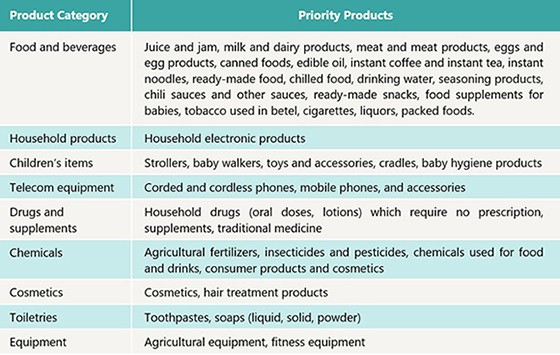
The committee may announce other products to be included in the list in the future.

Companies will have a six-month grace period from the notification date (October 26, 2018) to comply with the new regulation. Any violations after the grace period will leave companies vulnerable to the following sanctions under Section 19 of the Myanmar Consumer Protection Law 2014:

  • warning;
  • severe warning;
  • order to remedy the violation or compensate;
  • temporary prohibition of the sale and distribution of goods in violation;
  • product recall;
  • destruction of goods; and/or,
  • temporary or permanent revocation of business licenses or permits.

RELATED INSIGHTS​ 

September 1, 2020
The cannabis industry in Thailand took its first concrete step in February of 2019, when medical cannabis was unexpectedly legalized. In August 2019, a Ministry of Public Health (MOPH) notification delisted some components and derivatives of cannabis plants from the category of narcotics and reclassified them as products within the purview of individual laws (e.g., on medicine, herbal products, cosmetics, food, etc.).
June 25, 2020
Practical Law has published an updated online version of Agricultural Law in Thailand, a Q&A-style guide that provides detailed overviews of the law affecting agribusiness in the country. The Thailand overview is one of twenty such guides to jurisdictions worldwide, covering key practical issues related to the legal environment for agricultural operations.The Thailand section, written by lawyers at Tilleke & Gibbins, delves into the following main issues:
June 15, 2020
Dealing with the COVID-19 pandemic has taken top priority for almost every country in the world. In Thailand, even though the strength of the country’s health security measures has been ranked sixth-best globally, COVID-19 hit hard, and the country has only just begun to detail with the effects of the outbreak.    
May 5, 2020
The Global Attorney-Client Privilege Guide, published by Lex Mundi, provides information on what constitutes attorney-client privilege in over 65 jurisdictions around the world. The Thailand chapter of the guide was written by Michael Ramirez, counsel in the dispute resolution group of Tilleke & Gibbins’ Bangkok office.