
You are using an outdated browser and your browsing experience will not be optimal. Please update to the latest version of Microsoft Edge, Google Chrome or Mozilla Firefox. Install Microsoft Edge

November 5, 2018

Myanmar-Language Labeling Required on Wide Range of Products

Myanmar’s Central Committee for Consumer Protection issued Notification 1/2018 on October 26, 2018, which requires labels containing certain information in Myanmar language, jointly or combined with another language, to be affixed to certain products sold in the country. The notification is intended to ensure the safety of consumers.

The notification states that Myanmar-language labels must contain the following information:

  • Directions for use;
  • Storage instructions;
  • Allergy alerts and/or warnings; and
  • Side effects (if any).

The Myanmar-language label must be affixed to consumer units, jointly or combined with labelling in another language, but the legislation does not cover other packaging, such as display boxes.

The list of priority products that require Myanmar-language labelling, jointly or combined with labelling in another language, is as follows: 
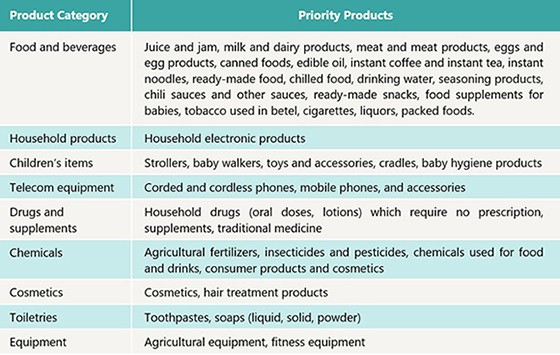
The committee may announce other products to be included in the list in the future.

Companies will have a six-month grace period from the notification date (October 26, 2018) to comply with the new regulation. Any violations after the grace period will leave companies vulnerable to the following sanctions under Section 19 of the Myanmar Consumer Protection Law 2014:

  • warning;
  • severe warning;
  • order to remedy the violation or compensate;
  • temporary prohibition of the sale and distribution of goods in violation;
  • product recall;
  • destruction of goods; and/or,
  • temporary or permanent revocation of business licenses or permits.

RELATED INSIGHTS​ 

August 27, 2021
The process of registering pesticide products in Myanmar has been slowed significantly by regulatory challenges since the enactment of the Pesticide Law in 2016. In some cases, the whole process can take almost three years. Nonetheless, this stringent and time-consuming process has been functioning smoothly, and Tilleke & Gibbins has successfully received approvals from the Pesticide Registration Board (PRB) despite the ongoing COVID-19 pandemic and state of emergency in the country. Overview Since its enactment, the Pesticide Law of 2016 has governed the regulation of local and imported pesticides under the oversight of the Plant Protection Division (PPD) and the joint secretary of the PRB. All foreign and domestic companies (including subsidiaries and joint ventures) looking to have their agricultural or household pest control products imported into Myanmar must first provide the products’ complete formulas and lists of active ingredients to the PPD, and apply for a pesticide registration certificate. Applications should be supported by a letter of consent from the manufacturer and various other technical documents and requirements. Experts at the PRB will review the technical dossier and inform the applicant if any re-submissions are required. Key Considerations One common cause of delay in the registration process is the requirement to submit both English and Myanmar translations of proposed labels to the PRB. Because the PRB takes a restrictive view of these labels and their translations, having the labels initially reviewed by a local regulatory expert familiar with the requirements will streamline the process by flagging potential issues for correction before submission to the PRB. After document submission is complete, the next stage of the process is further lab testing according to requirements set out by the Myanmar Pesticide Law. Applicants will need to supply the formulated product in an amount sufficient for carrying out supervised trials and
August 26, 2021
The Ministry of Health of Vietnam recently issued Circular No. 10/2021/TT-BYT dated June 30, 2021, stipulating the list of substances prohibited from use in the production and trading of health supplements (“Circular 10”). Circular 10 will come into effect on September 1, 2021. Accordingly, substances found on the following lists will be prohibited from use in health supplements: The list of drugs and drug materials prohibited from importation and production found in Annex V of Decree No. 54/2017/ND-CP of the Government dated May 8, 2017, guiding the implementation of Law on Pharmacy (Decree 54). Lists promulgated with Decree No. 73/2018/ND-CP of the Government dated May 15, 2018, stipulating the list of narcotic substances and precursors, including: List I: Narcotic substances banned from use in healthcare and daily life, the use of which for analysis, testing, scientific research, and criminal investigation is subject to permission by competent authorities. List II: Narcotic substances restricted from analysis, testing, scientific research, criminal investigation, or healthcare as regulated by competent authorities. List III: Narcotic substances permitted in analysis, testing, scientific research, criminal investigation, healthcare, and veterinary medicine as regulated by competent authorities. List IVA: Essential precursors involved in forming the structure of narcotic substances. The list of narcotic active ingredients found in Annex I of Circular No. 20/2017/TT-BYT of the Ministry of Health, detailing articles of the Law on Pharmacy and Decree 54 related to drugs and drug materials under special control. The list of toxic drugs and toxic drug materials under Circular No. 06/2017/TT-BYT of the Ministry of Health dated May 3, 2017. Lists under Circular No. 42/2017/TT-BYT of the Ministry of Health dated November 13, 2017, stipulating the lists of toxic herbal materials, including: Annex I: List of toxic herbal materials of plant origin. Annex II: List of toxic herbal materials of
August 26, 2021
In April 2021, the Vietnamese government made public a draft decree to amend Decree No. 43/2017/ND-CP of the Government dated April 14, 2017, on goods labeling (“Decree 43”), which is the primary legislation in Vietnam on the labeling requirements for domestically circulating goods and imported goods. Some noteworthy differences between the draft and the current Decree 43 include the following: 1. Original labels for imported products For imported goods, the draft adds a requirement on compulsory information for original labels, which is not mentioned in Decree 43. In particular, the original product label for goods being imported to circulate on the Vietnam market must contain the following compulsory information in a foreign language or in Vietnamese before customs clearance: Product name; Name and address of the entities responsible for the products; Product origin or place where the final production stage to complete the product was conducted. (If this information is not presented on the original product label, it must be included in the import documents accompanying the product.) 2. Vietnamese labels for imported products Under the draft, if it is impossible to determine the product origin under rules/guidance on determining product origin in Vietnam, it is acceptable to instead indicate on the product label the place(s) where the final production stage to complete the product was conducted. 3. Nutritional information for food Instead of being optional information as mentioned in Decree 43, “nutritional value” is compulsory information on labels for some food products under the draft. The Ministry of Health will have a roadmap for carrying out nutritional labeling and will provide appropriate guidance to manufacturers and importers, as well as issue regulations on types of food that are partially or entirely exempt from declaration of nutritional value. The draft has not yet been finalized and is subject to