
You are using an outdated browser and your browsing experience will not be optimal. Please update to the latest version of Microsoft Edge, Google Chrome or Mozilla Firefox. Install Microsoft Edge

November 5, 2018

Myanmar-Language Labeling Required on Wide Range of Products

Myanmar’s Central Committee for Consumer Protection issued Notification 1/2018 on October 26, 2018, which requires labels containing certain information in Myanmar language, jointly or combined with another language, to be affixed to certain products sold in the country. The notification is intended to ensure the safety of consumers.

The notification states that Myanmar-language labels must contain the following information:

  • Directions for use;
  • Storage instructions;
  • Allergy alerts and/or warnings; and
  • Side effects (if any).

The Myanmar-language label must be affixed to consumer units, jointly or combined with labelling in another language, but the legislation does not cover other packaging, such as display boxes.

The list of priority products that require Myanmar-language labelling, jointly or combined with labelling in another language, is as follows: 
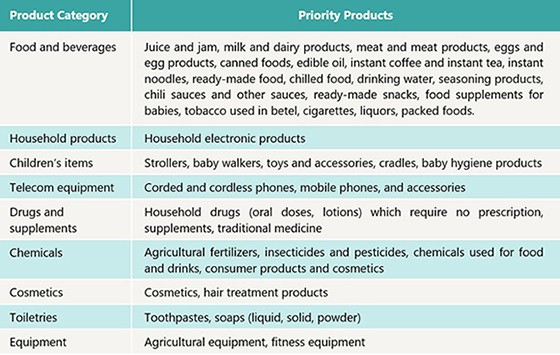
The committee may announce other products to be included in the list in the future.

Companies will have a six-month grace period from the notification date (October 26, 2018) to comply with the new regulation. Any violations after the grace period will leave companies vulnerable to the following sanctions under Section 19 of the Myanmar Consumer Protection Law 2014:

  • warning;
  • severe warning;
  • order to remedy the violation or compensate;
  • temporary prohibition of the sale and distribution of goods in violation;
  • product recall;
  • destruction of goods; and/or,
  • temporary or permanent revocation of business licenses or permits.

RELATED INSIGHTS​ 

April 30, 2011
It is generally known to practitioners in the cosmetics industry that the Thai Cosmetic Act requires registration of specially controlled cosmetics prior to an act of manufacture, sale, or import. Similarly, any business operators who wish to manufacture or import controlled cosmetics must notify the Thai Food and Drug Administration of the required information according to the law.
April 30, 2011
After two years of postponement, the Thai Food and Drug Administration (FDA) has announced the implementation of ASEAN Harmonization on Pharmaceutical Registration effective January 1, 2009. This represents a significant change in the Thai FDA’s history of the registration of pharmaceutical products. This article provides an overview of the expected impact of the ASEAN Harmonization rules on both local manufacturers and multinational companies.
April 30, 2011
Within the past two years, Thailand has experienced a number of events that have called into question the country’s political stability. In this article, David Lyman puts these events into historical perspective by looking back on the path that has led to the current situation. This article provides a thorough overview of Thailand’s recent history and explains many of the driving factors underlying the political instability of 2008. The article concludes that there is reason for optimism about Thailand’s future, with progressive development likely to return to the country.
April 29, 2011
This chapter provides an overview of the legal system and key laws for foreign companies doing business in Thailand. Presented in a question-and-answer format, the chapter examines the rules governing foreign investment, business vehicles, employment, tax, competition, intellectual property, marketing agreements, e-commerce, data protection, and product liability.