
You are using an outdated browser and your browsing experience will not be optimal. Please update to the latest version of Microsoft Edge, Google Chrome or Mozilla Firefox. Install Microsoft Edge

November 5, 2018

Myanmar-Language Labeling Required on Wide Range of Products

Myanmar’s Central Committee for Consumer Protection issued Notification 1/2018 on October 26, 2018, which requires labels containing certain information in Myanmar language, jointly or combined with another language, to be affixed to certain products sold in the country. The notification is intended to ensure the safety of consumers.

The notification states that Myanmar-language labels must contain the following information:

  • Directions for use;
  • Storage instructions;
  • Allergy alerts and/or warnings; and
  • Side effects (if any).

The Myanmar-language label must be affixed to consumer units, jointly or combined with labelling in another language, but the legislation does not cover other packaging, such as display boxes.

The list of priority products that require Myanmar-language labelling, jointly or combined with labelling in another language, is as follows: 
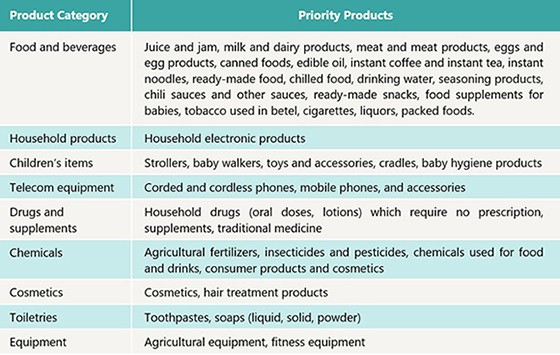
The committee may announce other products to be included in the list in the future.

Companies will have a six-month grace period from the notification date (October 26, 2018) to comply with the new regulation. Any violations after the grace period will leave companies vulnerable to the following sanctions under Section 19 of the Myanmar Consumer Protection Law 2014:

  • warning;
  • severe warning;
  • order to remedy the violation or compensate;
  • temporary prohibition of the sale and distribution of goods in violation;
  • product recall;
  • destruction of goods; and/or,
  • temporary or permanent revocation of business licenses or permits.

RELATED INSIGHTS​ 

April 30, 2011
Recently, the members of Association of Southeast Asian Nations (ASEAN) attempted to improve product registration efficiency and marketing approval for pharmaceutical products. The ASEAN harmonization regime hopes to improve the standard of the Food and Drug Administrations’ (FDAs) regulatory reviews in ASEAN countries. Despite these efforts, however, the lingering obstacle of a lack of intellectual property understanding continues to leave pharmaceutical companies with difficulties when dealing with product registration in several ASEAN FDAs.
April 30, 2011
Within the past two years, Thailand has experienced a number of events that have called into question the country’s political stability. In this article, David Lyman reflects on the situation and sees a number of promising signs which indicate that the rule of law is continuing to be strengthened and that the political infighting can be overcome.
April 30, 2011
In producing advertising material, skepticism can cause complications and a great deal of expense to your company. Due diligence on intellectual property and regulatory compliance of advertising material may help mitigate these unnecessary complications and expense for your company.
April 30, 2011
This open letter from David Lyman to the clients of Tilleke & Gibbins addresses the events that unfolded in April 2009, when political demonstrations—sometimes violent—took place in Bangkok and Pattaya. Although the protests by the so-called Red Shirts attracted a great deal of media attention, life continued without serious disruption in Thailand’s capital.