
You are using an outdated browser and your browsing experience will not be optimal. Please update to the latest version of Microsoft Edge, Google Chrome or Mozilla Firefox. Install Microsoft Edge

November 5, 2018

Myanmar-Language Labeling Required on Wide Range of Products

Myanmar’s Central Committee for Consumer Protection issued Notification 1/2018 on October 26, 2018, which requires labels containing certain information in Myanmar language, jointly or combined with another language, to be affixed to certain products sold in the country. The notification is intended to ensure the safety of consumers.

The notification states that Myanmar-language labels must contain the following information:

  • Directions for use;
  • Storage instructions;
  • Allergy alerts and/or warnings; and
  • Side effects (if any).

The Myanmar-language label must be affixed to consumer units, jointly or combined with labelling in another language, but the legislation does not cover other packaging, such as display boxes.

The list of priority products that require Myanmar-language labelling, jointly or combined with labelling in another language, is as follows: 
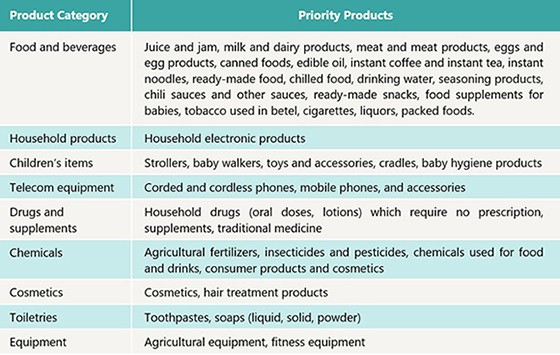
The committee may announce other products to be included in the list in the future.

Companies will have a six-month grace period from the notification date (October 26, 2018) to comply with the new regulation. Any violations after the grace period will leave companies vulnerable to the following sanctions under Section 19 of the Myanmar Consumer Protection Law 2014:

  • warning;
  • severe warning;
  • order to remedy the violation or compensate;
  • temporary prohibition of the sale and distribution of goods in violation;
  • product recall;
  • destruction of goods; and/or,
  • temporary or permanent revocation of business licenses or permits.

RELATED INSIGHTS​ 

April 30, 2011
In recent years, Thailand has seen an increasing number of pharmaceutical patent litigations, launched by drug originators to combat infringing generic products in the market. This article looks at the forces underlying this trend and recommends several legal options to allow drug originators to defend their products against low-price infringing generics.
April 30, 2011
Recent years have witnessed a proliferation in the number of products available under the “nutritional food” heading. For companies to stand out from their competitors in this growing sector, marketing and advertising is integral for success. The ability to make claims regarding products is a significant aspect of this process. While the number of products has been on the rise, there has also been an augmentation in demand among consumers for healthier, more nutritious products. This, coupled with more aggressive advertising tactics, could lead to exaggerated or egregious claims.
April 30, 2011
As most ASEAN Food and Drug Administrations and Ministries of Agriculture labor under critical backlogs of product registration applications for the growing number of products being released into Asian markets, businesses are looking to new ways to facilitate approvals. Outsourcing product registration work to law firms is becoming an increasingly popular way for regulatory affairs departments to speed up applications as local knowledge and effective navigation go a long way in Asia.
April 30, 2011
Recent scandals, particularly the one involving melamine-tainted milk from China, have impacted consumer awareness in a big way, making consumers pay more attention to the quality and safety of the products they purchase. This is particularly true for products that are ingested, such as food and beverages. In Thailand, these products must first receive approval from the Food and Drug Administration in the case of food and drugs, and the Excise Department in the case of alcoholic beverages, before launching in the market.