
You are using an outdated browser and your browsing experience will not be optimal. Please update to the latest version of Microsoft Edge, Google Chrome or Mozilla Firefox. Install Microsoft Edge

November 5, 2018

Myanmar-Language Labeling Required on Wide Range of Products

Myanmar’s Central Committee for Consumer Protection issued Notification 1/2018 on October 26, 2018, which requires labels containing certain information in Myanmar language, jointly or combined with another language, to be affixed to certain products sold in the country. The notification is intended to ensure the safety of consumers.

The notification states that Myanmar-language labels must contain the following information:

  • Directions for use;
  • Storage instructions;
  • Allergy alerts and/or warnings; and
  • Side effects (if any).

The Myanmar-language label must be affixed to consumer units, jointly or combined with labelling in another language, but the legislation does not cover other packaging, such as display boxes.

The list of priority products that require Myanmar-language labelling, jointly or combined with labelling in another language, is as follows: 
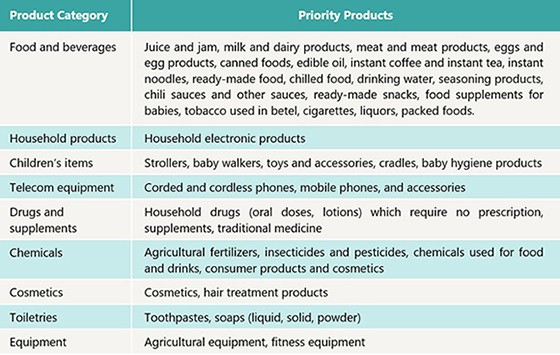
The committee may announce other products to be included in the list in the future.

Companies will have a six-month grace period from the notification date (October 26, 2018) to comply with the new regulation. Any violations after the grace period will leave companies vulnerable to the following sanctions under Section 19 of the Myanmar Consumer Protection Law 2014:

  • warning;
  • severe warning;
  • order to remedy the violation or compensate;
  • temporary prohibition of the sale and distribution of goods in violation;
  • product recall;
  • destruction of goods; and/or,
  • temporary or permanent revocation of business licenses or permits.

RELATED INSIGHTS​ 

October 31, 2017
Foodpedia articles, published online on the ChemLinked Chemical Portal by REACH24H Consulting Group, provide an overview of the food industries in eight jurisdictions in Asia. An article on Food Regulation in Thailand, written by Alan Adcock, a partner and deputy director of the intellectual property and regulatory affairs group at Tilleke & Gibbins, provides an overview of the following subjects:
September 21, 2017
PLC Life Sciences Global Guide  is a Q&A-style chapter that provides an overview of the regulatory frameworks of the life sciences industries across multiple jurisdictions worldwide. Legal practitioners from Tilleke & Gibbins contributed to the Thailand chapter of the guide, which is comprised of the following two sections:Medical Product Regulation and Product Liability in Thailand
September 21, 2017
Pharmaceutical experts from Tilleke & Gibbins authored the Vietnam chapters of the latest edition of the PLC Life Sciences Global Guide. PLC’s popular guides provide a comparative overview, in Q&A format, of laws and regulations across a wide range of practice areas in dozens of jurisdictions around the world.The Life Sciences Global Guide  focuses on the pharmaceutical sector and related areas, and is divided into two sections. The first section covers medicinal product regulation and product liability, including the following topics:
August 29, 2017
With Decree No. 54/2017/ND-CP dated May 8, 2017, guiding the implementation of the 2016 Pharmaceutical Law (Decree 54) entering into effect on July 1, 2017, some new provisions are forcing pharmaceutical companies to reconsider their business models in Vietnam. The key changes have resulted in pharma companies reviewing their distribution channels, setting up subsidiary companies to take part in importing and other aspects of business, and considering relocating marketing staff (known in Vietnam as “medical representatives,” “med reps,” or “MR(s)”).