
You are using an outdated browser and your browsing experience will not be optimal. Please update to the latest version of Microsoft Edge, Google Chrome or Mozilla Firefox. Install Microsoft Edge

November 5, 2018

Myanmar-Language Labeling Required on Wide Range of Products

Myanmar’s Central Committee for Consumer Protection issued Notification 1/2018 on October 26, 2018, which requires labels containing certain information in Myanmar language, jointly or combined with another language, to be affixed to certain products sold in the country. The notification is intended to ensure the safety of consumers.

The notification states that Myanmar-language labels must contain the following information:

  • Directions for use;
  • Storage instructions;
  • Allergy alerts and/or warnings; and
  • Side effects (if any).

The Myanmar-language label must be affixed to consumer units, jointly or combined with labelling in another language, but the legislation does not cover other packaging, such as display boxes.

The list of priority products that require Myanmar-language labelling, jointly or combined with labelling in another language, is as follows: 
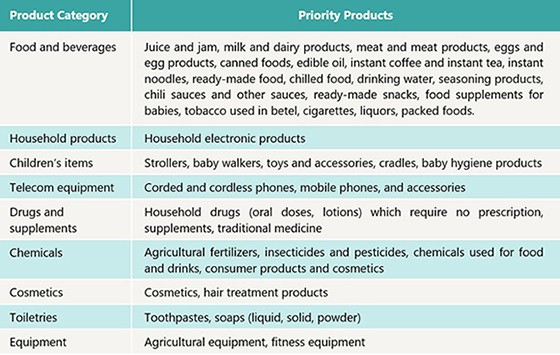
The committee may announce other products to be included in the list in the future.

Companies will have a six-month grace period from the notification date (October 26, 2018) to comply with the new regulation. Any violations after the grace period will leave companies vulnerable to the following sanctions under Section 19 of the Myanmar Consumer Protection Law 2014:

  • warning;
  • severe warning;
  • order to remedy the violation or compensate;
  • temporary prohibition of the sale and distribution of goods in violation;
  • product recall;
  • destruction of goods; and/or,
  • temporary or permanent revocation of business licenses or permits.

RELATED INSIGHTS​ 

April 19, 2021
Thailand has made significant changes to its statutory interest rate framework for the first time in almost a century. Since 1925, the statutory interest rate codified in Thailand’s Civil and Commercial Code (the CCC) has remained at 7.5% per year. But with Covid-19 having an unprecedented impact on the Thai economy, the Thai Government, via emergency decree, has reduced the statutory rate. While the decree is largely aimed at providing relief to hard-hit SMEs and individual debtors, the amendments have broader implications for doing business in Thailand. Main Changes The new interest rate revisions are contained within the Emergency Decree Amending the Civil and Commercial Code B.E. 2564 (2021) (the Emergency Decree), which was published in the Government Gazette on April 10, 2021 and came into effect on April 11, 2021. The Emergency Decree amends Sections 7 and 224 of the CCC, which stated the previous statutory interest rate of 7.5% per year. The Emergency Decree makes three major changes. The first involves a reduction of the statutory interest rate from 7.5% per year to 3% per year in Section 7. The new 3% annual rate is subject to review every three years by the Ministry of Finance. The interest rate is subject to further change later by a royal decree. The second change concerns money debts under Section 224 of the CCC. The previous version of Section 224 stated, among other things, that a money debt based on a default bears interest of 7.5% per year. Under the Emergency Decree, the new actual statutory default interest rate is the statutory interest rate stated in Section 7 with an additional rate of 2% per year. The result is a 5% annual statutory default interest rate. Since the statutory default interest rate is based in part on the Section 7