
You are using an outdated browser and your browsing experience will not be optimal. Please update to the latest version of Microsoft Edge, Google Chrome or Mozilla Firefox. Install Microsoft Edge

November 5, 2018

Myanmar-Language Labeling Required on Wide Range of Products

Myanmar’s Central Committee for Consumer Protection issued Notification 1/2018 on October 26, 2018, which requires labels containing certain information in Myanmar language, jointly or combined with another language, to be affixed to certain products sold in the country. The notification is intended to ensure the safety of consumers.

The notification states that Myanmar-language labels must contain the following information:

  • Directions for use;
  • Storage instructions;
  • Allergy alerts and/or warnings; and
  • Side effects (if any).

The Myanmar-language label must be affixed to consumer units, jointly or combined with labelling in another language, but the legislation does not cover other packaging, such as display boxes.

The list of priority products that require Myanmar-language labelling, jointly or combined with labelling in another language, is as follows: 
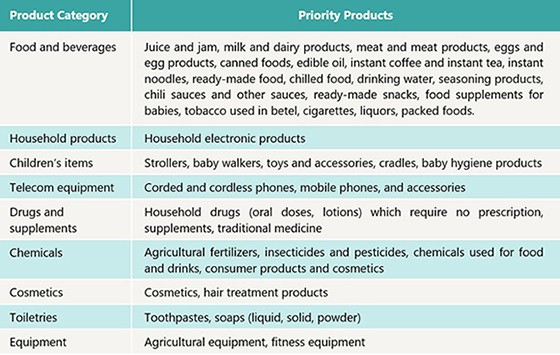
The committee may announce other products to be included in the list in the future.

Companies will have a six-month grace period from the notification date (October 26, 2018) to comply with the new regulation. Any violations after the grace period will leave companies vulnerable to the following sanctions under Section 19 of the Myanmar Consumer Protection Law 2014:

  • warning;
  • severe warning;
  • order to remedy the violation or compensate;
  • temporary prohibition of the sale and distribution of goods in violation;
  • product recall;
  • destruction of goods; and/or,
  • temporary or permanent revocation of business licenses or permits.

RELATED INSIGHTS​ 

June 9, 2021
The latest updates to Practical Law’s Life Sciences Global Guide feature two revised sections from Tilleke & Gibbins attorneys in the firm’s Jakarta office—“Medicinal Product Regulation and Product Liability in Indonesia,” and “Pharmaceutical IP and Competition Law in Indonesia.” “Medicinal Product Regulation and Product Liability in Indonesia” covers a range of regulatory issues related to the marketing and selling of pharmaceutical products, including the following: Regulatory overview, including relevant laws and authorities, scope, definitions, and general procedures for pharmaceuticals, biologicals, and medical devices and health care IT Pricing, government funding, and reimbursement: Structure of Indonesia’s health care system, price regulation, and reimbursement Clinical trials Manufacturing and distribution Marketing: Authorization for marketing medicinal products, parallel imports and cross-border trade in medicines Restrictions on dealings with health care professionals Selling restrictions Advertising and promotion Data privacy Packaging, labeling, and tracking Product safety, quality, and liability Local establishment, representation, and residency requirements Reform The full “Medicinal Product Regulation and Product Liability in Indonesia” section can be accessed on the Practical Law website. “Pharmaceutical IP and Competition Law in Indonesia” first goes over the country’s legal and regulatory environment for patents and trademarks in relation to pharmaceutical business operations in the jurisdiction. The section then turns to competition law issues, with the Q&A format focusing on how the country’s competition laws and regulations affect the pharmaceutical sector. Readers are also given information on how to properly comply with Indonesian competition law, including in the licensing of medicines and pharmaceutical technology. The full “Pharmaceutical Intellectual Property and Competition Law in Indonesia” section can be found on the Practical Law website. Practical Law, produced by Thomson Reuters, is the world’s leading legal know-how resource for business lawyers, publishing a huge range of guides covering hundreds of jurisdictions and practice areas.