
You are using an outdated browser and your browsing experience will not be optimal. Please update to the latest version of Microsoft Edge, Google Chrome or Mozilla Firefox. Install Microsoft Edge

January 4, 2023

Lao Department of Intellectual Property Issues Country’s First Trademark Cancellation Decision

World Trademark Review

In decisions dated 29 September 2022, the Lao Department of Intellectual Property (DIP) has cancelled two trademark registrations based on their confusing similarity to earlier marks. An official from the DIP unofficially confirmed that these decisions are the first of their kind in Laos and, as such, constitute a positive step that puts legal provisions into actual practice.

Background

In Laos, cancellation proceedings against a registered mark are not common, as the number of applications in the country is relatively low and thorough substantive examination only began to be carried out in recent years. There was previously no precedent for how cancellation decisions would be handled, despite the Law on Intellectual Property (No. 38/NA of 15 November 2017) allowing a third party to file a petition for the cancellation of a registered mark if it can be proven that the mark should not be granted registration.

The Law on Intellectual Property states that a third party may object to, or request the cancellation of, a trademark registration within five years of its date of publication in the Official Gazette. However, it is difficult to ascertain how to calculate the five-year period if the mark was registered before June 2019, as publication in the Official Gazette was first made available at that time. This could mean that the five-year statutory limitation for trademark cancellation in Laos could start from June 2024, but how this will be applied in practice remains to be seen.

The Case

This case began when Siam Kubota Corporation Co Ltd took action against two marks that looked similar to its own earlier marks (see Figure 1):


Figure 1. Earlier registered marks

Siam Kubota registered its marks in 2009 for goods in Class 12, and has extensively used and protected the marks in Laos.

After reviewing its options, Siam Kubota submitted petitions for the cancellation of the registration of the two similar-looking marks (see Figure 2), which were also registered for goods in Class 12.

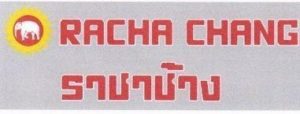
Figure 2. Marks that were the subject of the petitions for cancellation

As Siam Kubota has a reputation as a longstanding, well-known seller of tractors throughout the Southeast Asian market, it was suggested that the applicant for the similar-looking marks was trying to associate itself with and imitate Siam Kubota’s marks because the parties’ marks shared essential elements. Additionally, because the products sold under these marks are marketed to consumers who use or purchase tractors, there was a substantial risk and a high likelihood of confusion in the marketplace as to the ownership and source of the goods.

In support of the cancellation petitions, Siam Kubota submitted evidence of actual use to prove that the applicant was acting in bad faith in an attempt to free-ride on the reputation of Siam Kubota’s marks. It also submitted proof of use related to sales, advertisement and promotion of goods for the DIP’s consideration.

Based on the overall representation, design and pronunciation of the marks, as well as the goods they were applied to, the DIP determined that the parties’ marks were confusingly similar. As these similarities were likely to cause confusion among the public, the DIP cancelled the contested registrations.

Comment

As the first of their kind in Laos, these decisions constitute a significant development in cancellation proceedings in the country, and will hopefully build momentum for other types of adversarial proceedings, such as oppositions. More broadly, however, these decisions mark the alignment of the law and practice in this area, which should lead to more effective protection of trademark rights.


This article first appeared in WTR Daily, part of World Trademark Review, in December 2022. For further information, please go to www.worldtrademarkreview.com.


RELATED INSIGHTS​ 

July 24, 2026
Indonesia has updated its fee framework for intellectual property (IP)-related government services, with implications for IP owners, licensees, lenders, digital platforms, and businesses operating in the country. Government Regulation No. 30 of 2026 on Types and Tariffs of Non-Tax State Revenue Applicable to the Ministry of Law (GR 30/2026) was promulgated on July 2, 2026, and will take effect on August 1, 2026. Key Takeaways GR 30/2026, which replaces the relevant IP service fees under Government Regulation No. 45 of 2024, reorganizes the fee schedule into separate categories for copyright, industrial designs, patents, layout designs of integrated circuits, trade secrets, trademarks, geographical indications, IP enforcement, and other categories. The most commercially relevant changes include a new copyright recordation tariff exemption for songs and music, higher fees for several trademark and geographical indication services, new IP enforcement service fees, and a new fee type for registration of fiduciary security over IP rights objects. In addition, this is the first major update for trademark fees in approximately 10 years. GR 30/2026 is significant not only as a fee update but also as a further indication of Indonesia’s increasing recognition of IP as a financeable commercial asset. By expressly assigning fees to the registration of fiduciary security over IP rights objects, the regulation places IP-backed collateral filings within the Ministry of Law’s administrative service framework. While GR 30/2026 does not create a new secured-transactions regime, this development is relevant for lenders, borrowers, and IP owners structuring financing arrangements secured by trademarks, patents, copyrights, industrial designs, or other registrable IP rights in Indonesia. Copyright: New Fee Exemption for Songs and Music Recordation For copyright, GR 30/2026 creates a fee-exempt category for recordation of works or related-rights products for songs or music, while maintaining a separate category for other works and related-rights products. It
July 21, 2026
Thailand’s Ministry of Digital Economy and Society (MDES) published a notification establishing an expedited court-ordered takedown mechanism for online content in cases of “urgent necessity.” The notification, which was issued on July 17, 2026, under the Computer Crime Act B.E. 2550 (2007), as amended, took effect the following day. It significantly expands the categories of content subject to rapid government-initiated removal. Content Categories Subject to Takedown The notification defines “urgent necessity” (section 20, paragraph 5, of the Computer Crime Act) as circumstances where any delay in suppressing computer data may impact national security, religion, the monarchy, good morals, social culture, or public order. In this regard, it establishes four broad categories of content: Computer Crime Act offenses. National security offenses. IP and other criminal offenses, where it is contrary to public order or good morals and a competent officer has requested its suppression. Content contrary to public order or good morals, a broad residual category encompassing 14 subcategories approved by the Computer Data Screening Committee. The fourth category is the most expansive. Its 14 subcategories include: Content defaming, mocking, satirizing, or devaluing the monarchy. Online gambling advertising or facilitation. Offering illegal firearms for sale. Offering baraku (hookah) products or e-cigarettes for sale. Offering cannabis inflorescences or processed cannabis products for sale. Advertising or soliciting prostitution. Content inciting violence, hatred, or social division. Unauthorized overseas employment advertising. Offering boiled kratom juice for sale. Online sale or advertising of alcoholic beverages. Content satirizing or degrading Buddhism. Money lending at interest rates exceeding legally prescribed limits. Advertising or disseminating information about surrogacy services. Forgery of documents, cards, or official documents. Enforcement Procedure In cases of urgent necessity, a competent official assigned by the MDES permanent secretary must file a petition with supporting evidence to the court with jurisdiction, requesting an order to
July 15, 2026
Ambush marketing refers to a strategy in which a business associates itself with an event, campaign, or brand without paying for official sponsorship rights. The tactic is most visible in sports, concerts, and festivals, where official sponsors have invested substantially for exclusivity. Ambush marketers may use suggestive wording, event-themed imagery, athlete endorsements, venue-adjacent promotions, or social media campaigns implying a commercial connection with the event. Common Forms of Ambush Marketing Ambush marketing typically takes one of the following forms: Direct ambushing: using event names, logos, or mascots suggesting authorization Coattail ambushing: sponsoring an athlete or broadcaster connected with the event Subtle ambushing: themed advertising, venue-adjacent campaigns, or similar visual cues The legal analysis in each case turns on whether the marketing crosses from permissible event-based advertising into infringement, passing off, deception, or wrongful exploitation of goodwill, and the risk assessment is necessarily fact-specific. Thailand has no dedicated ambush marketing statute, so legality depends on execution. A campaign that merely comments on a public event may be permissible, but one that uses protected marks, creates consumer confusion, misrepresents sponsorship status, or makes unsubstantiated claims may trigger liability under various Thai laws, as laid out below. Ambush Marketing and Thailand’s Trademark Act The Trademark Act B.E. 2534 (1991) is the primary tool for addressing campaigns that use registered trademarks, event names, logos, mascots, or confusingly similar signs. The law gives registered trademark owners the exclusive right to use their mark for registered goods, and infringement risk arises when a nonsponsor uses an event mark or a confusingly similar sign in advertising. Even referential or playful use may create liability if it causes public confusion as to sponsorship or commercial connection. The law also preserves passing-off claims for unregistered marks. This matters because event names, taglines, or mascots may not always be
July 13, 2026
When Decree No. 186/2026/ND-CP (Decree 186) takes effect on July 15, 2026, it will introduce the most significant reform of Vietnam’s administrative IP enforcement framework since Decree 99/2013/ND-CP was issued in 2013. These changes are expected to make administrative enforcement faster, more accessible, and better suited to the realities of modern IP disputes. Below are the principal reforms and their practical implications for rights holders and enforcement practitioners. The End of Notarization and Consular Legalization Among the most welcome procedural changes is the abolition of the notarization and consular legalization requirement for powers of attorney (POA) submitted in administrative enforcement proceedings. Under the previous regime, foreign rights holders were generally required to execute a POA, then have it notarized and consular legalized (if seeking customs recordal). In practice, this process frequently delayed enforcement by four to eight weeks, often long enough for infringing goods to disappear before authorities could intervene. Decree 186 removes this bottleneck, now requiring only an original or certified copy of the POA. If the document is in a foreign language, a Vietnamese translation is sufficient, provided it is certified by a competent authority or confirmed by the authorized Vietnamese IP representative. Consular legalization and notarization are no longer required. For rights holders, the practical impact is substantial. Administrative enforcement files that previously took weeks to prepare can now be completed in a matter of days, allowing much faster responses in time-sensitive matters such as warehouse raids, border interventions, and trade-fair enforcement. The decree also introduces a useful administrative simplification. Where an original POA has already been submitted to the same enforcement authority and remains valid, applicants may rely on a copy of that earlier submission by identifying the previous case file. This eliminates unnecessary duplication for rights holders pursuing multiple enforcement actions before the same