You are using an outdated browser and your browsing experience will not be optimal. Please update to the latest version of Microsoft Edge, Google Chrome or Mozilla Firefox. Install Microsoft Edge

7月 25, 2025

ESGの台頭とタイにおける立体商標保護への影響

現代のビジネス戦略が持続可能性が重視されるようになり、ESG原則の影響は商品デザイン、パッケージ、そしてブランド保護に新たな形を与えている。タイにおけるラベルレスボトルから立体商標の法的重要性まで、これらの動向は環境責任と知的財産の結びつきの深まりを浮き彫りにしている。

ESGの台頭

ESG原則は、世界中でビジネス戦略を策定する上で不可欠な要素となっている。企業はESGデータを開示することをますます要求され、これは投資家の意思決定、融資、そして消費者行動に影響を与えている。調査によると、消費者は持続可能なパッケージに対してより多くのお金を払う意思があり、ESGへの取り組みに力を入れている企業は高い成長率を達成する傾向がある。

プロダクト・ミニマイゼーションのトレンド

大きな変革を経験している分野の一つが消費財業界で、世界中のブランドがESG原則に沿ったパッケージを採用している。注目すべき取り組みの一つはパッケージの小型化で、pepsiが2022年に中国で初めてラベルレスPETボトルを導入したことがその好例である。同様にタイでは、SPRINCLEの飲料水「Redesign to Reduce」および同様のイニシアチブをはじめ、複数のボトル・ウォーターのブランドがラベルレス・デザインを採用している。
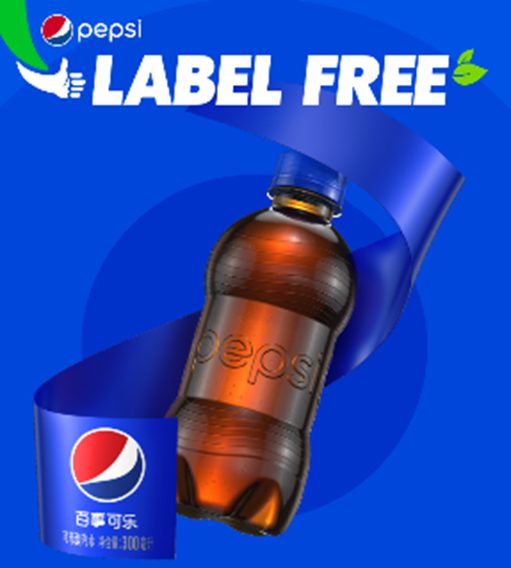

こうした変化はブランドイメージの向上だけでなく、消費者やビジネスパートナーからも温かく歓迎されている。例えば、キャセイパシフィック航空は、機内リサイクル活動の強化に向けた継続的な取り組みの一環として、一部のフライトと客室でラベルフリーのボトル・ウォーターを導入した。

立体商標でデザインから識別性へ

パッケージはブランド・アイデンティティの重要な要素へと進化し、機能性と識別性を融合させることで消費者の認知度とロイヤルティを高める。この変化は知的財産に大きな影響を及ぼしている。これらのデザインは、その高い商業的価値を考えると、もはやオプション的なものではなく、不可欠な要素である。意匠権や立体商標などを介して法的保護を確保することは、戦略的に不可欠な要素となっている。持続可能性とイノベーションが重視される時代において、識別可能なパッケージを保護することは、単なる予防措置ではなく、競争優位性を維持し、ブランドの永続的な成功を確保するための基本的なステップである。

タイでは、商標法により、幅、高さ、奥行きを含む物体の立体的な形状を表す立体商標を登録することができる。立体商標が登録されるためには、識別性、つまりある事業者の商品またはサービスを他の事業者の商品またはサービスと区別できる特徴を示すことが必要がある。ただし、その形状は、単に商品の本質的な形状を反映したもの、または技術的機能を実現するために不可欠なデザインであってはならない。

その構成に固有の識別力が欠けているとしても、継続的かつ広範囲な使用を通じて消費者の幅広い認知を得ている場合は、登録が認められる可能性がある。このような場合、企業は、そのデザインが商品の出所を強く識別する役割を果たしていることを証明する必要がある。このプロセスでは通常、マーケティング資料、広告記録、流通データなど、消費者の認知を効果的に裏付ける包括的な証拠を収集する必要がある。注目すべき例として、イタリアの高級ブランドであるBulgariは、独自の円形状物が勘合する香水瓶のデザインをタイで立体商標として登録することに成功した。

重要なポイント

企業がパッケージ戦略やブランディング戦略に持続可能性を組み込む傾向は、ますます強まっている。環境に配慮した取り組みの一環として、ミニマルでラベルレスなデザインが世界中で人気を集めている。個性的なパッケージデザインは、ブランド・アイデンティティを定義する上で重要な役割を果たし、商標法の下、法的に保護され得る。タイでは、立体商標として保護されるためには、デザインが識別性または消費者の認知度の高さを示す必要があり、多くの場合、マーケティング記録や流通データなどのたくさんの証拠によって裏付けらる。これらの法的要件を早期に理解することで、企業はブランド・アイデンティティを守るための積極的な対策を講じることができる。商品の出所を自然に伝えるデザインについては、ESG(環境(Environment)、社会(Social)、企業統治(Governance))が重視される今日の環境において、法的保護を求めることが最優先事項である。


備考:本和文は英文記事を翻訳したものです。原文については、以下のリンクをご参照ください。

The Rise of ESG and Its Implications for 3D Mark Protection in Thailand


その他の情報 

9月 7, 2026
On September 4, 2026, Thailand’s prime minister convened the first meeting of the Data Center Business Policy Committee. The committee endorsed a draft policy framework for the data center industry and tasked four subcommittees with developing the standards that would sit beneath it, shifting away from fragmented, agency-by-agency approvals toward a unified national strategy aiming to maximize economic value while managing environmental and infrastructure concerns. Proposed Scope and Pillars of the National Data Center Policy Framework The proposed framework would cover all types of data centers, including internal or captive facilities operated within a company or its affiliates, rather than only commercial third-party providers. If adopted in this form, companies running private data centers purely for internal purposes would also become subject to regulatory oversight. Minimum safety and operational standards would be established, with uniform enforcement across all categories. The committee endorsed a draft policy framework with four key pillars: Industrial classification: Data centers exceeding 2 MW would be classified as industrial operations, which may require factory licenses and environmental impact assessments under the Factory Act. Resource pricing: Utility rates would be structured to reflect both direct and indirect costs, supporting green energy and green data center standards. Centralized screening: A centralized review would evaluate project suitability and resource allocation. Operators may be required to submit proposals through periodic “pitching” rounds, where projects are competitively assessed on their potential economic and strategic benefits to Thailand. Digital ecosystem: The framework would prioritize data sovereignty, tax incentives, and conditions promoting domestic digital businesses, AI, and cloud infrastructure. Multidimensional Evaluation Criteria and Subcommittees Four subcommittees will be established to develop standards responsible for the following dimensions: Economic: Criteria for assessing the economic viability of data center projects, for use in prioritizing data centers based on infrastructure readiness, demand type (including AI factories),
9月 7, 2026
Indonesia’s Constitutional Court (Mahkamah Konstitusi) has reinstated a key provision limiting pharmaceutical patent protection, signaling a renewed commitment to balancing patent rights with public access to medicines. In its ruling to Case No. 255/PUU-XXIII/2025, the court partially granted a petition for judicial review of Law No. 65 of 2024, which had amended the country’s Patent Law, and ordered the restoration of a provision that had excluded certain pharmaceutical inventions from patentability. The decision took effect immediately upon its pronouncement at the court’s plenary session on August 28, 2026. Background The petition challenged the removal of article 4(f) from Law No. 13 of 2016 concerning Patents (Patent Law), as amended by Law No. 65 of 2024. Article 4(f) had excluded from patentability certain inventions relating to new uses of known substances. The petitioners argued that removing this provision would open the door to patent protection for second medical use inventions and facilitate patent evergreening—practices that can extend exclusivity periods, delay generic market entry, and reduce public access to affordable medicines. The petitioners included several patient advocacy and public-interest organizations: the Indonesian Dialysis Patients Community Association, the Indonesian Association of Drug Abuse Victims (PKNI), the Indonesian Pulmonary Hypertension Foundation (YHPI), the Rekat Peduli Indonesia Foundation, and the Indonesian Positive Women’s Association (IPPI), along with the Indonesia for Global Justice Association and four individual petitioners. The petitioners also challenged the constitutionality of the phrase “interested party” in article 70(1) of the Patent Law, arguing that it should be construed expressly to clarify who has standing to appeal a decision to grant a patent before the Board of Patent Appeal, and to allow a broader range of parties—such as patent holders, licensees, consumer organizations, prosecutors, aggrieved third parties, and others who may suffer direct or indirect harm from the grant of a patent—to
9月 4, 2026
Blind boxes and collectibles have become increasingly popular, driven by the excitement of not knowing which character or design will be revealed until the package is opened. While most visible in the art toy market, the same concept is also used in the food industry. Confectionery, snacks, and other food products are sometimes sold with toys, character figures, cards, or other collectibles. A package might, for example, contain one of ten possible characters, with consumers knowing that an item is included but not which one they will receive. Some collections may also feature rare or “secret” items. For food businesses, however, adding a randomized toy or collectible involves more than a marketing decision. The food, the nonfood item, and the randomized mechanism may each raise different regulatory considerations in Thailand. Thai FDA Requirements for Nonfood Objects Packaged with Food The main food regulatory consideration is Ministry of Public Health Notification No. 310 B.E. 2551 (2008), which regulates food packaged together with things or objects that are not food. Under Notification No. 310, certain nonfood objects may be packaged together with food where they fall within specified exceptions, including objects that serve the following purposes: Maintaining the quality or standard of the food, such as a desiccant or oxygen absorber; Serving as a seasoning or as part of food preparation, such as chili powder sachets or seasoning sachets contained in instant noodle packages; or Functioning as an eating or food-preparation utensil, such as a spoon or fork included with instant noodles. Other nonfood objects that do not fall within these categories generally should not be placed inside the food container together with the food. Where a toy, collectible, or other nonfood object is intended to be sold together with a food product, businesses should therefore carefully consider the nature of
9月 4, 2026
Foreign business restrictions on telecommunications, treasury center businesses, and intragroup support services were eased when Thailand published the Ministerial Regulation Prescribing Service Businesses Not Requiring Permission for Foreign Business Operations (No. 5) B.E. 2569 (2026) in the Government Gazette on August 28, 2026. The ministerial regulation expands the categories of service businesses that foreign investors may operate without a foreign business license (FBL) under the Foreign Business Act B.E. 2542 (1999) (FBA). Of particular relevance to the telecommunications, fintech, and technology sectors, the ministerial regulation exempts: Type 1 telecommunications licensees, which do not have their own networks; Treasury center businesses operated in accordance with Thailand’s exchange control regulations; and Certain intragroup administrative, human resources, and information technology management services. Telecommunications Services Foreign-owned businesses providing telecommunications services under a type 1 telecommunications license may now operate without obtaining an FBL. This may streamline market entry for qualifying telecommunications and digital infrastructure businesses. The exemption applies only to the FBA licensing requirement. Operators must continue to comply with applicable requirements under the Telecommunications Business Act and the regulations of the National Broadcasting and Telecommunications Commission, and the change does not affect foreign ownership restrictions applicable to type 2 or type 3 telecommunications businesses. Treasury Center Businesses The ministerial regulation also exempts qualifying treasury center businesses from the FBL requirement. This may facilitate centralized treasury functions in Thailand, including liquidity management, foreign exchange management, and intragroup funding arrangements. Treasury center operations remain subject to applicable requirements of the Bank of Thailand and other competent authorities. Intragroup Administrative, HR, and IT Services Certain administrative, human resources, and information technology management services provided between affiliated entities are also exempt, provided the relevant entities satisfy prescribed ownership or management criteria. The exemption is available where the service provider and recipient are related through specified ownership