
It is generally understood that patents are granted for new designs that have not been widely known or used in Thailand and not been disclosed anywhere prior to the date of the patent application.
It is trite law that design law protects the distinctive appearance or products. Under Section 3 of the Thai Patent Act B.E. 2522, as amended by the Patent Act (No. 2) B.E. 2535 and the Patent Act (No. 3) B.E. 2542, a design is defined as “any form or composition of lines or colors that gives a product a special appearance and can serve as a pattern for an industrial or handicraft product.”
This raises an important question. Can a patent be issued for a product design that contains text, numerals, trademarks, or symbols that do not fall under the definition of a design? This issue commonly arises when attempting to register packaging, labels, and graphical user interfaces (GUIs).
Until a few years ago, applicants could file design applications with the Thai Patent Office for designs that contained such elements, provided that an appropriate disclaimer was included. This practice was generally accepted by Thai design examiners at that time, but the Patent Office has since implemented a change in its practice that could have a significant impact on applicants for design patents. Where design representations are submitted as line drawings or computer-aided design (CAD) drawings, the examiner may now issue an office action requiring their removal.
This practice, however, appears to be applied inconsistently, as some examiners still exercise their own discretion in determining whether drawings containing these elements are acceptable.
Below are examples of a GUI design, a CAD drawing design, and a photographic design representation that illustrates issues relating to the presence of nonallowable elements.
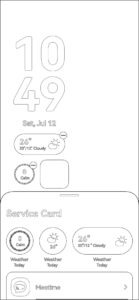
GUI design
For this GUI design, the submitted representations included text, numerals, and symbols. During examination of the application, the examiner issued an office action requiring the removal of the text, numerals, and commonly used symbols, while allowing only newly created symbols to remain.
In response, the applicant submitted an explanation that these elements were incorporated solely to illustrate their placement within the product design and that no claim of exclusivity was made with respect to them. The applicant further clarified that protection was sought only for the novel arrangement, configuration, and positioning of the graphical elements shown in the design. The applicant also amended the claim to include a disclaimer stating this explicitly.
Following the amendment, the application was determined to satisfy all official requirements and was subsequently allowed.
Nonetheless, recent experience indicates that Thai design examiners have adopted a markedly stricter approach. Examiners now have consistently maintained that line drawings and CAD drawings must not include any text, numerals, trademarks, or symbols. In contrast to past practice, explanatory letters or arguments stating that protection is not claimed for such elements are generally no longer accepted by the Thai Patent Office.
As illustrated by the above example, GUI design proprietors may question the practical scope of protection available if all text, numerals, and symbols are removed from the drawings, leaving only basic graphical features such as rounded-corner rectangles. How Thai design examiners will approach the examination of GUI design drawings under the stricter standard remains uncertain; also uncertain is whether additional guidance will become available once proposed amendments to the current Patent Act relating to GUI protection are adopted and come into effect.
The next example below a CAD drawing filed for a label design in which no text, numerals, trademarks, or symbols appear in the design representation. If the original design incorporates any such elements, they should be removed before filing; otherwise, the examiner will likely raise an objection and issue an office action requiring their removal as a condition for further prosecution of the application.

CAD drawing
Lastly, by contrast, where photographs of the design are submitted, such elements are generally permitted to appear in the photographs. An example of such a design representation is shown below.

Photograph of a design
In such cases, however, applicants are typically required to include a disclaimer excluding those elements from the scope of protection.
Practical Takeaways
When a design incorporates text, numerals, trademarks, or symbols, applicants should carefully assess the most appropriate form of design representations to be filed. If such elements constitute part of the product’s visual appearance, photographic representations may be advantageous, as they are generally accepted when accompanied by a suitable disclaimer. By contrast, line drawings and CAD drawings should not contain any text, numerals, trademarks, or symbols.
Taking these considerations into account at the filing stage may reduce the likelihood of objections being raised during examination, streamline prosecution, and increase the prospects of obtaining registration in a timely manner.